Photography Tips
Are Edits Authentic? A Property Photo Test
Discover how to enhance your listing photos truthfully so you can showcase every space beautifully while setting accurate expectations that protect guest trust.
By Hospitality Lens · · 7 min read
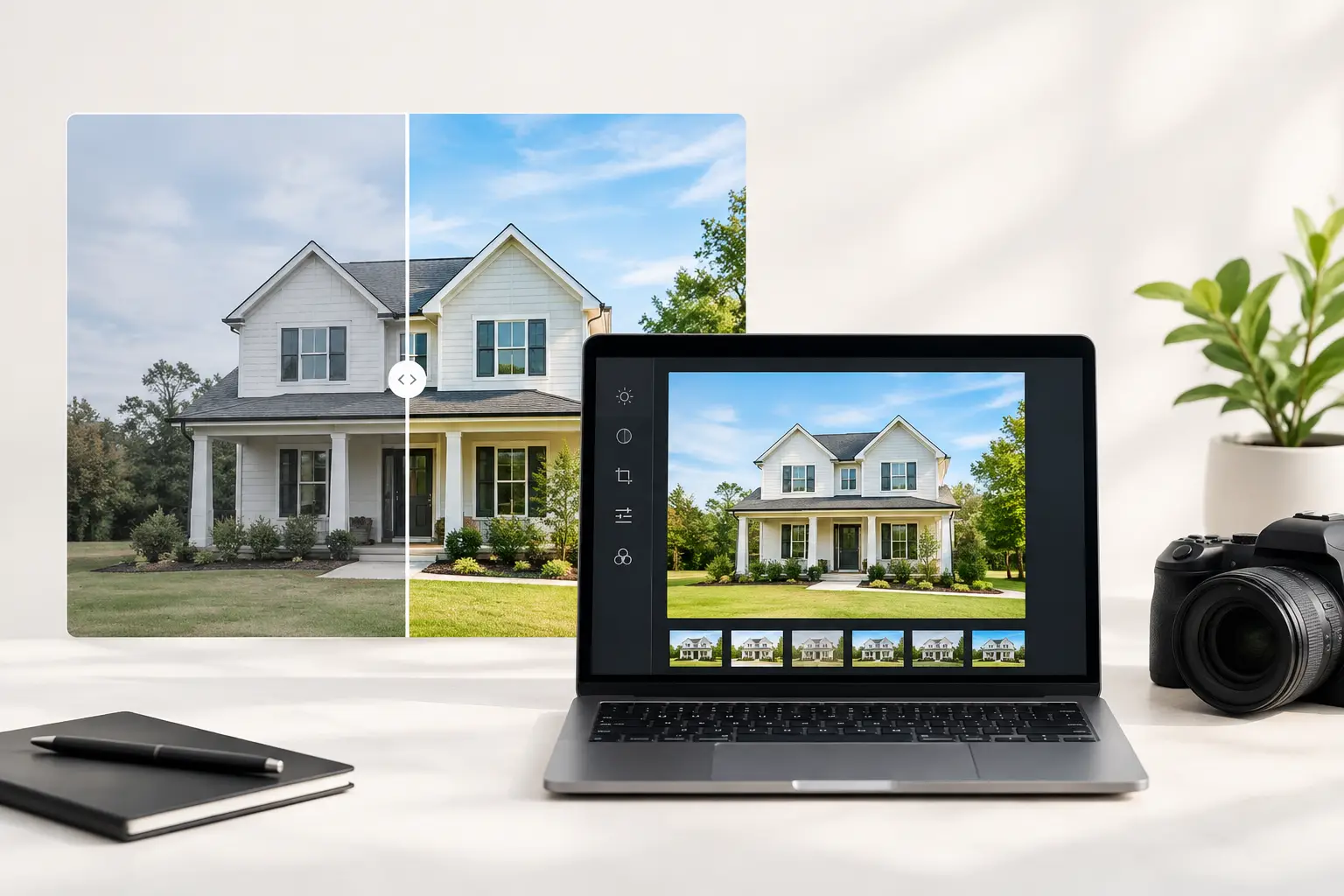
A cleaner removes a trash bag before photographing a vacation rental. A photographer turns on lamps, opens blinds, straightens pillows, and waits for softer light. Few guests would call that deceptive. But are edits authentic once the image is on a screen and software has improved it?
For property managers, Airbnb co-hosts, and hotel teams, this is not an abstract question. Listing photos shape a guest’s first expectation of the stay. The goal is not to make a property look artificially impressive. It is to present the real space clearly, attractively, and consistently enough that the guest recognizes it on arrival.
The useful distinction is simple: authentic edits improve the accuracy and readability of what already exists. Misleading edits alter what a guest reasonably expects to receive.
Are Edits Authentic When They Improve the Real Property?
Yes, often they are. A camera, especially a phone camera in an inexperienced hand, does not record a property neutrally. It can turn a bright room gray, make vertical walls lean inward, exaggerate a yellow ceiling light, or darken a view beyond recognition. Those technical failures can make an otherwise appealing, well-kept rental look less inviting than it is in person.
Truthful photo enhancement corrects those failures without changing the underlying property. Realistic lighting and perspective correction, color balancing, horizon correction, and modest cleanup can bring an image closer to how a guest sees the room with their own eyes.
That is why authenticity is not the same as leaving every photo untouched. A raw file is not automatically more honest than a carefully edited one. If a room is genuinely airy but the source image is underexposed, brightening it can be a more faithful representation. If a wide-angle phone lens makes a bathroom wall bow, correcting distortion can make the room more recognizable, not less.
The test is whether the edit clarifies reality or replaces it.
Edits that generally preserve authenticity
Many routine property-photo improvements sit comfortably on the truthful side of the line. Removing temporary visual noise is a good example. A cleaner’s supply caddy, a loose power cable, a photographer’s reflection, or a bag waiting for collection may be present when a photo is taken but not part of the guest experience. Removing those distractions can make the listing image more representative of the prepared property.
The same applies to correcting a tilted horizon in a balcony photo, balancing overly warm indoor color, or recovering detail from a window that has blown out to solid white. These edits help prospective guests understand the room, layout, and condition more easily.
They also help a multi-property portfolio look coherent. When some homes were photographed professionally and others were captured by owners or cleaners, a consistent visual standard can make the entire operation appear more considered. Consistency should not mean every space looks identical. It should mean each image is clear, natural, and faithful to the home it represents.
The point where enhancement becomes misleading
An edit stops being authentic when it adds, removes, or changes something material to a booking decision. Adding a larger pool, a skyline view, a fireplace, designer furniture, a breakfast setup, or a mountain beyond the window is not photo enhancement. It is creating a different property.
The same principle applies to removing permanent conditions that a guest will encounter. If a neighboring building dominates the view, deleting it changes the experience. If a patio is visibly worn, replacing it with a new surface is misleading. If a compact room is stretched beyond recognition through aggressive perspective manipulation, the image may technically depict the same room while setting the wrong expectation.
There are gray areas. A temporary construction barrier might be reasonable to remove if it was gone before the listing went live, but not if guests will see it during their stay. A seasonal image of a pool can be useful, but it should not imply year-round availability where that is untrue. The answer depends on whether the condition is temporary, whether it will affect the stay, and whether the final photo would surprise a reasonable guest.
A Practical Authenticity Check for Listing Photos
Before approving an edited image, property teams can ask one direct question: if a guest walked into this room today, would they feel the photo gave them a fair impression?
That question works better than trying to create a rigid rule for every adjustment. It accounts for context, including the source image, the property’s condition, and what a guest is likely to notice.
A second check is to compare the completed image with the original at normal viewing size. Look for changes to permanent features, room proportions, outdoor surroundings, furniture, finishes, and available amenities. Image quality can influence how people evaluate a listing, but there is no universal performance uplift that applies to every property. Measure clicks, inquiries, bookings, or sales on the individual listing. If it changes the property’s character, pause.
Finally, consider the image as part of the full listing rather than a single polished frame. A bright hero image may be completely fair when the remaining photos show the layout, sleeping arrangements, bathroom size, and outdoor areas clearly. Authenticity comes from the overall impression, not from forcing every image to be flat, dim, and unedited.
When Existing Photos Are Enough and When They Aren’t
AI property photo enhancement is most useful when the source photos already show the space accurately but need professional polish. That can include owner photos from a new-property onboarding, cleaner-taken images after a seasonal reset, phone photos for a quick serviced-apartment update, or older listing images that no longer match the rest of a portfolio.
In these cases, enhancement can create booking-ready listing images without the cost and scheduling effort of a new shoot. It is a practical property photographer alternative when arranging a photographer is unnecessary, unavailable, too slow, or uneconomical.
But it is not the answer to every image problem. A professional photographer is the better choice when a property has no usable source photos, has been substantially renovated, needs a full visual campaign, or requires careful composition across a large home. It is also the better choice where new photography is needed to show an amenity, a new view, a changed floor plan, or a particular design feature that existing photos miss.
Enhancement cannot responsibly recover information that was never captured. A dark, blurry photo cannot become a reliable record of a room’s details. Nor should an editor invent them. The strongest results start with usable images: clean enough to understand, reasonably in focus, and broad enough to show the space.
Authentic Editing Requires a Clear Brief
Good results depend on more than software. The operator approving the work needs a practical standard. If a home should look light and calm, say so. If the afternoon sun is a true feature of the living room, preserve it rather than neutralizing every shadow. If a view is partially obscured in reality, keep that reality visible.
For recurring work, teams benefit from agreeing on a few editorial rules: natural color over dramatic color grading, straight lines without extreme stretching, tidy surfaces without removing permanent flaws, and room images that retain a believable relationship to one another. A studio apartment should not appear to have the scale of a two-bedroom home simply because one image was edited more aggressively than the rest.
This is where revisions matter. A first pass may be technically polished but slightly too bright, too cool, or too stripped of the property’s atmosphere. At HospitalityLens, a watermarked free preview lets teams assess whether a usable image can become a professional-looking property photo before they buy. The service is designed around truthful lighting and cleanup, with no fake rooms, views, amenities, or property features.
Better Photos Should Reduce Surprises
The commercial case for authentic editing is straightforward. Strong listing images earn attention, communicate care, and help a property compete visually. Yet the real objective is not a photo that wins approval in isolation. It is an image set that helps the right guest understand what they are booking.
That means showing a compact space well without pretending it is expansive. It means cleaning up a kitchen photo without adding appliances. It means making a cloudy day brighter in a reasonable way without replacing the sky with a fantasy sunset. These choices protect guest confidence while still giving the property its best fair presentation.
The best edited property photos do not announce themselves as edits. They simply make a real, prepared space easier to see. If the finished image helps a guest arrive with accurate expectations and helps your team present the property with more care, it has done the job.