Real Estate
Image Formats in Property Marketing: 2026 Guide
Optimize your property listings by choosing the perfect image formats, enhancing visual quality, boosting views, and accelerating sales outcomes for every property.
By Hospitality Lens · · 11 min read

TL;DR:
- Choosing the right image format in property marketing affects both visual quality and listing performance. JPEG is ideal for web listings due to its balance of quality and file size, while TIFF is best for print materials with lossless quality. Consistent, optimized visuals boost buyer engagement, reduce time on market, and increase sale speeds.
The role of image formats in property marketing is to balance visual quality, file size, and cross-platform compatibility so listings load fast, look sharp, and convert browsers into buyers. The 2025 NAR buyer report found that 83% of buyers who used the internet rated photos as a very useful website feature. That single fact reframes every format decision you make. The format you choose is not a technical afterthought. It is a marketing decision that directly affects how many people click, stay, and inquire.
Image format selection in real estate is the practice of choosing the right file type for each stage of the marketing workflow, from capture to publication. Each format serves a different purpose, and using the wrong one at the wrong stage costs you quality, speed, or both.

RAW is the format your camera produces before any processing. It captures the most detail and gives you the most control in editing. The tradeoff is large file sizes and the requirement to process every image before it can be published anywhere.
JPEG is the workhorse of web listings. JPEG balances small file size with universal support, making it the default for property portals, social media, and email campaigns. The compression is lossy, meaning some quality is sacrificed, but at high export settings the difference is invisible to most buyers.
HEIF/HEIC is the format iPhones use by default. It offers better compression than JPEG at comparable quality, which matters for mobile-first workflows. The catch is limited compatibility on older Windows systems and some listing platforms, so you often need to convert before uploading.
TIFF is the standard for print deliverables. Brochures, signage, and high-resolution print ads require lossless quality that TIFF preserves. File sizes are large, so TIFF stays in your archive and print pipeline, not on your website.
MP4 handles video tours and dynamic content. As immersive media becomes standard in property marketing, MP4 is the format that carries virtual walkthroughs and lifestyle video to websites and social channels.
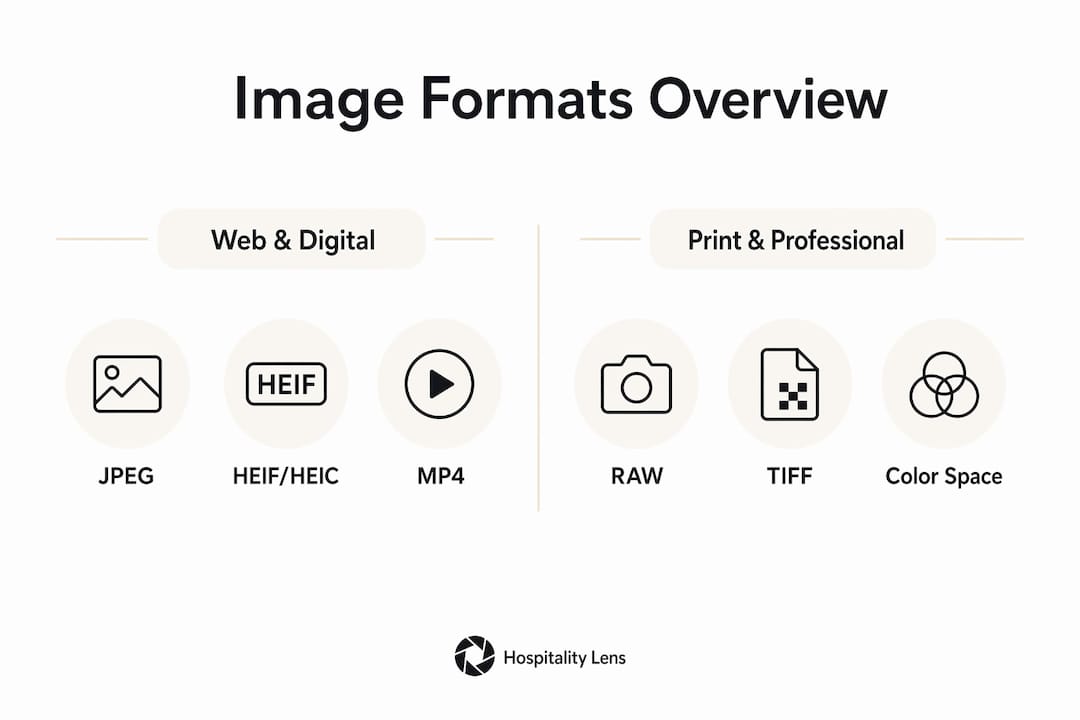
Color space is the invisible layer beneath all of these formats. Maintaining consistent color space, sRGB for web and managed profiles for print, keeps your property colors accurate across every channel. A living room that looks warm and inviting on your monitor should look the same on a buyer’s phone.
| Format |
Best use |
Key tradeoff |
| RAW |
Capture and editing |
Large files, requires processing |
| JPEG |
Web listings, social media |
Lossy compression at low quality settings |
| HEIF/HEIC |
Mobile capture |
Limited platform compatibility |
| TIFF |
Print brochures, signage |
Very large files, not web-ready |
| MP4 |
Video tours, dynamic ads |
Requires encoding and bandwidth |
File size is the hidden variable in listing performance. Optimized smaller files improve mobile user experience and reduce bounce rates, which in turn affects how listing portals rank your property in search results. A slow-loading listing page loses buyers before they see the first photo.
The emotional impact of a listing photo is immediate. Buyers form an impression in seconds. High-resolution images in the right format signal that the property is well-maintained and that the seller is serious. Low-quality or poorly compressed images suggest the opposite, even when the property itself is excellent.
Professional photos can strengthen online presentation, but there is no universal percentage by which they reduce time on market. Format and image quality should support clear buyer evaluation rather than a promised sale-speed result.
Immersive formats take engagement further. 3D virtual walkthroughs can increase sale prices by up to 9% and speed closings by 31%. For buyers aged 18–34, virtual tours increase showings by approximately 130%. These formats require MP4 or dedicated 3D delivery formats, not standard JPEG.
Pro Tip: Export your hero listing image as a high-quality JPEG at 85% compression and 1,920 pixels wide. This hits the sweet spot between visual sharpness and fast load time on both desktop and mobile.
Platform compatibility shapes format decisions as much as quality does. A HEIC file that fails to display on a Windows desktop or a listing portal is effectively invisible. Always verify that your chosen format renders correctly on the platforms where your buyers search.
What are best practices for managing real estate image libraries?
A visual asset library is a structured collection of photos, videos, renderings, and floor plans organized with metadata and usage rights for ready access. Standardizing capture and export formats enables faster campaigns and consistent storytelling across every channel you use.
The return on building this library is measurable. The return on professional photography is listing-specific and should be evaluated from actual media cost and observed property performance rather than a universal ROI benchmark. A well-organized library means you can reuse those assets across multiple campaigns without paying for reshoots.
Here is a practical approach to building your library.
1. Standardize at capture. Decide your RAW or JPEG workflow before the shoot. Changing formats mid-project creates inconsistency in color and quality that is difficult to correct later.
2. Tag every asset on import. Tagging images by use case, size, orientation, and quality enables efficient reuse across digital and print platforms without frequent reshoots. A tag system that takes 10 minutes to set up saves hours of searching later.
3. Separate web and print exports. Keep your TIFF or high-resolution JPEG masters in one folder and your web-optimized exports in another. Never publish a print-resolution file to a website.
4. Document usage rights. Every image in your library should have a clear record of who owns it and where it can be used commercially. This matters especially when you work with third-party photographers or AI enhancement services.
5. Review and refresh regularly. Seasonal changes, renovations, and new furnishings all affect how a property presents. Schedule a library review every six months to retire outdated images.
Leading marketing teams treat visual assets as leveraged investments, amortized across channels to build credibility over time. A single well-organized shoot can fuel a full year of content across your website, social media, print, and email.
AI illustrations complement traditional photography for marketing mid-renovation or vacant properties. A hybrid approach, combining photography with AI-generated visuals, is the industry standard in 2026 for presenting properties that are not yet photo-ready.
Pro Tip: Create a naming convention that includes the property address, room name, orientation, and export type. For example: “123MainSt_LivingRoom_Landscape_Web.jpg” makes every file instantly findable.
Channel requirements drive format selection. The right format for a social media post is different from the right format for a printed brochure, and treating them the same creates problems at both ends.
For web listings and property portals, JPEG remains the standard. Export at 85–95% quality, set the color space to sRGB, and size images to 1,920 pixels on the long edge. This keeps files under 500 KB while maintaining the sharpness buyers expect on high-resolution screens.
For social media, JPEG works well for static posts. Stories and reels use MP4 for video content. HEIC files from iPhone shoots should be converted to JPEG before uploading to avoid display failures on Android devices and desktop browsers.
For print brochures and signage, use TIFF or a high-resolution JPEG at 300 DPI minimum. Color space shifts to CMYK for offset printing, though your designer will typically handle this conversion. Sending a web-optimized JPEG to a print shop produces blurry, pixelated results.
For virtual tours and video walkthroughs, MP4 encoded with H.264 or H.265 (HEVC) delivers broad compatibility. H.265 offers better compression at the same quality level, which matters for embedding video on listing pages without slowing load times.
For email campaigns, keep images under 200 KB per image. JPEG at 70–80% quality and 600 pixels wide is the reliable choice. Large images in email trigger spam filters and load slowly on mobile, where most buyers read their messages.
Many home buyers use online listings during their search, which means your web and mobile formats carry the most weight. Prioritize those first, then work outward to print and specialized channels.
Key Takeaways
The format you choose for every property image directly affects visual quality, page load speed, and whether buyers engage or leave.
| Point |
Details |
| JPEG leads web listings |
Export at 85–95% quality, sRGB color space, 1,920px wide for fast loading and sharp display. |
| File size affects SEO |
Optimized images reduce bounce rates and improve ranking on listing portals. |
| Immersive formats drive results |
3D and video content can improve remote property evaluation, but outcomes vary by listing and market. |
| Asset libraries multiply ROI |
Tagged, organized image libraries enable reuse across channels and reduce reshoots. |
| Professional photos sell faster |
Professional photos support clear online presentation; sale speed still depends on the wider listing and market context. |
Most conversations about image formats in real estate stop at “use JPEG for the web.” That advice is correct but incomplete. The real issue is that format decisions are made too late in the workflow, usually at export, when the damage from poor capture choices is already done.
The format conversation should start at the shoot. If you capture in JPEG only, you lose the ability to correct exposure and white balance without visible quality loss. If you capture in RAW but have no processing workflow, you create a bottleneck that delays listings. The format you choose at capture shapes every decision downstream.
The second thing most guides miss is the emotional weight of format consistency. Imagery has evolved from basic documentation to lifestyle storytelling that connects buyers emotionally before they ever walk through a door. When your web images look different from your print brochure because of color space mismatches, that inconsistency erodes trust. Buyers notice, even if they cannot name what feels off.
AI-enhanced visuals are not a replacement for good photography. They are a tool for properties that cannot be photographed at their best right now. A vacant unit, a mid-renovation space, or a property with temporary furniture all benefit from AI illustration to show buyers what the space can become. The best content asset libraries combine both, and the teams that manage them well move faster and spend less.
My honest recommendation: treat your image library like a financial asset. Organize it, protect it, and invest in quality at the source. The format decisions that follow become much easier when the foundation is solid.
— Greg
How HospitalityLens fits into your visual marketing workflow
Property marketers who want professional-quality listing photos without the wait now have a practical option. HospitalityLens uses AI-driven enhancement to improve any property photo, regardless of its original quality, and delivers results in 15 minutes. The platform supports commercial use with no hidden fees and backs every order with a 100% satisfaction guarantee.
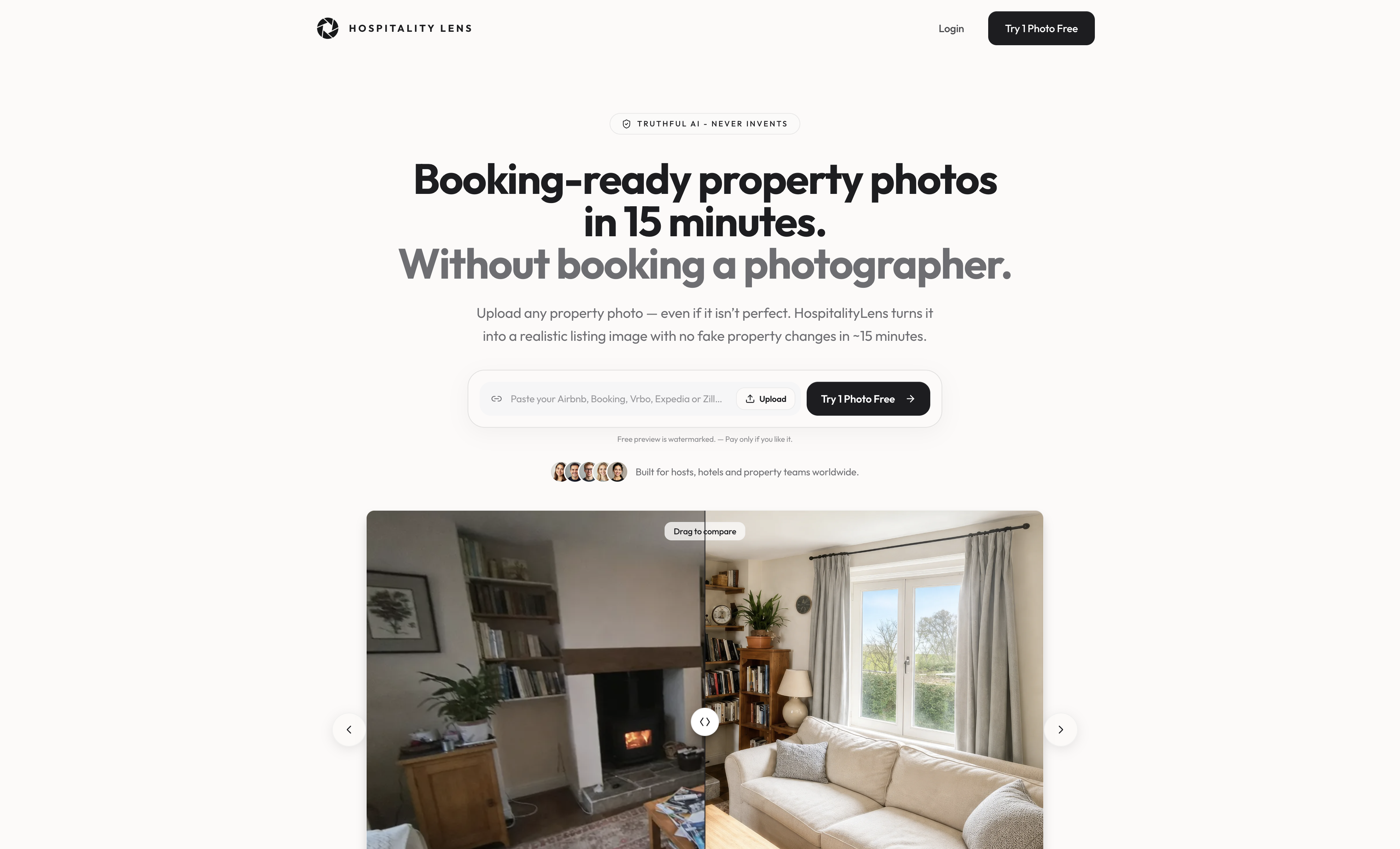
HospitalityLens can improve usable source photos without scheduling a new shoot; business impact should be measured on the individual listing rather than assumed from a universal revenue uplift. Whether you manage a single rental or a portfolio of properties, the step-by-step guide shows exactly how to upload, enhance, and publish images that are ready for every channel in your marketing mix.
FAQ
JPEG is the best format for online property listings. It balances file size and visual quality, loads fast on mobile and desktop, and is universally supported by listing portals and social platforms.
How does image quality affect property sales?
High-quality images can improve how buyers evaluate a listing online, but there is no universal percentage by which professional photos reduce time on market.
What is the role of photo libraries in property marketing?
A photo library organizes images, videos, and renderings with metadata and usage rights so marketing teams can reuse assets across channels without repeated reshoots. This reduces costs and keeps visual branding consistent.
When should I use TIFF instead of JPEG?
Use TIFF for print deliverables like brochures and signage where lossless quality is required. TIFF files are too large for web use and should stay in your archive and print production pipeline.
Do virtual tours actually improve property sales outcomes?
Virtual tours can help buyers understand layout remotely, but there is no universal percentage uplift in sale price, closing speed, or showings. Their value depends on the property, buyer mix, market, and execution.
Recommended