Real Estate
Why Property Photos Drive Inquiries: A 2026 Guide
Unlock more inquiries and confidently stand out in competitive markets by leveraging high-quality property photos that immediately capture buyer interest.
By Hospitality Lens · · 10 min read
TL;DR:
- Property photos are the most powerful factor influencing whether buyers click or scroll past a listing.
- High-quality, honest images increase inquiries and help properties stand out in competitive markets.
Property photos are the single most powerful factor determining whether a buyer or renter clicks on your listing or scrolls past it. 96% of buyers now start their property search online, and 81% name listing photos as the most important factor in their search. That means your photos are not decoration. They are the first decision point, and in most cases, the only one that matters before a buyer decides to inquire. This guide explains the psychology, the data, and the practical steps behind why property photos drive inquiries, so you can apply them to your own listings right now.
Why property photos drive inquiries before buyers read a word
The listing photo is emotional before it is rational. A buyer does not read your square footage, scan your amenities, or check your price before forming an opinion. They look at the photo first, and that reaction happens fast.
Eye-tracking research shows that buyers make a click decision within 1–3 seconds based on the first image they see. That speed is not a quirk. It reflects how the brain’s amygdala processes visual cues before conscious thought kicks in. A clean, well-lit exterior photo communicates “house, neighborhood, daylight, real” almost instantly. That recognition triggers a click.
The opposite is also true. Overly stylized photos, such as dramatic twilight shots with heavy filters, can cause hesitation. System 1 fast thinking processes clear, natural images faster than aspirational ones. When a photo looks too edited or staged, buyers pause. That pause often becomes a scroll.
The hero image, meaning the first photo in your listing, carries the entire weight of that first impression. It sets the expectation for everything that follows. A strong hero photo does not need to be perfect. It needs to be honest, bright, and immediately recognizable as a home worth exploring.
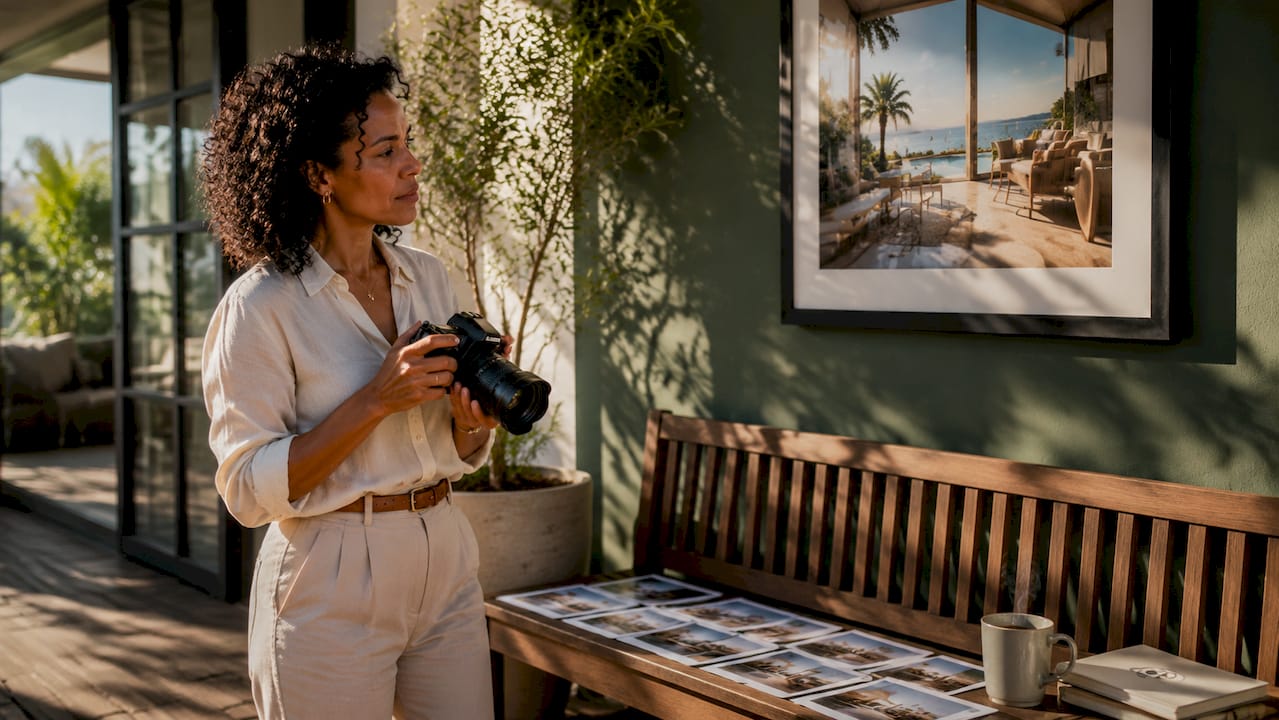
Pro Tip: Test your hero photo by showing it to someone unfamiliar with the property for three seconds, then asking what they remember. If they cannot describe the space clearly, the photo is not doing its job.
How many photos does a listing actually need?
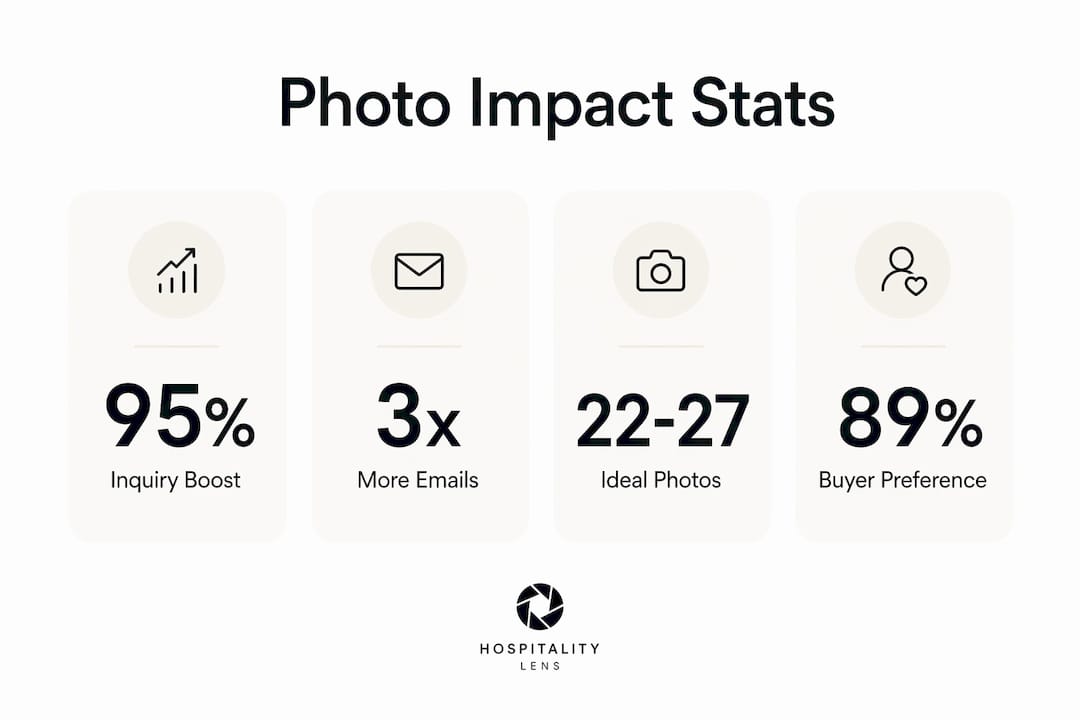
Photo quantity has a measurable impact on both inquiries and perceived value. Listings with 22–27 photos see significantly higher engagement than listings with fewer than 15 photos. That range is enough to show the full property without overwhelming the viewer.
The floor matters just as much as the ceiling. Listings with 4 photos or fewer show dramatically lower asking prices compared to listings with 5 or more. Buyers interpret a thin photo set as a signal that something is being hidden. That suspicion reduces both inquiries and offers.
The right number of photos is not about volume for its own sake. It is about giving buyers enough visual information to feel confident reaching out. When a buyer can see the kitchen, the living room, the bedrooms, the bathrooms, and the outdoor space, they have enough context to inquire. Without that context, they move on.
Getting the sequence right
Photo order shapes how buyers experience your listing. Starting with a strong exterior shot and then moving through lifestyle and feature images keeps viewers engaged longer. The sequence should feel like a natural walk through the property.
A common mistake is burying the best features. If your kitchen is the standout room, it should appear early, not as photo 19 of 24. Repeating similar angles, such as three nearly identical bedroom shots, also kills momentum. Each photo should show something new and add a reason to keep scrolling.
Pro Tip: Map your photo sequence like a tour route before you shoot. Exterior first, then entry, then the main living area, then kitchen, then bedrooms, then bathrooms, then outdoor spaces. Stick to that order and cut any photo that duplicates what the previous one already showed.
What professional photography actually does for your inquiry rate
The impact of professional real estate photography on inquiries is not subtle. 89% of buyers say professional photos are crucial to their decision-making process. That figure alone explains why the professional real estate photography market is valued at over $1 billion and growing.
The inquiry numbers are equally direct. Professional photos increase inquiries by up to 95% and generate three times more buyer emails compared to listings with amateur images. That is not a marginal improvement. It is the difference between a listing that sits and one that moves.
Advanced visual formats push those results further. Virtual tours and drone photography have grown 45% year over year. Listings with virtual tours receive 65% more showings from millennial buyers before a physical visit. For rental hosts and agents managing multiple properties, that kind of pre-qualification saves significant time.
The financial case for photo quality is straightforward. Properties using professional photos see revenue increases of up to 15%, according to HospitalityLens. Better photos attract more inquiries, more inquiries create more competition, and more competition supports stronger prices and faster closings.
What separates a professional photo from a good phone shot
Professional real estate photography uses wide-angle lenses, controlled lighting, and post-processing to show rooms at their best without misrepresenting them. A phone camera captures what is there. A professional setup captures what the space feels like.
The difference shows up most clearly in lighting. Dark corners, blown-out windows, and yellow artificial light all reduce trust. A professionally processed photo balances natural and artificial light so the room looks inviting and accurate. That accuracy matters because buyers who feel misled by photos cancel showings and leave negative reviews.
How to apply photo best practices to your listing today
You do not need to hire a full photography crew to improve your listing photos. The most important step is choosing the right hero image and making sure it is clear, bright, and honest.
Start by reviewing every photo in your current listing with fresh eyes. Ask whether each image adds new information or just repeats what another photo already shows. Remove any photo that is dark, crooked, or cluttered. A shorter set of strong images outperforms a longer set of weak ones.
AI photo enhancement tools, such as those offered by HospitalityLens, let you improve color, lighting, and clarity without altering the property itself. You upload your existing photos and receive enhanced versions within minutes. That approach addresses the two biggest barriers to better listing photos: time and cost.
Automating photo enhancement workflows saves agents 2.5–4.5 hours per listing. For hosts managing multiple properties, that time adds up quickly. Consistent photo quality across all your listings also builds brand trust with repeat guests and buyers.
Pro Tip: Use the same photo enhancement settings across all rooms in a listing. Inconsistent color temperature between rooms, where one looks warm and another looks cool, signals to buyers that the photos were taken at different times or under different conditions. Consistency builds trust.
Once your photos are ready, use them everywhere. Your listing platform, your social media, your direct booking site, and any printed materials should all feature the same high-quality images. Photo quality in real estate marketing compounds across channels. A strong image set works harder when it appears consistently.
Key takeaways
High-quality property photos are the primary driver of inquiries because they trigger an emotional decision before buyers engage with any other listing detail.
| Point |
Details |
| Hero photo decides the click |
Buyers decide to click or scroll within 1–3 seconds based on the first image alone. |
| Optimal photo count is 22–27 |
Listings in this range see the highest engagement; fewer than 5 photos signals something is hidden. |
| Professional photos triple buyer emails |
Properties with professional photography generate 3x more buyer emails and up to 95% more inquiries. |
| Photo sequence shapes the experience |
Start with a strong exterior, then move through the property in a logical tour order. |
| AI enhancement closes the quality gap |
Tools like HospitalityLens improve lighting and color in minutes, without misrepresenting the property. |
What I’ve learned after years of watching listings succeed and fail
After spending years watching listings perform across different markets, one pattern holds without exception: the listings that generate the most inquiries are not always the most beautiful properties. They are the ones with the best photos.
I have seen a modest studio apartment in a competitive city outperform a larger, more expensive unit simply because its photos were brighter, better sequenced, and more honest. The bigger unit had better finishes. The smaller one had better images. Buyers clicked on the smaller one first, inquired faster, and booked sooner.
The uncomfortable truth is that most property owners and agents underestimate how much a single bad photo costs them. A dark kitchen photo does not just fail to attract buyers. It actively signals neglect. Buyers assume that if the seller did not care enough to take a decent photo, the property itself may have been treated the same way.
The market expectation has shifted. Professional visuals are now the standard, not a premium option. Buyers and renters have seen enough well-photographed listings that a poor photo set reads as a red flag rather than a neutral choice. You are not competing against the property down the street. You are competing against every listing a buyer sees in a single scroll session.
The good news is that the gap between amateur and professional quality has narrowed significantly. AI enhancement tools mean you do not need a $500 photography session to get listing-ready images. You need good source photos and the right tools to prepare them. The investment is small. The return in inquiries is not.
— Greg
Better listing photos, faster than you think
If your current photos are holding back your inquiries, the fix does not have to be expensive or slow. HospitalityLens uses AI to enhance your existing property photos in about 15 minutes, improving lighting, color balance, and clarity without changing what the property actually looks like.
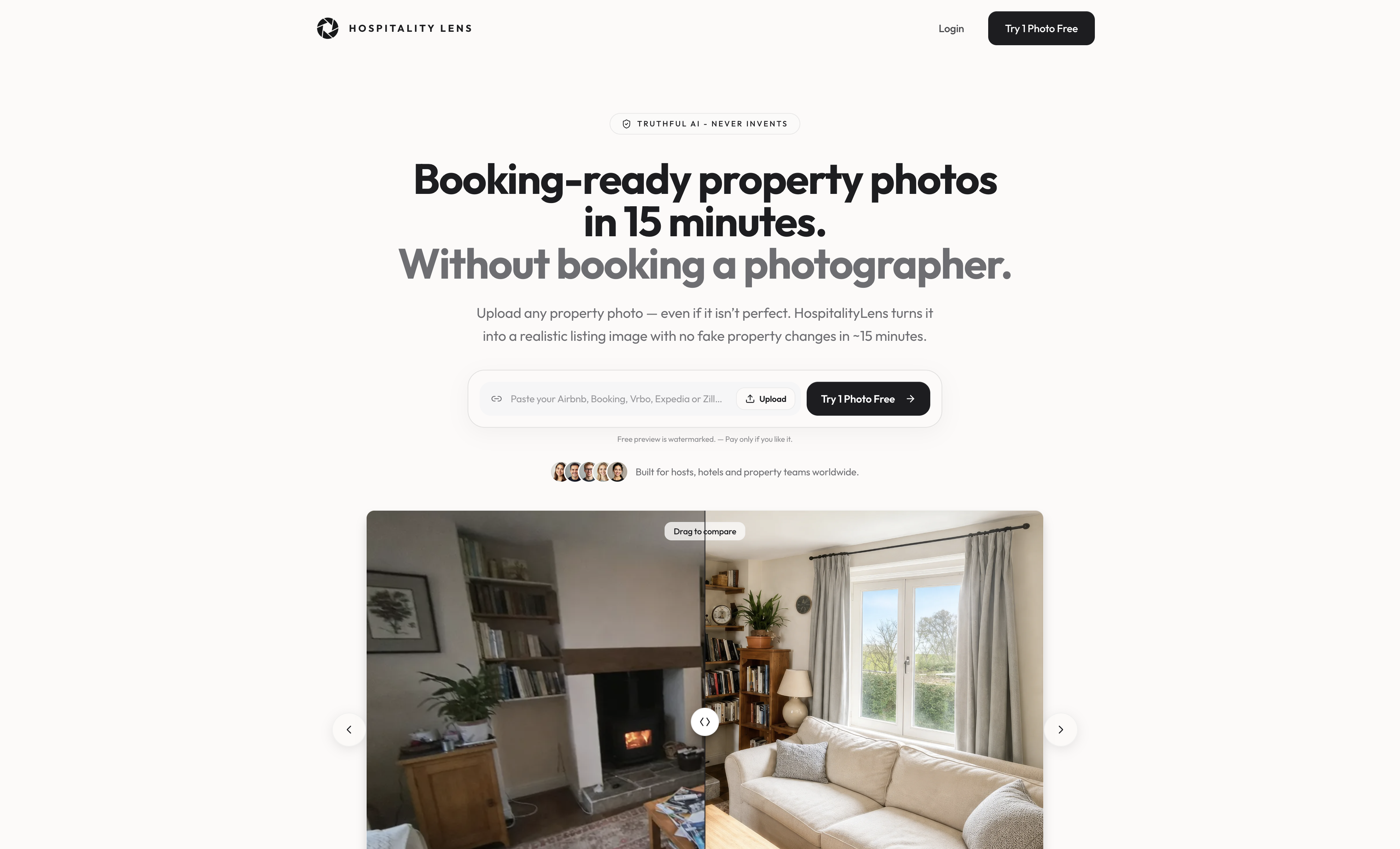
Whether you manage a vacation rental in Miami, a short-term rental in New York, or a portfolio of listings across multiple cities, HospitalityLens works with the photos you already have. You can enhance a single room for $7 or upgrade your full listing. Every order comes with a 100% satisfaction guarantee and commercial use rights, with no hidden fees. If you want to see what better photos do for your inquiry rate, HospitalityLens is a practical place to start.
FAQ
Why do property photos drive more inquiries than descriptions?
Photos trigger an emotional response within 1–3 seconds, before buyers read any text. Descriptions inform; photos decide whether a buyer clicks at all.
How many photos should a property listing have?
Listings with 22–27 photos see the highest engagement. Fewer than 5 photos correlates with lower asking prices and reduced buyer trust.
Do professional photos really increase inquiries?
Yes. Professional photos increase inquiries by up to 95% and generate three times more buyer emails compared to listings with lower-quality images.
What is the most important photo in a listing?
The hero image, the first photo in the listing, is the most critical. It drives over 90% of click-through decisions and sets the buyer’s expectation for the entire listing.
Can AI photo enhancement replace a professional photographer?
AI enhancement improves existing photos significantly by correcting lighting, color, and clarity. For most listings, it closes the quality gap without the cost or scheduling delay of a full photography session.
Recommended