Photography Tips
AI Editing Limits for Property Listing Photos
Image quality can influence how people evaluate a listing, but there is no universal performance uplift that applies to every property. Measure clicks, inquiries, bookings, or sales on the individual listing.
By Hospitality Lens · · 6 min read
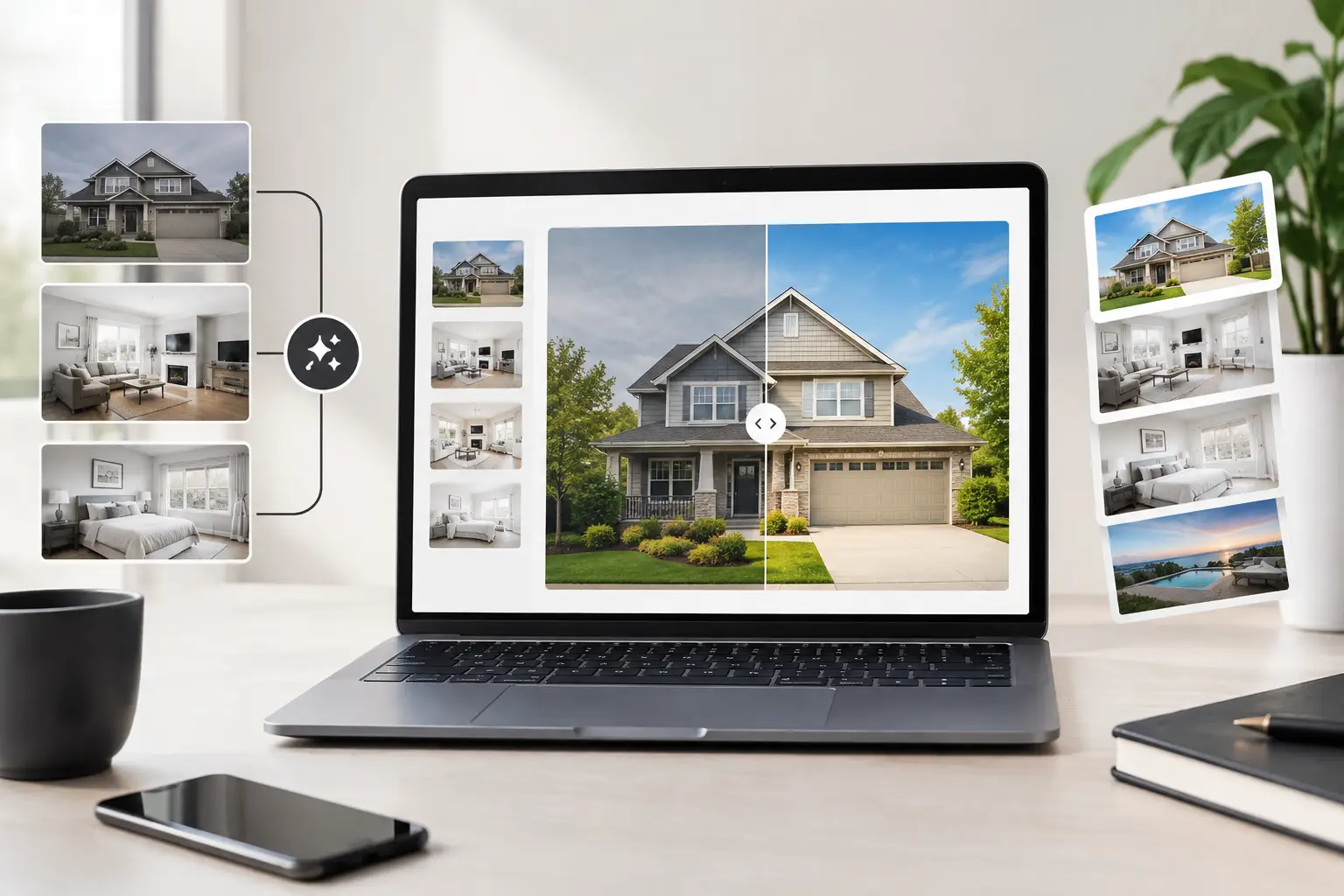
A crooked horizon, yellow indoor lighting, and a cleaner's supplies in the corner can make a perfectly good apartment look less considered than it is. AI editing limits matter because correcting those distractions is useful, while changing the property itself is not. For short-term rental operators, the goal is not a more impressive fictional image. It is a professional-looking property photo that gives guests a clear, appealing, and accurate reason to book.
That distinction is where AI property photo enhancement earns its place. It can turn usable owner photos, phone photos, and existing listing images into booking-ready listing images. But it cannot rescue every image, and it should never be used to fill gaps in the property, hide permanent shortcomings, or manufacture features that were never there.
What AI Editing Limits Mean in Property Marketing
AI editing limits are the boundary between visual correction and visual deception. A correction improves how faithfully a photo presents a real space. It may balance color, recover usable detail from an image that is slightly dark, straighten lines, or remove a temporary distraction. A deceptive change alters what a prospective guest is being asked to expect.
This is not just a philosophical difference. A listing image is part of the guest's decision process. If the room, layout, view, or amenities in the image do not match the property, the photo may create the wrong expectation before a guest has even read the description.
Truthful photo enhancement should preserve the core evidence in the frame: the size and shape of the room, the windows, the furnishings that are actually provided, the condition of surfaces, and the view that really exists. It should also retain the character of the property. A compact city studio does not need to be made to resemble a luxury suite. It needs to look clean, bright, level, and well presented.
What AI Can Improve Without Changing the Property
When the source image is usable, realistic lighting and perspective correction can make a meaningful difference. Phone photos commonly have mixed color temperatures, tilted verticals, uneven exposure, or a horizon that makes an exterior scene feel off balance. These are presentation problems, not property problems.
AI can also help remove temporary visual noise. Think of a person walking through the background, a cleaning caddy left out before check-in, loose cords, small countertop clutter, or an object that was moved shortly after the photo was taken. The key question is simple: was the item a temporary distraction, or is it a permanent part of what the guest will encounter?
That question matters more than the editing tool. Removing a stack of laundry from a bedroom may be appropriate if it was there only during turnover. Removing a built-in radiator, a neighboring building from the window, or a worn section of flooring changes the property record. The first produces a cleaner image. The second produces a misleading one.
Color correction follows the same rule. It is reasonable to correct a strong orange cast from old bulbs so walls appear closer to their real color. It is not reasonable to recolor dated cabinets, make a dark room look sun-filled at night, or turn a muted ocean view into a dramatic sunset scene. The finished image should look like the property on a good, normal day, not like a different property in a marketing concept.
Perspective correction has a practical ceiling
Wide phone lenses can make rooms feel distorted. Vertical lines bow, doorframes lean, and a bed near the edge of the frame can appear unusually large. Perspective correction can restore a more natural sense of proportion, but it cannot reveal space that the original angle failed to capture.
If a bathroom was photographed from the doorway with half the room obscured, editing cannot create a clear full-room image honestly. If the room was shot so close that it exaggerates depth, the image may improve, but it may still be the wrong photo for the listing. Better editing is not always a substitute for a better angle.
The Source Photo Still Sets the Ceiling
AI works with the information available in the image. An image that is slightly underexposed, somewhat cluttered, or poorly leveled can often become much more useful. An image that is severely blurry, heavily compressed, blocked by a finger, or captured in near darkness gives the editor very little reliable material to work with.
Property teams sometimes assume any photo can be upgraded into a polished hero image. That is rarely the right expectation. If there is no visible detail in a blown-out window, no editing process can truthfully restore the real view. If motion blur has softened the room beyond recognition, sharpening may make edges look harsher without making the image genuinely clear.
Composition is another hard limit. A strong listing photo usually makes the room easy to understand within a second or two. It shows the guest where they are looking and what matters: the bed setup, seating area, kitchen scale, bathroom finish, or outdoor space. Editing can improve the frame, but it cannot reliably turn a confusing close-up into an informative room photo.
For operators collecting owner-submitted or cleaner-taken images, this is good news as well as a constraint. You do not need a full photography brief to get useful material. Ask for straight, well-lit photos from room corners, with windows and key features visible, then remove obvious temporary clutter before shooting. Those basics give AI property photo enhancement enough to work with.
When Editing Should Stop and a New Photo Is Needed
A listing refresh without a new photoshoot is often a smart operational choice when the property is unchanged and the existing images are fundamentally sound. It is especially useful for seasonal updates, newly onboarded units with usable phone photos, inconsistent portfolios, and listings that need a cleaner, more polished visual standard.
A professional photographer is the better choice when the image library does not document the property properly. That may be because important rooms are missing, the best selling feature has never been photographed, or the available images are too dark, blurred, narrow, or poorly composed to explain the space.
It is also the stronger option after a substantial renovation. New cabinetry, a redesigned layout, upgraded bathrooms, added outdoor amenities, or major furniture changes deserve photographs that show the work clearly. Trying to revise old images around a materially changed property creates uncertainty and can leave the listing looking pieced together.
There is no conflict between these choices. A professional shoot is valuable when new visual evidence is required. A property photographer alternative is valuable when usable visual evidence already exists and needs careful refinement. The commercially intelligent decision depends on the condition of the source images, the scale of the update, and how quickly the listing needs to be refreshed.
A Simple Review Standard for Property Teams
Before approving an edited image, review it as if you were a first-time guest. Does it accurately show the room's proportions, finishes, furniture, and view? Does the lighting look natural for the scene? Has a temporary distraction been removed without erasing a meaningful feature? And does the image fit naturally beside the rest of the listing?
Consistency deserves attention, particularly across a portfolio. A batch of images can look uneven when some rooms are cool and gray, others are very warm, and exterior shots have different horizons or contrast levels. Bringing them into a consistent visual range helps a property page feel more considered without making every image look artificially identical.
This review is also where operators should be specific with revision feedback. “Make it better” is difficult to act on. “Keep the wall color neutral, reduce the yellow cast, and remove only the cleaning supplies by the sink” protects accuracy while giving the editor a clear direction.
HospitalityLens is built around this standard: truthful lighting and color correction, clutter cleanup, and realistic visual polish, with no fake rooms, views, amenities, or property features. For a low-risk check on a source image, Try one photo free. The preview is watermarked, and you only pay for the completed watermark-free photo if it meets the need.
The best edited listing photo should not make a guest wonder what has been changed. It should make the property easier to see as it really is, at its best.