Short-Term Rentals
How to Improve Listing Hero Image Performance
Image quality can influence how people evaluate a listing, but there is no universal performance uplift that applies to every property. Measure clicks, inquiries, bookings, or sales on the individual listing.
By Hospitality Lens · · 6 min read
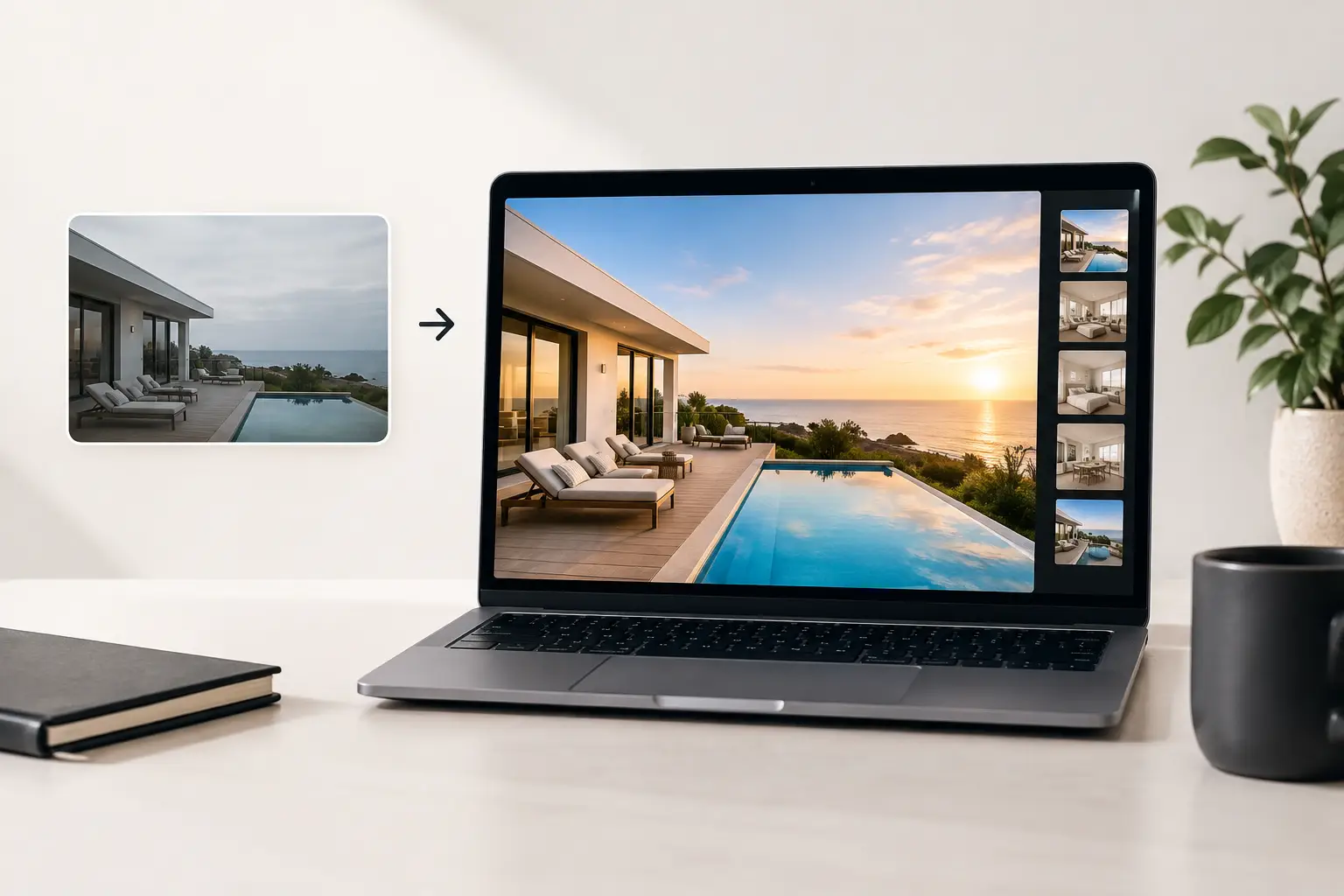
A traveler may see your lead photo at the size of a postage stamp, beside dozens of competing stays. That is why the effort to improve listing hero image performance should begin with a practical question: does this photo make the property feel clear, credible, and worth a closer look before a guest reads a single detail?
For short-term rental operators, the hero image is not simply the nicest photo in a folder. It is the image that communicates the strongest reason to consider that specific property, quickly and truthfully. Sometimes that is a bright living room. Sometimes it is a balcony with a real view, a well-framed pool, or an exterior that immediately explains the setting. The right answer depends on what guests are actually choosing.
What a strong listing hero image needs to do
A hero image has a different job from the rest of your gallery. Gallery photos can document bedrooms, bathrooms, layouts, and practical amenities. The first image has to earn attention while setting an accurate expectation for the stay.
The best hero images usually have a clear focal point, enough visual depth to feel inviting, and lighting that allows a guest to understand the room or setting immediately. They do not require dramatic effects. In fact, a heavily stylized image can create a mismatch between the first impression and the property a guest encounters later in the gallery.
For an urban serviced apartment, the strongest lead image may be a clean, naturally lit living area that shows space and finish. For a vacation rental near the water, the outdoor area may lead if the view is both genuine and central to the guest experience. A boutique hotel room may perform better with a composed interior rather than an exterior that looks similar to every nearby building.
The point is not to make every listing look the same. It is to make the primary appeal obvious.
Start with the right source photo
Editing can elevate a usable image, but it cannot rescue every source file. Before investing in a listing refresh without a new photoshoot, review the available images at their actual resolution. Look for an image that is reasonably sharp, shows the space honestly, and has a composition worth preserving.
A phone photo can be a good candidate when it has enough detail, the room is visible, and the camera is not pointed at an extreme angle. Owner photos and cleaner-taken images can also work well when the underlying scene is sound. Realistic lighting and perspective correction can make these images feel far more considered without changing what the property is.
There are clear limits. A new professional photoshoot is usually the better choice if every available image is blurry, badly underexposed, blocked by furniture, or missing the property’s most important spaces. The same applies when a property has been fully renovated, when the layout needs documenting from scratch, or when you need a broader visual campaign rather than a targeted refresh.
A property photographer alternative makes sense when you already have usable source images and need them to look more polished, consistent, and booking-ready. It is not a substitute for photography that was never captured.
Improve listing hero image quality without changing reality
The most effective adjustments are often the least theatrical. Truthful photo enhancement gives the viewer a cleaner, clearer version of the actual property rather than an invented version of it.
Correct light and color first
Poor white balance can make a warm, welcoming room look yellow or a daylight view look cold and flat. Uneven exposure can bury details in shadows or wash out windows until the photo feels lifeless. Careful color and lighting correction should restore balance while keeping surfaces, skies, views, and interior finishes believable.
Avoid the temptation to push every image toward bright white walls and intense blue skies. If the property has moody finishes, a north-facing room, or a naturally shaded patio, the image should still reflect that. The goal is clarity, not a fictional atmosphere.
Fix perspective and horizon issues
Vertical lines that lean inward, crooked horizons, and wide-angle distortion can make a well-kept space feel amateurish. These are common in phone photography and are especially noticeable in kitchens, living rooms, hotel rooms, and exterior shots.
Perspective correction helps the room read as stable and proportionate. It can improve perceived care and make a compact room easier to understand. However, overcorrection can make furniture look stretched or create an unnatural crop, so the edit should remain restrained.
Remove distractions that do not define the stay
A cluttered counter, loose cable, cleaning supply, personal item, or an accidentally included person can pull attention away from the room. Removing distractions is often a high-value part of a refresh because it lets the property’s actual features do the work.
The line is simple: remove temporary visual noise, not meaningful property details. Do not add furniture, replace a view, change the size of a room, or create amenities that are not there. Professional-looking property photos should still show the property guests will arrive at.
Choose the image with the clearest guest promise
When several photos are technically strong, choose the hero image based on the listing’s positioning. A family-oriented home may lead with the safe, open main living area or outdoor dining space. A design-led city stay may lead with the room that best shows materials, styling, and light. A retreat property may lead with the authentic feature that cannot be replicated elsewhere, such as a fireplace, mountain outlook, or private deck.
Be cautious with bedrooms as the first image unless the bed, view, or design is truly distinctive. Bedrooms are necessary gallery content, but they often provide less immediate context than a main living space or a compelling outdoor feature.
It also helps to compare the candidate image with nearby listings in your market. This is not about copying their style. It is about noticing whether your image becomes visually muddy, overly dark, generic, or confusing at a glance. A hero image should be identifiable even when displayed small.
Build consistency across the portfolio
For teams managing dozens or hundreds of listings, inconsistency creates friction. One property may have warm, bright images; another may have blue shadows and tilted walls; a third may rely on dark owner photos. Even when each property is different, the portfolio can still benefit from a consistent standard of color, crop discipline, and visual cleanliness.
AI property photo enhancement is particularly useful here because it can help turn owner photos to booking-ready images without requiring every property to wait for a new shoot. That is valuable for new-property onboarding, seasonal updates, and underperforming listing refreshes where time and budget need to be directed carefully.
HospitalityLens focuses on this middle ground: realistic, professional-looking property photos from usable existing images. The work centers on truthful lighting and color correction, perspective fixes, clutter cleanup, and visual polish, with no fake rooms, views, amenities, or property features.
A practical review process before you publish
Before changing the hero image, view it in the context guests will experience. Reduce it to a small size, place it beside the next few gallery images, and ask whether it creates a coherent first impression. If the hero image promises a bright open home but the next photos reveal a dark, cramped space, the sequence needs more honest alignment.
Use this simple internal test: can a guest identify the room or feature, understand why it matters, and trust that it represents the property? If the answer is no, select another photo or improve the source image before publishing.
Free watermarked preview. Pay only if you like it. No card is required to create the free watermarked preview. See current pricing for unlocks, one-time packs, and subscriptions.
The strongest hero image is rarely the most edited one. It is the image that makes the real property easier to see, easier to understand, and easier for the right guest to choose.