Real Estate
Why Photo Quality Affects Perceived Property Value
Boost your listing's appeal and close sales faster by understanding how stunning, high-quality images directly increase perceived property value.
By Hospitality Lens · · 12 min read
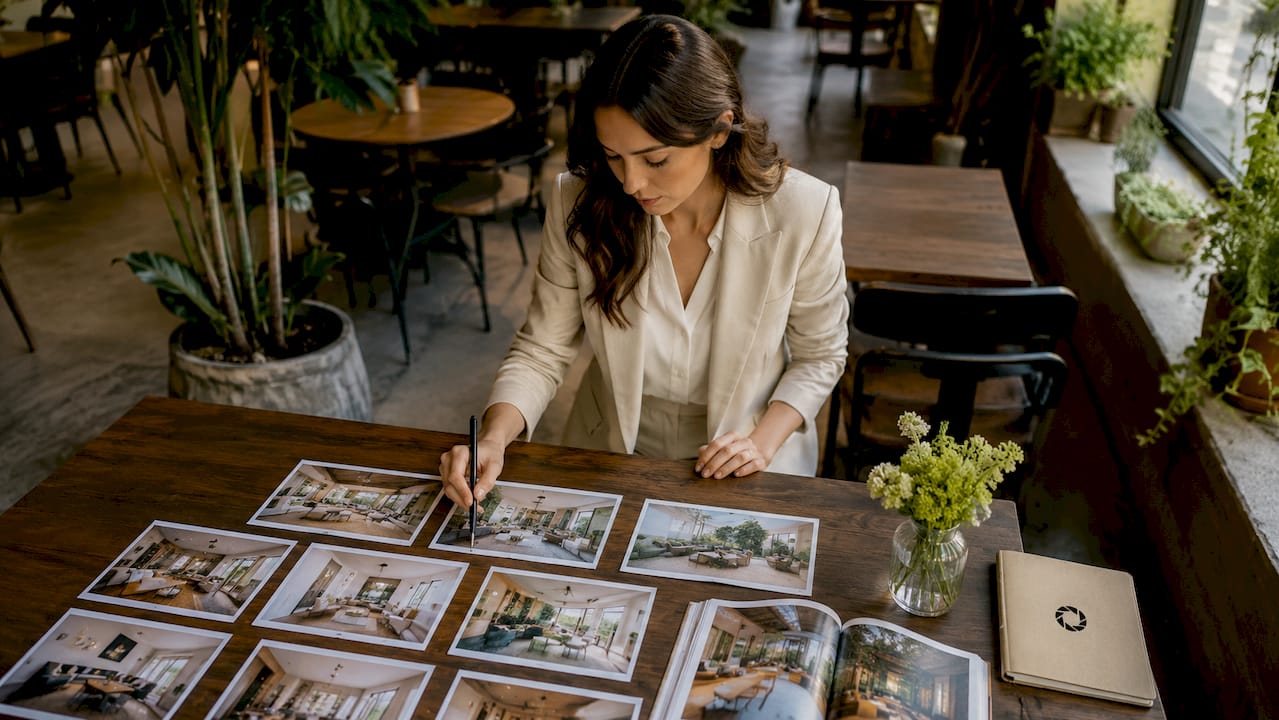
How photo quality directly shapes what buyers think a property is worth
Photo quality affects perceived property value before a buyer reads a single word of your listing description. The National Association of Realtors-576-584) reports that 85% of homebuyers-576-584) consider photos the most critical factor when evaluating a property online. That is not a preference. It is the decision point.
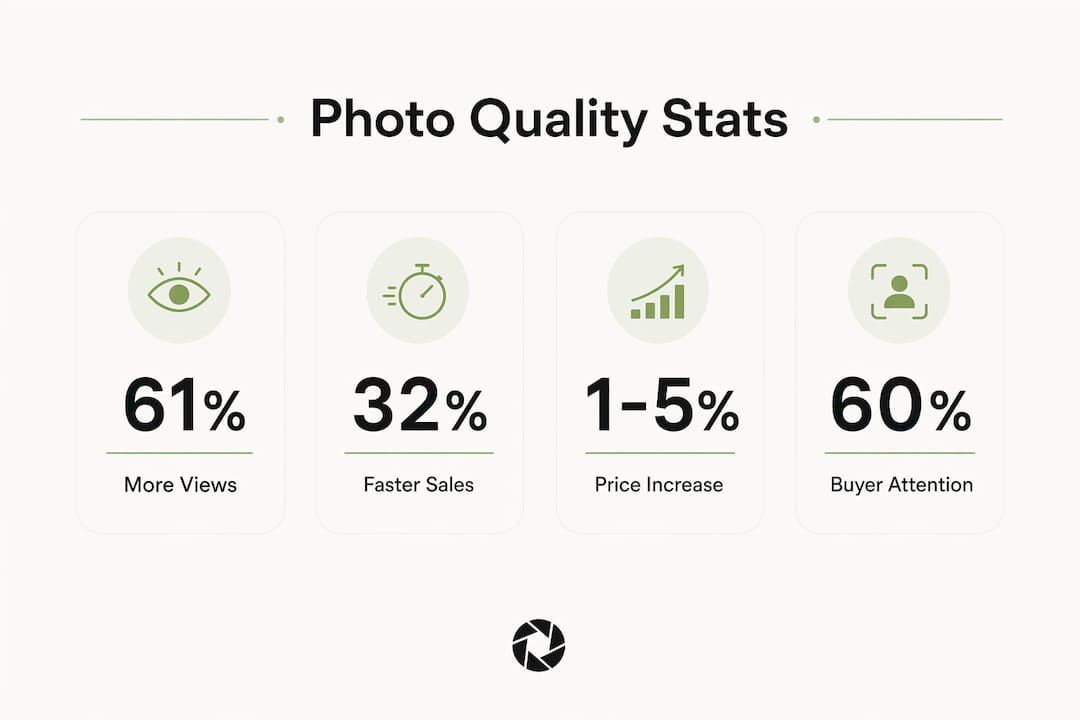
Professional-looking photos can strengthen online presentation, but there is no universal percentage increase in views, sale speed, or sale price attributable to photography alone. Those outcomes also depend on price, market, location, property condition, competition, and the broader listing strategy. The mechanism is psychological: buyers use photo quality as a proxy for the property’s condition and the seller’s professionalism.
This is signaling theory applied to real estate. A crisp, well-lit photo signals care, maintenance, and value. A dark, crooked, cluttered photo signals the opposite, regardless of what the property actually looks like in person. Buyers do not consciously run this calculation. They feel it.
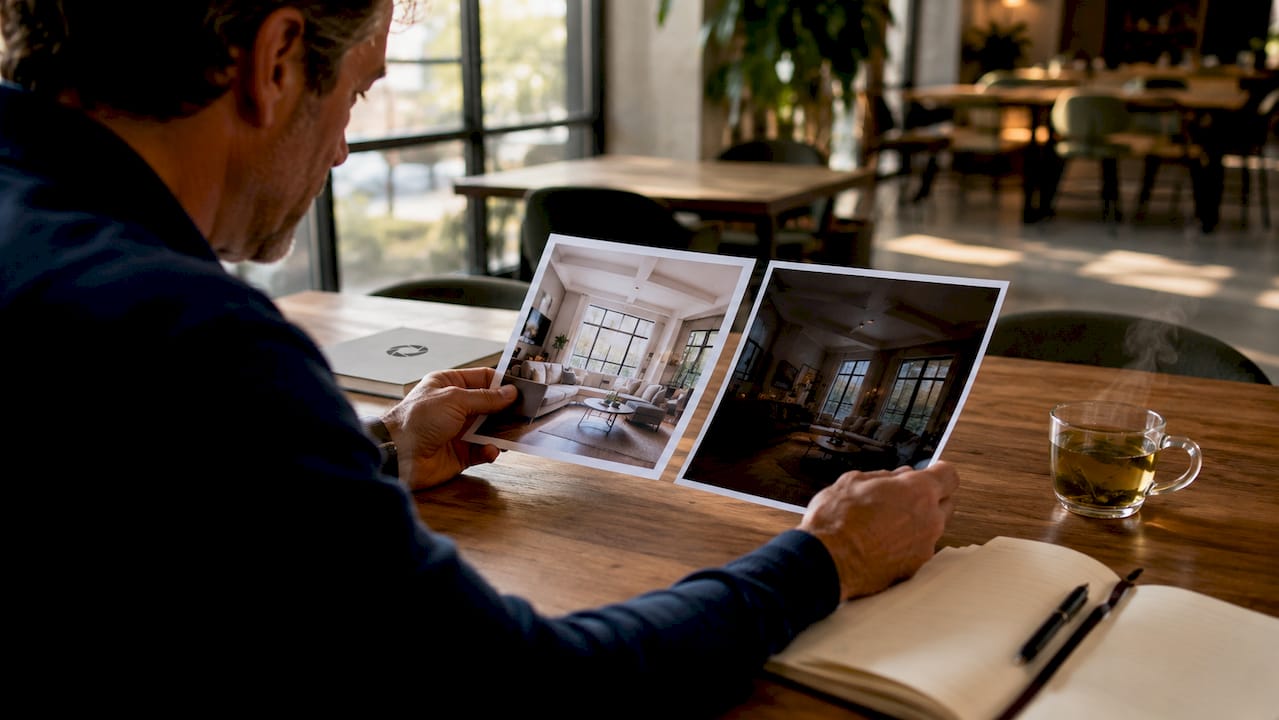
Pro Tip: Buyers use listing photos heavily when evaluating homes online. Rather than assigning a universal share of attention to photos versus descriptions, treat both as complementary: photos explain the property visually while accurate text provides details images cannot.
Why buyers’ brains respond so strongly to listing photos
The psychological process behind photo-driven valuation is well documented. Buyers process visual information faster than text, and their first emotional response to a photo often determines whether they click through or scroll past.
Signaling theory explains the core dynamic. When buyers cannot physically inspect a property, they rely on observable cues to infer unobservable qualities. Photo quality becomes one of those cues. A professionally composed image signals that the seller is serious, the property is well-maintained, and the asking price is probably justified.
Three specific visual dimensions drive this response. Composition guides the eye and creates a sense of flow through a space. Color temperature sets the emotional tone, with warm light reading as welcoming and cool light reading as clinical. The figure-ground relationship, meaning how clearly the main subject stands out from its background, determines whether a room reads as spacious or cluttered. Artistic image features, like these, systematically correlate with higher demand metrics across listing platforms.
What technically separates a good real estate photo from a bad one
The gap between a professional photo and an amateur one usually comes down to three controllable elements: lighting, composition, and camera angle.
Lighting is the most impactful. Natural light during the golden hour, combined with careful shadow management, creates a warm and inviting atmosphere that makes spaces feel larger and more comfortable. Flash photography without diffusion produces harsh shadows and flat colors that make even a well-staged room look institutional.
Composition shapes how a buyer moves through the image mentally. Leading lines, whether a hallway, a countertop edge, or a window frame, draw the eye toward the room’s best feature. Negative space around furniture lets a room breathe. Decluttering before the shoot is not optional; it is part of the composition.
Camera angle changes perceived size and feel more than most sellers realize. Wide-angle shots and perspective correction-576-584) can make a home appear 33% larger, directly affecting how buyers assess livability and value. Higher vantage points emphasize ceiling height and open floor plans. Eye-level shots work well for kitchens and bathrooms where detail matters more than scale.
Pro Tip: Technical precision and emotional appeal are not competing goals. A room that is correctly exposed, properly framed, and free of clutter will naturally feel inviting. You do not need to choose between accuracy and warmth.
How emotional storytelling in photos raises a property’s perceived worth
Photos do more than document a space. They tell buyers what their life could feel like there. This distinction between search attributes (facts like square footage and bedroom count) and experience attributes (how a sunlit kitchen feels on a Saturday morning) is where photo quality has its strongest effect on price.
Research on digital real estate platforms confirms that experience attributes in online listings have a significant positive influence on sale price, particularly for properties valued significantly above or below the neighborhood average. For luxury or unique properties, emotional photo narratives carry even more weight because buyers have fewer comparable sales to anchor their valuation.
Staging and decluttering are the practical tools for building that narrative. A clean, thoughtfully arranged room lets buyers project themselves into the space. Properties that successfully convey warmth and cleanliness through their photos see 45% more saved listings-576-584) and 60% more in-person viewing requests-576-584). Those are not vanity metrics. Saves on a platform like Zillow increase offer volume and can push the final sale price higher.
Practical ways to improve your listing photos right now
You do not need a full photoshoot to improve your listing’s visual performance. Several targeted improvements make a measurable difference.
Start with the light. Open every blind and curtain before shooting. Shoot during the day, ideally mid-morning when natural light is soft and even. Turn on all interior lights to fill shadows without creating harsh contrast. If the room still looks dark in the photo, that is a lighting correction problem that can be fixed in post-processing.
Fix the horizon. Crooked photos read as careless. A tilted room, even slightly, creates subconscious unease in the viewer. Perspective correction, whether done on-site with a tilt-shift lens or in editing, straightens vertical lines and makes architecture look intentional.
Remove the clutter. Personal items, cords, cleaning supplies, and excess furniture all reduce perceived space. A room does not need to look staged to a magazine standard. It needs to look like a place someone would want to live, not like someone is still living there mid-move.
For property managers handling multiple listings, photo enhancement best practices matter at scale. Consistent visual quality across a portfolio builds brand trust and reduces the time each listing spends on market.
How photo quality affects pricing and how long a listing sits
The price and speed effects of photo quality are well established and compound each other. Professional photography correlates with an increase in sale price of 1–5%, with the effect strongest in homes priced above $300,000. Homes with professional photos also tend to spend less time on the market compared to those with standard photos.
Faster sales protect price. A listing that sits for 60 days starts to feel stale. Buyers and their agents begin to wonder what is wrong with it, and lowball offers follow. Professional photography compresses the timeline by concentrating buyer interest in the first two weeks, which creates competition and protects your negotiating position.
For MLS listing performance, the visual quality of your hero shot determines whether a buyer clicks through at all. A clean, well-lit thumbnail with clear architectural lines stops the scroll. A dark or awkward photo gets passed over in seconds.
Common photography mistakes that quietly hurt perceived value
Most listing photo problems are avoidable. The most damaging ones tend to be:
Shooting through windows without HDR technique. When you expose for the interior, the windows blow out to white. When you expose for the view, the room goes dark. Neither version communicates what the buyer is paying for.
Including people, pets, or personal items in the frame. These details pull a buyer out of the imaginative experience and remind them they are looking at someone else’s home.
Using a phone camera without any editing. Phone cameras have improved, but they still struggle with dynamic range in mixed-light rooms. The result is photos that look flat or overly processed.
Shooting at the wrong time of day. Harsh midday sun creates unflattering shadows on exteriors. Overcast days can make interiors look gray and uninviting. Timing matters more than most sellers account for.
Skipping perspective correction. Barrel distortion from wide-angle lenses makes walls bow outward and countertops curve. Left uncorrected, it makes a room look physically wrong, even if the buyer cannot name why.
Professional vs. amateur photography: what the data actually shows
The performance gap between professional and amateur listing photos is consistent across markets and price points. Professionally photographed homes sold for between $934 and $116,076 more than comparable properties with amateur photos, according to a Redfin analysis of over 100,000 listings. That range reflects the compounding effect of price point, location, and market competition.
Amateur photos are not just aesthetically weaker. They send a signal. Buyers who see dark, poorly framed photos subconsciously assume the seller is unmotivated, the property has issues, or the agent is not invested. That assumption affects their offer, their inspection behavior, and their willingness to negotiate.
Professional photography changes the mental framework buyers bring to a showing. A buyer who arrives expecting a well-maintained property based on accurate, high-quality photos is less likely to use minor inspection findings as leverage for a lower offer.
What the research says about photo quality and sale outcomes
The evidence connecting photo quality to sale outcomes is drawn from multiple independent sources and holds across property types and markets.
Airbnb properties with verified professional images showed 8.98% higher occupancy than those with host-taken photos, based on a study of 7,423 properties over 16 months. On traditional real estate platforms, the pattern is the same: more views, faster sales, and higher prices.
For luxury and unique properties, the effect on price is especially pronounced. Research on digital platforms confirms that experience attributes have a significant impact on the sale price of uncommon properties, while their effect on average-priced homes is less dramatic. A $2 million property with amateur photos does not just look bad. It looks suspicious.
The consistent finding across all this research is that photo quality functions as a credibility signal. It does not add square footage or fix a bad floor plan. What it does is give buyers permission to value the property at its asking price.
Your listing photos, improved without booking a photoshoot
Real estate professionals and property managers who need better listing photos without the cost and scheduling friction of a full photoshoot have a practical option in HospitalityLens.
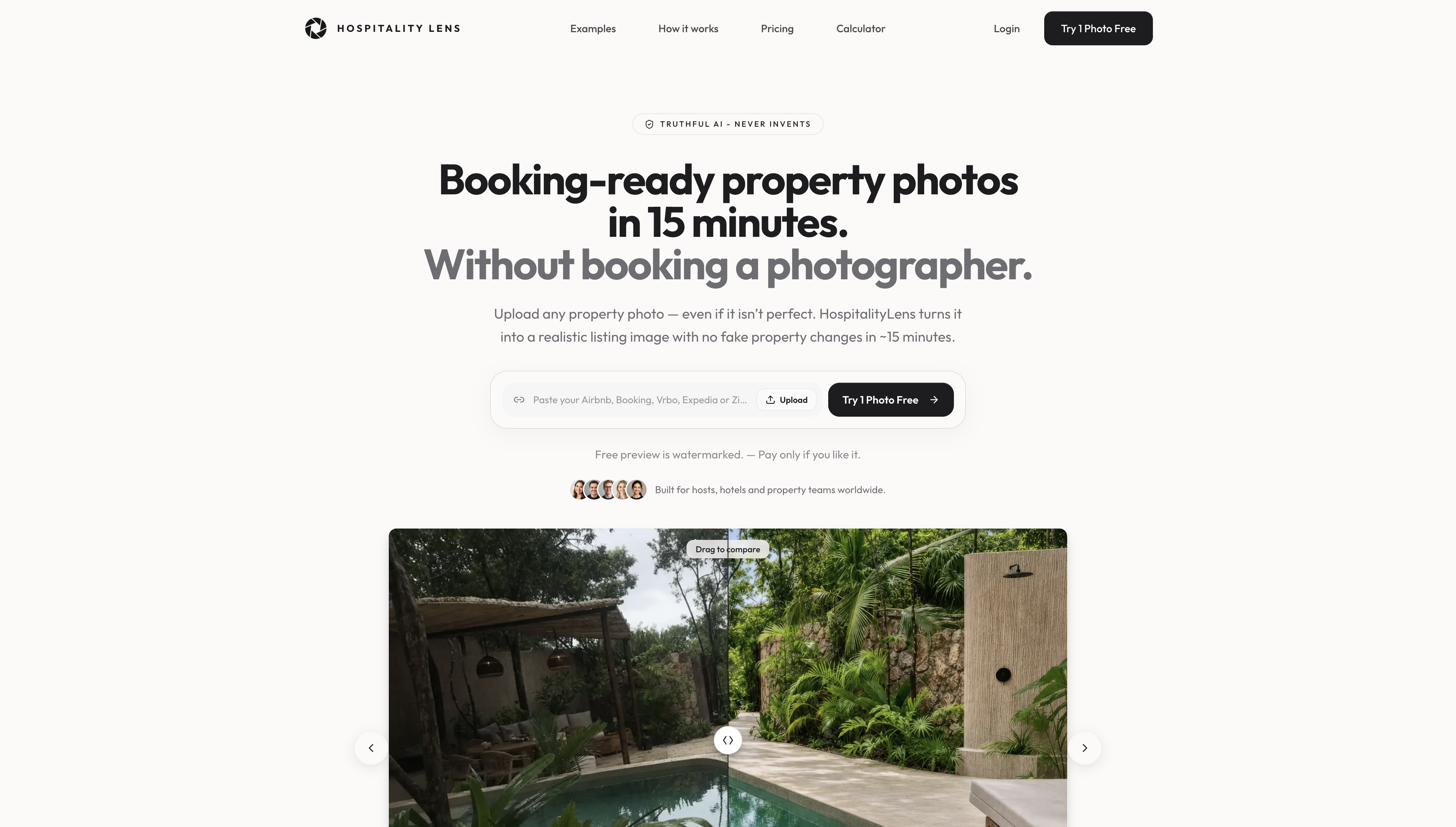
HospitalityLens takes your existing photos, whether they were shot by an owner, a cleaner, or a previous agent, and returns booking-ready enhanced images with corrected lighting, straightened horizons, removed clutter, and overall visual polish. The property stays accurate. Nothing is fabricated or misrepresented. You get images that honestly show the space at its best.
HospitalityLens offers a free watermarked preview before payment; see current pricing for the finished image, packs, subscriptions, and current revision terms. Every enhanced image includes commercial usage rights. See how it works and try your first photo before committing to anything.
FAQ
How much can photo quality affect a property’s sale price?
Photo quality can influence how buyers perceive a property online, but there is no universal sale-price premium attributable to photography alone. Final price also depends on market conditions, pricing strategy, condition, location, competition, and negotiation.
Why do buyers pay close attention to listing photos?
Buyers use photos heavily when evaluating homes online, but there is no universal percentage of attention that applies to every portal or buyer. Photos and accurate descriptions provide different information and should work together.
Does professional photography help a property sell faster?
There is no universal percentage by which professional photography makes a home sell faster. Strong images can improve online presentation, while days on market also depend on price, inventory, location, property condition, demand, and marketing.
What photo mistakes can hurt perceived value?
Misleading perspective, poor exposure, severe color casts, clutter, and images that no longer match the property can all make a listing harder to evaluate. Prioritize accurate representation over a single universal “worst” mistake.
Can HospitalityLens improve photos without misrepresenting the property?
HospitalityLens is designed for truthful enhancement of usable source photos: improving presentation while preserving the real room, layout, permanent features, amenities, and view.
Recommended