Real Estate
How Images Drive MLS Listing Performance in 2026
Elevate your MLS listings with compelling imagery that captivates buyers, accelerates sales, and maximizes your property's market value.
By Hospitality Lens · · 11 min read
TL;DR:
- High-quality listing images significantly influence MLS performance by increasing sales speed and boosting sale prices. Professional photos create a strong emotional impact, leading to higher engagement, more inquiries, and greater trust from buyers and guests. Proper sequencing, testing, and editing of photos enhance listing appeal and conversion rates.
High-quality listing images are the single most influential factor in MLS listing performance, shaping click-through rates, showing requests, and final sale prices before a buyer reads a single word of description. Images are a major part of online listing presentation. The 2025 NAR buyer report found that photos are highly useful to buyers who search online, but it does not establish a universal sale-speed, sale-price, or revenue uplift attributable to professional photography.
How professional photography impacts MLS listing engagement
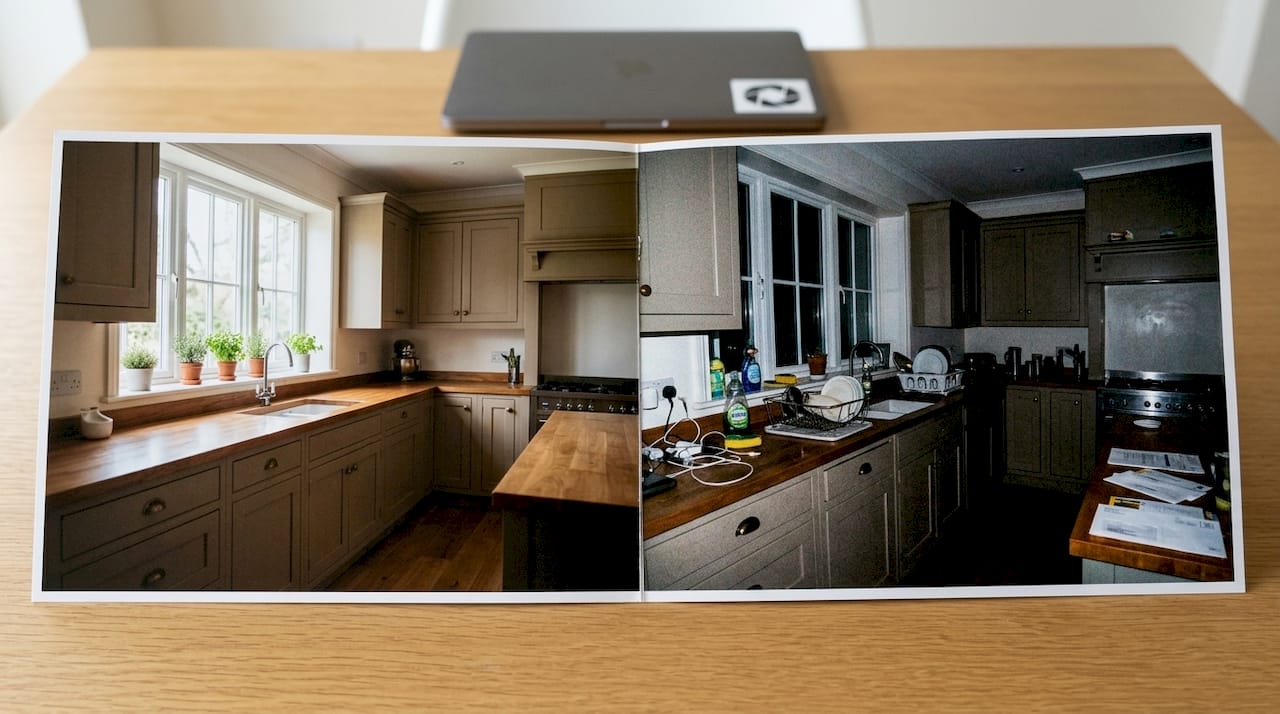
The performance gap between professional and amateur listing photos is not subtle. Professional photography can improve how clearly a listing is presented online, but sale speed and final price still depend on the property, market, pricing strategy, condition, and competition. That speed matters because days on market directly affects perceived value. A listing that sits too long signals problems, even when none exist.
The impact of photos on MLS listings extends well beyond the sale price. Video can help buyers understand a property remotely, but there is no universal inquiry uplift that applies to every listing. That figure reflects how much buyers and guests want to feel a space before committing to a showing or a booking. Aerial photography and walkthrough video amplify this effect further, particularly for short-term rental properties where outdoor spaces and neighborhood context are selling points.
Low-quality photos create a different kind of problem. Dark rooms, crooked horizons, and cluttered surfaces do not just look bad. They signal neglect. Buyers and guests interpret poor visuals as a proxy for poor property condition, even when the property itself is well maintained. The result is fewer showings, more price reductions, and longer time on market.
Pro Tip: If your listing has sat for more than two weeks without a showing, replace the hero photo before dropping the price. A fresh lead image often resets buyer perception faster than a price cut.
Listings with five or more quality images also carry significantly higher asking prices compared to those with four or fewer, with pricing disparities reaching up to 83% in some regional markets. That gap reflects how visual marketing signals confidence and value to the market.
What makes an MLS listing image convert?
The psychology behind listing photo performance is well documented. Buyers process images emotionally, with 95% of information retained visually compared to just 10% from text. The amygdala responds to a photo before the analytical brain engages. This means your listing image triggers a feeling before a buyer forms a rational opinion.
“The listing photo is emotional before it is rational. A buyer does not decide to click because the square footage is right. They click because the photo made them feel something. For short-term rental listings, that emotional response is the booking.”
For short-term rentals specifically, this emotional visualization is the mechanism behind bookings. A guest imagines waking up in that bedroom, cooking in that kitchen, sitting on that deck. If the photo does not invite that imagination, the listing gets skipped. Brightness, clarity, and honest representation are not optional. They are the conditions under which that imagination activates.
The hero image carries the most weight. Eye-tracking research confirms that buyers spend only 1–3 seconds on the first photo before deciding to click or scroll. That single image drives 90% of all click-through decisions on major listing portals. Choosing the wrong hero photo is the most expensive mistake a property manager can make, and it is also the easiest to fix.
Three qualities define a converting listing image. First, brightness: a well-lit room reads as spacious and welcoming. Second, perspective accuracy: a straight horizon and corrected verticals make a space look professional and trustworthy. Third, truthful representation: the photo should show the real property, improved but not fabricated. Guests who arrive to find a property that matches its photos leave better reviews and rebook more often. That consistency is a long-term asset.
How many photos should an MLS listing include?
Gallery size has a measurable effect on listing engagement. The optimal MLS gallery size is 22–27 photos, generating 91% more engagement compared to galleries with fewer than 15 images. Exceeding 50 photos reduces viewer retention. More is not always better. The goal is a complete, confident presentation, not an exhaustive archive.
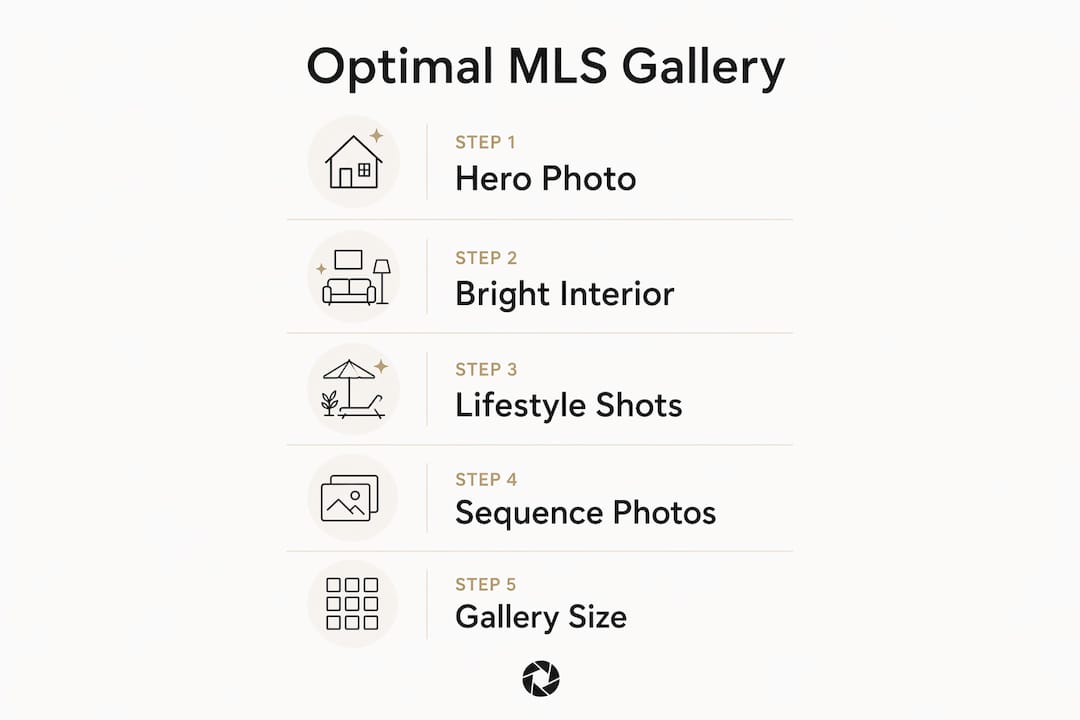
The sequence of photos matters as much as the count. Listings perform best when photos simulate a natural walk-through of the property. The sequence below reflects what buyers and guests expect to see, in the order that builds the strongest impression.
| Position |
Photo type |
Purpose |
| 1 |
Hero exterior or signature room |
Stop the scroll, create the first emotional response |
| 2–4 |
Living and dining areas |
Establish scale, light, and livability |
| 5–7 |
Kitchen |
Signal quality and functionality |
| 8–10 |
Bedrooms |
Confirm comfort and sleeping capacity |
| 11–14 |
Bathrooms and details |
Build confidence in condition and finish |
| 15–20 |
Outdoor spaces and amenities |
Reinforce lifestyle and guest experience |
| 21–27 |
Neighborhood context and extras |
Anchor the property in its location |
For short-term rental MLS listings, the outdoor and lifestyle photos carry more weight than in a traditional sale. A guest booking a vacation rental is buying an experience. A deck photo at golden hour communicates something a bedroom photo cannot. Sequence your gallery to tell that story, not just document the rooms.
Pro Tip: Shoot outdoor spaces during the hour after sunrise or the hour before sunset. Natural light at those times adds warmth and depth that midday sun cannot replicate, and it costs nothing extra.
Galleries with fewer than 15 photos signal either a small property or a lack of effort. Both interpretations reduce buyer and guest confidence. If you are managing a property with limited visual content, prioritize the spaces that matter most: the main living area, the primary bedroom, the kitchen, and one strong outdoor shot.
Practical photo strategies for short-term rental MLS listings
The most effective approach to visual content in property listings starts before the photos are taken, not after. Planning the shot list around the property’s strongest features, the guest’s likely priorities, and the platform’s display format saves time and produces better results than shooting everything and editing later.
Testing your hero photo before MLS launch is one of the highest-return actions you can take. Data-driven photo testing with a small ad budget identifies which image stops buyers mid-scroll most effectively. Aesthetic assumptions are often wrong. The photo you find most impressive is not always the one that performs best with your target audience. A modest test spend before launch can prevent weeks of underperformance.
When budget is limited, invest in quality over quantity. A gallery of 12 professionally edited images outperforms a gallery of 30 dark, crooked, or cluttered photos every time. The best practices for MLS listing photos consistently point to three priorities: correct the light, straighten the frame, and remove distractions. These three corrections alone move a photo from amateur to credible.
For short-term rental listings, lifestyle context adds measurable value. A styled coffee setup on the kitchen counter, a neatly folded throw on the sofa, or a set outdoor dining table communicates that the property is guest-ready. These details are not fabrications. They are honest signals of how the property is prepared for arrival. Guests respond to them because they reduce the uncertainty of booking a space they have never visited.
Clutter removal and perspective correction are the two most common improvements that change how a photo reads. A room that looks cramped in a raw photo often reads as comfortable after straightening and decluttering. These are not cosmetic changes. They are corrections that let the actual property show through clearly.
Key Takeaways
Professional, well-sequenced listing images are the most direct lever real estate professionals have over MLS engagement, pricing power, and booking conversion.
| Point |
Details |
| Professional photos accelerate sales |
Professional photography can strengthen online presentation, but there is no universal sale-speed or price-premium uplift. |
| Hero image drives click decisions |
The first photo is a key visual impression; choose a clear, representative hero image rather than relying on a universal decision-time benchmark. |
| Gallery size affects engagement |
Use enough images to cover the property clearly without padding the gallery with near-duplicates; there is no universal optimal photo-count engagement benchmark. |
| Sequence tells the story |
Photos ordered as a walk-through build stronger emotional connection and guest confidence. |
| Test before you launch |
Running a small ad test on hero photo candidates before MLS launch reduces weeks of underperformance. |
What we have learned from working with listing photos every day
The HospitalityLens Team has reviewed thousands of listing photos submitted by property managers, Airbnb co-hosts, and real estate agents. The pattern is consistent: the properties that struggle are rarely the ones with the worst spaces. They are the ones with the worst photos of perfectly good spaces.
The uncomfortable truth is that poor listing images do not just cost you clicks. They cost you negotiating power. When a listing sits too long because the photos failed to generate showings, sellers lose confidence. That loss of confidence translates directly into price reductions that would not have been necessary with better visual presentation from day one. Professional media protects commissions by reducing the risk of stale listings and the pressure to discount.
We also see agents treat photography as a one-time expense rather than a repeatable asset. For short-term rental properties, seasonal photo refreshes matter. A property photographed in winter looks different in summer, and guests booking a summer stay respond to summer photos. Keeping your visual content current is not vanity. It is accuracy.
The agents and managers who build strong reputations in this market are the ones whose listings consistently look trustworthy. Not perfect. Trustworthy. That distinction matters because buyers and guests are skeptical. They have seen enough misleading photos to approach listings with caution. When your photos are honest and well-prepared, that skepticism works in your favor.
— The HospitalityLens Team
Real estate professionals managing short-term rental listings often face a practical problem: the photos they have are not good enough, and booking a photoshoot takes time and budget they do not always have.
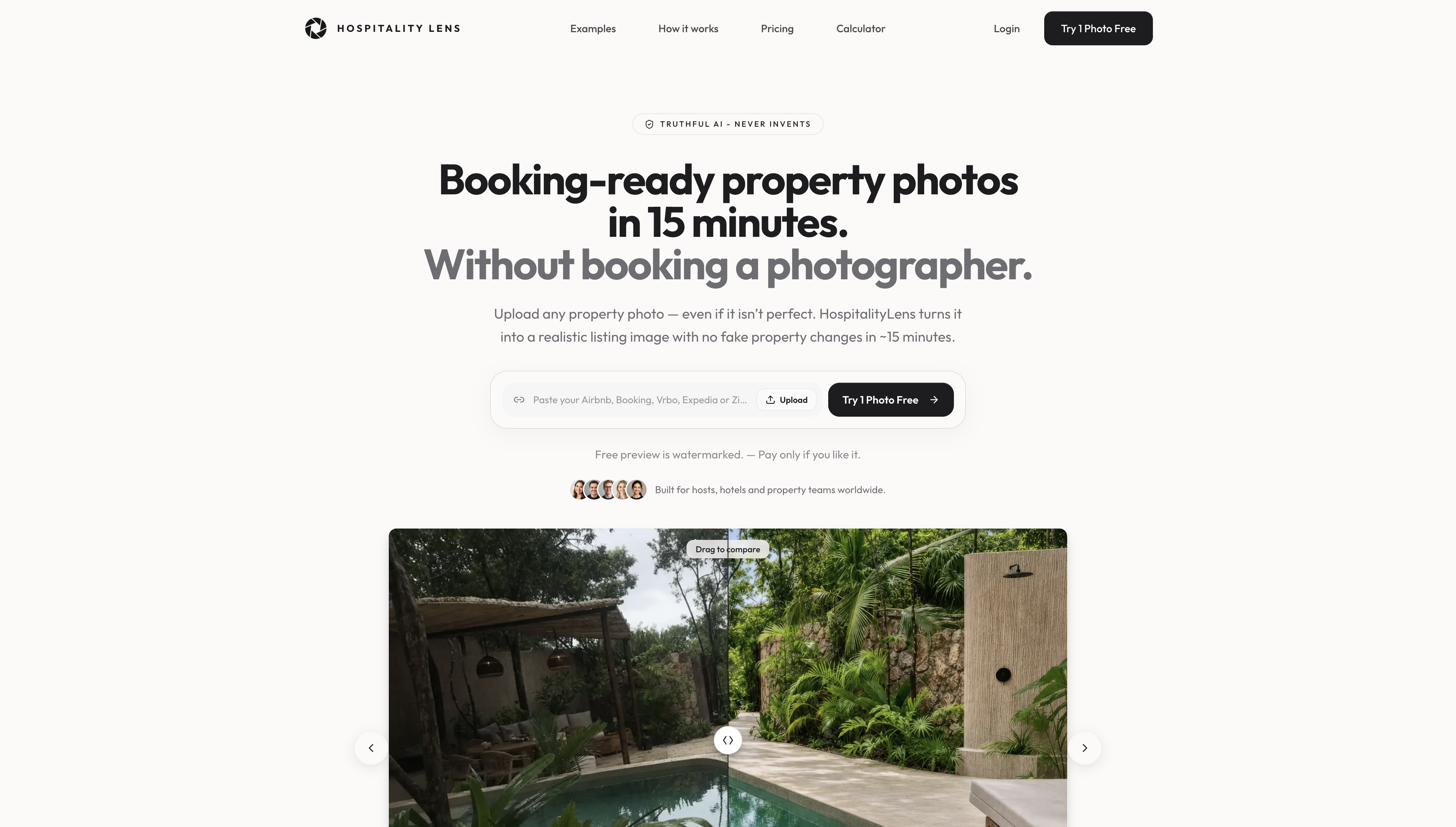
HospitalityLens addresses that gap directly. You upload the photos you already have, whether they came from a cleaner’s phone, an owner’s camera, or a previous listing, and receive professionally enhanced images with corrected lighting, straightened perspectives, and removed clutter. No photoshoot required. Commercial usage rights are included. HospitalityLens offers a free watermarked preview before payment; see current pricing for finished images, packs, subscriptions, and revision terms. The step-by-step process is straightforward, and the first photo is free. You only pay if the result is worth it.
FAQ
Images help buyers evaluate a listing online, but click-through, showing requests, sale speed, and final price depend on many factors. There is no universal percentage uplift attributable to professional photos alone.
What is the ideal number of photos for an MLS listing?
The optimal gallery size is 22–27 photos. Galleries in this range generate 91% more engagement than those with fewer than 15 images, while galleries exceeding 50 photos reduce viewer retention.
Why does the hero photo matter so much?
Buyers spend only 1–3 seconds on the first photo before deciding to click or scroll. That single image drives 90% of all click-through decisions on major listing portals, making it the highest-impact choice in the entire gallery.
What photo improvements have the biggest impact on short-term rental listings?
Lighting correction, perspective straightening, and clutter removal produce the most consistent improvement. These corrections let the actual property show clearly, which builds guest trust and reduces booking hesitation.
How should photos be sequenced in an MLS gallery?
Start with the strongest exterior or signature room, then move through living areas, kitchen, bedrooms, bathrooms, outdoor spaces, and neighborhood context. This sequence simulates a natural walk-through and builds emotional connection progressively.
Recommended