Real Estate
Avoid MLS Flags: Bathroom Photo Cleanup for Property Managers
Ethically enhance your bathroom listing photos with approved edits like lighting and decluttering to attract more bookings and avoid MLS flags.
By Hospitality Lens · · 12 min read

Bathroom photo cleanup means realistic edits, lighting, color, perspective, and minor clutter removal, that make existing bathroom photos booking-ready without changing material facts about the property. Start by picking your best original shots, correcting exposure and straightening the frame, clearing temporary clutter, archiving the untouched originals, and disclosing any edit that alters what a guest would actually see in person. For teams managing more than a handful of listings, a service like HospitalityLens can do this at scale while keeping every edit truthful.
TL;DR:
- Editing bathroom photos is acceptable for lighting, color, perspective, and temporary clutter, but not for altering fixtures, room size, or structural damage.
- Consistent workflows involve selecting high-quality originals, applying automatic corrections, removing clutter carefully, and maintaining disclosure for any material changes.
- Upload images at roughly 1200×800 pixels in JPEG format at 80–90 percent quality, with sRGB color profile, to avoid quality loss or color inconsistencies.
- Disclosures are mandatory if edits change material facts, such as adding or removing fixtures, with California’s AB-723 requiring original uploads alongside altered images from January 2026.
- A free, watermarked photo preview from HospitalityLens allows testing edits before committing to full cleanup, suitable for minor fixes but not for severely damaged or poorly shot photos.
HospitalityLens
See Your Bathroom Photo Improved
Upload a usable bathroom photo and review a realistic, watermarked enhancement before deciding whether to purchase the completed image.
Try one photoTable of Contents
What Counts as a Legitimate Bathroom Photo Cleanup?
Editing a bathroom photo the right way means fixing how the room reads, not what the room is. Lighting correction, white balance, straightening a crooked shot, cropping out a hallway, and clearing a countertop of toothbrushes and shampoo bottles all fall inside that boundary. Removing a towel rack, hiding a water stain on the ceiling, or making a shower stall look bigger than it is does not.
Here’s the priority order worth following on nearly every bathroom photo that needs work:
- Declutter first. Clear toiletries, trash cans, bath mats, and personal items before anything else, since clutter is the single biggest reason bathroom photos underperform.
- Fix exposure and white balance next. Bathrooms are notoriously yellow under vanity lighting or blue near frosted windows, and this single correction often does more for booking appeal than anything else on the list.
- Straighten the perspective. A tile line or vanity edge running downhill reads as sloppy even when the room itself is fine. A rotation of a degree or two, rarely more than three, usually solves it.
- Kill glare and reflections. Flash bounce off mirrors and glossy tile is common in phone photos and easy to tone down without touching the fixtures underneath.
- Remove people and personal items. A toothbrush in a cup or a robe on a hook is fine to clean up; a person reflected in the mirror needs to go entirely.
- Leave minor stains for judgment calls. Small grout discoloration can be softened, but a cracked tile or water damage on drywall is a repair issue, not an editing one.
What you should never touch: permanent fixtures, tile or countertop material, the size or shape of the room, and any structural damage. If a shower door is broken or a tub has visible rust, that is a maintenance problem the camera should not be asked to solve.
Pro Tip: If a bathroom photo needs more than four or five fixes to look presentable, it’s usually faster and safer to reshoot with a phone in better light than to keep layering edits on a bad original.
How Do You Build a Repeatable Bathroom Photo Editing Workflow?
A one-off edit is easy. Editing bathroom photos across forty listings without losing consistency or creating compliance headaches takes a process. Here’s one that holds up at scale.
- Select and archive. Pick the sharpest, most representative original for each bathroom, then save it untouched in a read-only folder before any editing begins. Use a consistent suffix like
_ORIG for the original and _EDIT_v1 for the first pass, so nobody accidentally edits over the source file.
- Run baseline automated corrections. Auto-exposure, white balance, and lens distortion correction handle most of the heavy lifting and are safe to accept by default since they don’t change what the room actually looks like.
- Do manual cleanup by hand. Remove clutter, cords, and personal items, then check every mirror and glossy tile surface for reflections that no longer match the room after an object is gone. Mismatched reflections are the single most common tell that a photo has been over-edited.
- Correct perspective and match composition. Straighten verticals and keep the camera height and framing consistent across a bathroom’s full photo series, so the sink shot and the shower shot don’t look like they came from two different visits.
- Export with a preset and batch process. Apply the same export settings across the listing’s photo set rather than tweaking each image individually, which keeps galleries visually consistent.
At any point in this workflow, if a fix would change a material fact, missing tile replaced, a vanity swapped, a window added, stop and flag it for disclosure or a fresh photoshoot instead. That gating decision matters more than any single editing technique, and it’s worth training every editor on your team to recognize it before they touch a batch of photos. The difference between AI editing and traditional retouching often comes down to exactly this discipline.
What Do Airbnb and MLS Rules Actually Allow?
Platforms and MLS systems generally agree on the boundary: edits are fine when they don’t change how the property is represented, and they require disclosure the moment they do. CRMLS guidance treats lighting, sharpening, white balance, color correction, angle, straightening, cropping, and exposure as acceptable adjustments. Anything that adds or removes elements from the scene counts as a digitally altered image, and CRMLS requires the original photo be uploaded alongside it with clear labeling.
California’s Assembly Bill 723, effective January 1, 2026, formalizes this at the state level. AB-723 requires disclosure whenever a listing photo has been digitally altered, and it recommends uploading the unedited original alongside the altered version, the same habit CRMLS already encourages. Common edits like brightness and decluttering stay permitted; changes to material property facts do not, without disclosure.
Airbnb’s own host photo guidance points the same direction: realistic, detailed photos that set accurate expectations, with edits limited to brightness, contrast, cropping, straightening, and rotation. Canopy MLS goes further, requiring labeling for AI-enhanced or virtually staged images and, in some cases, watermarking photos that have been materially altered.
A practical compliance checklist covers three habits: retain every original in an archive, add disclosure text or a caption when an edit changes a material fact, and keep a one-line edit log in your listing notes so you can answer an MLS audit or a guest question in seconds rather than hours.

What File Specs Keep Bathroom Photos Looking Sharp?
Getting the edit right doesn’t matter much if the export settings ruin it. Bathrooms are small, tightly framed rooms, so compression artifacts and awkward crops show up faster here than in a living room shot.
- Orientation and size: shoot and export horizontal images where the layout allows it, at a minimum of roughly 1200×800 pixels, which Airbnb’s own guidance treats as the baseline for a usable listing photo.
- File format and quality: export as JPEG at 80 to 90 percent quality. That range keeps file size reasonable without introducing the blocky artifacts you get from over-compressing a photo with a lot of tile detail.
- Color profile: stick to sRGB. It’s the standard nearly every booking platform and browser expects, and skipping it is a common reason edited photos look slightly off once they’re live.
- Filenames and metadata: keep the
_ORIG and _EDIT_v1 naming convention through export, and decide up front whether to strip GPS metadata from EXIF data before upload, most property managers do, for privacy reasons.
- Sequencing: place bathroom photos in a logical order within the gallery, typically after the bedroom they serve, so the viewing experience matches how a guest would actually walk the space.
Build one export preset per listing type and reuse it for every batch. Testing a handful of exported images on both a desktop browser and a phone before you upload the full set catches sizing and color issues you’d otherwise only find after a guest complains.
Final Checks Before You Publish
Image quality can influence how people evaluate a listing, but there is no universal performance uplift that applies to every property. Measure clicks, inquiries, bookings, or sales on the individual listing.
- Check every reflection. Mirrors and glossy tile need to show a reflection consistent with what’s actually in the room after editing, not what used to be there.
- Verify proportions. After any perspective correction, make sure the vanity, tub, and doorway still look the right size relative to each other.
- Confirm your archive is intact. Every edited photo should have a matching original saved, and any materially altered image should carry disclosure language.
- Look for overprocessing. Halos around edges, exaggerated contrast, or oversaturated tile are signs an edit went too far.
- Check lighting consistency across the room series. A bathroom shot with warm light next to a hallway shot with cool light reads as mismatched, even if each photo is fine on its own.
Pro Tip: If a bathroom photo fails more than one of these checks after a round of edits, don’t keep adjusting it. Send it back for a reshoot or hand it to a professional photographer instead.
Why Restraint Beats Perfection in Bathroom Photo Edits

The mistake we see most often isn’t under-editing. It’s treating every editing tool as something to max out, because a slightly brighter, slightly straighter photo looks better than a dramatically transformed one that no longer matches the room a guest walks into. MLS guidance backs this up directly: the deciding factor for whether an edit is fine isn’t whether AI touched it, it’s whether it changed a material fact about the property.
HospitalityLens exists for exactly this kind of restrained cleanup: lighting, color, perspective correction, clutter removal, and object removal, applied to the photos you already have, without inventing rooms, fixtures, or amenities that aren’t there. That makes it a fast, practical alternative to a new photoshoot for listing refreshes, new-property onboarding, and portfolio-wide consistency work. It’s not the right tool for a flagship launch or a room where the only usable photo is unusable to begin with; a photographer still wins those situations. Try one photo free, watermarked, before committing to anything, and you’ll see fairly quickly which category your bathroom photos fall into.
— The HospitalityLens Team
Try One Photo Free Before You Commit to a Full Cleanup
HospitalityLens is the practical alternative to booking a new photoshoot when your bathroom photos just need fixing, not replacing. Where a professional shoot means scheduling, travel, and a day lost waiting on someone else’s calendar, you can upload a photo right now and see the result before spending a cent.
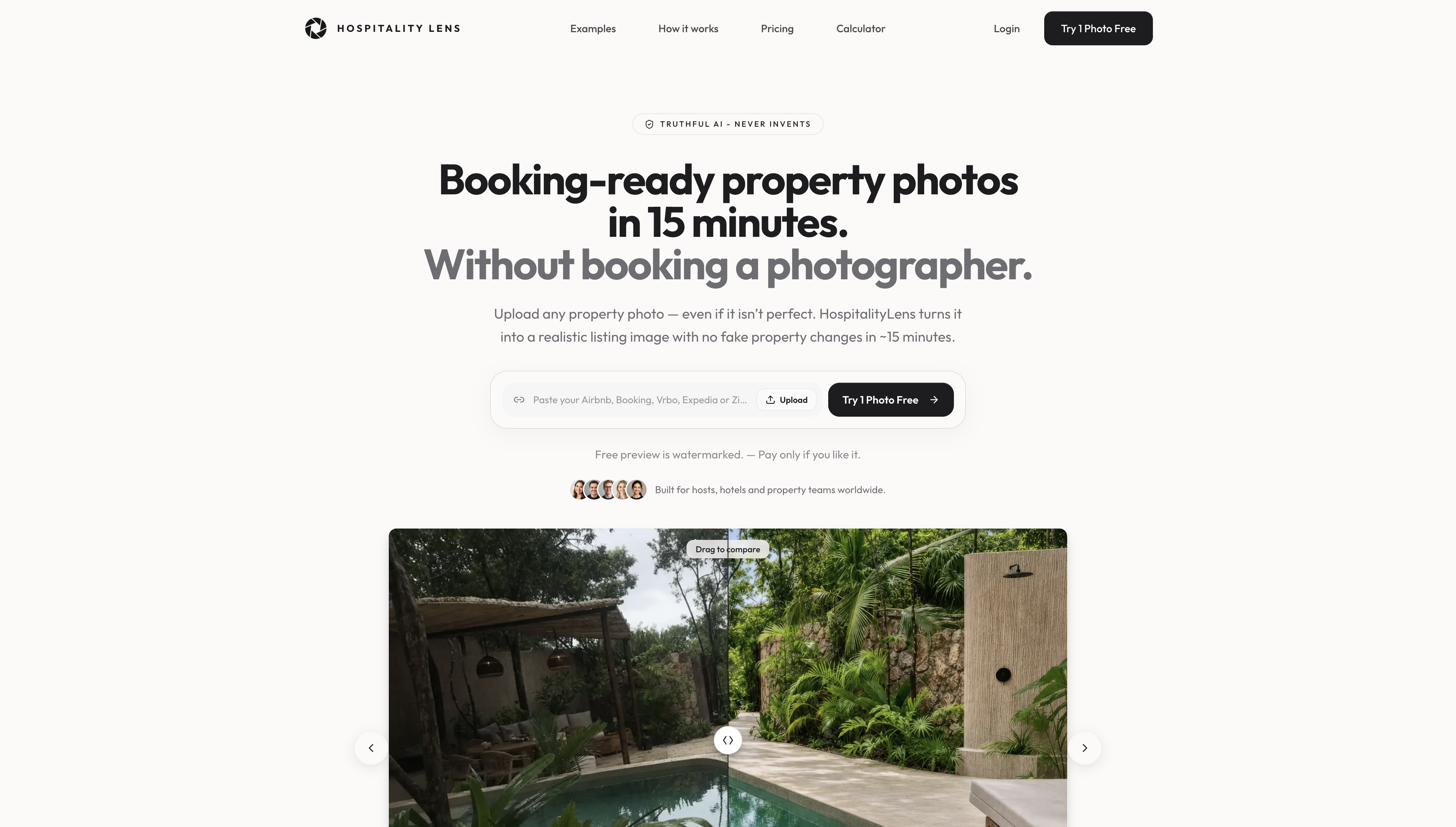
The first photo is free to preview, watermarked, so you can judge the quality honestly before paying anything. If you want the finished, watermark-free version, it’s a flat rate with two rounds of revisions included, and that first fee rolls into any pack or subscription you buy afterward. Teams juggling more than a few listings usually land on pricing built for volume, while managers overseeing a full portfolio can see how the service scales on the property managers page. If a bathroom really does need a fresh set of eyes and a tripod rather than an edit, our property photographer directory is worth a look instead. Whichever route fits, keep your originals archived either way, since disclosure rules don’t disappear just because the edit was fast.
Where to Verify These Rules Before You Publish
Save these primary sources in your listing team’s compliance folder rather than relying on secondhand summaries. CRMLS’s digitally altered image guidance spells out exactly which edits require labeling and originals. Airbnb’s host photo resource covers technical minimums and composition. Canopy MLS’s disclosure notes and AB-723 guidance explain when disclosure becomes mandatory rather than optional. If a bathroom needs physical decluttering before any photo gets taken, a service like AAA Movers’ decluttering and staging team can handle that groundwork.
Sources
FAQ
What edits are safe to make on bathroom listing photos?
Lighting, white balance, color correction, straightening, cropping, and removing temporary clutter are all generally acceptable under CRMLS guidance and Airbnb’s photo recommendations. Edits that remove or add fixtures, change materials, or alter the room’s actual size require disclosure.
When does a bathroom photo edit require disclosure?
Disclosure is required whenever an edit changes a material fact about the property, such as adding or removing a fixture, rather than just improving lighting or straightening a crooked shot. California’s AB-723, effective January 1, 2026, formalizes this requirement and recommends pairing altered images with their originals.
Should I keep the original, unedited bathroom photos?
Yes. Archiving originals is standard practice recommended across MLS guidance, and it’s the fastest way to answer a compliance question or a guest dispute without scrambling.
How much does HospitalityLens cost per photo?
Pricing varies by image and volume; detailed current prices, packs, and subscriptions for teams managing multiple listings are available on the pricing page; the first photo is a free watermarked preview. Full details are on the pricing page.
Is AI photo editing ever the wrong choice for a bathroom?
Yes. If the original photo is unusable, poor angle, structural damage visible, unfixable lighting, no amount of cleanup replaces a fresh shoot with a professional photographer, and that’s the honest answer even when a faster fix sounds appealing.
Recommended