Photography Tips
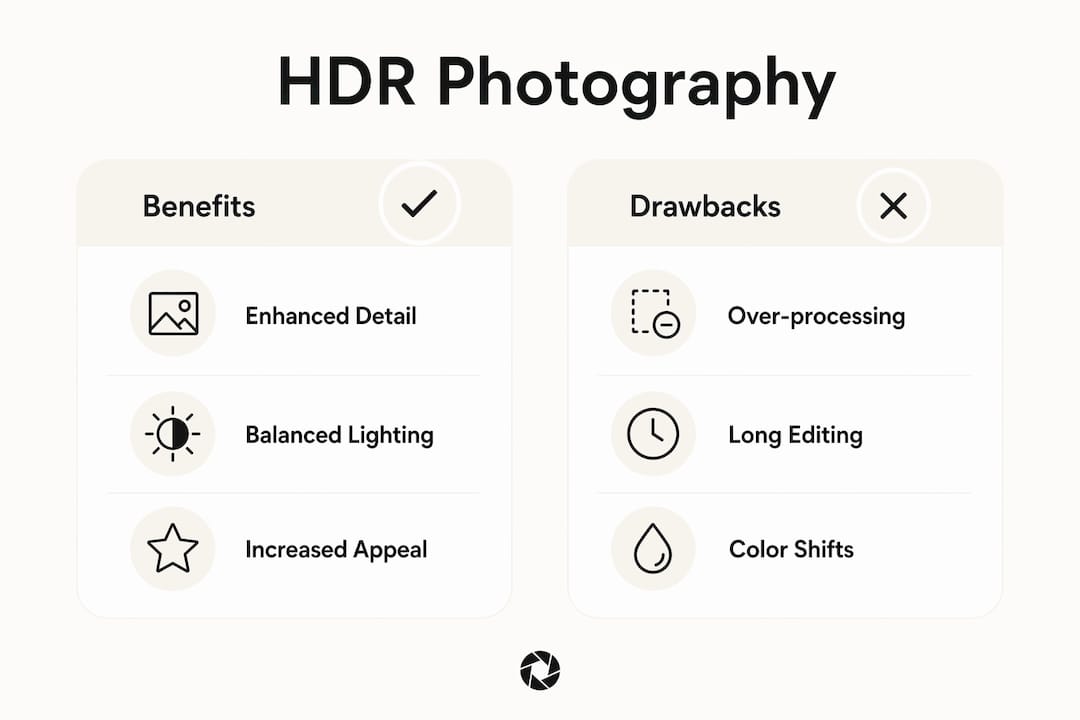
What HDR Means for Property Photos: A Real Guide
Unlock the full potential of your property listings with HDR photography, delivering stunning, balanced images that attract more buyers and sell homes faster.
By Hospitality Lens · · 15 min read
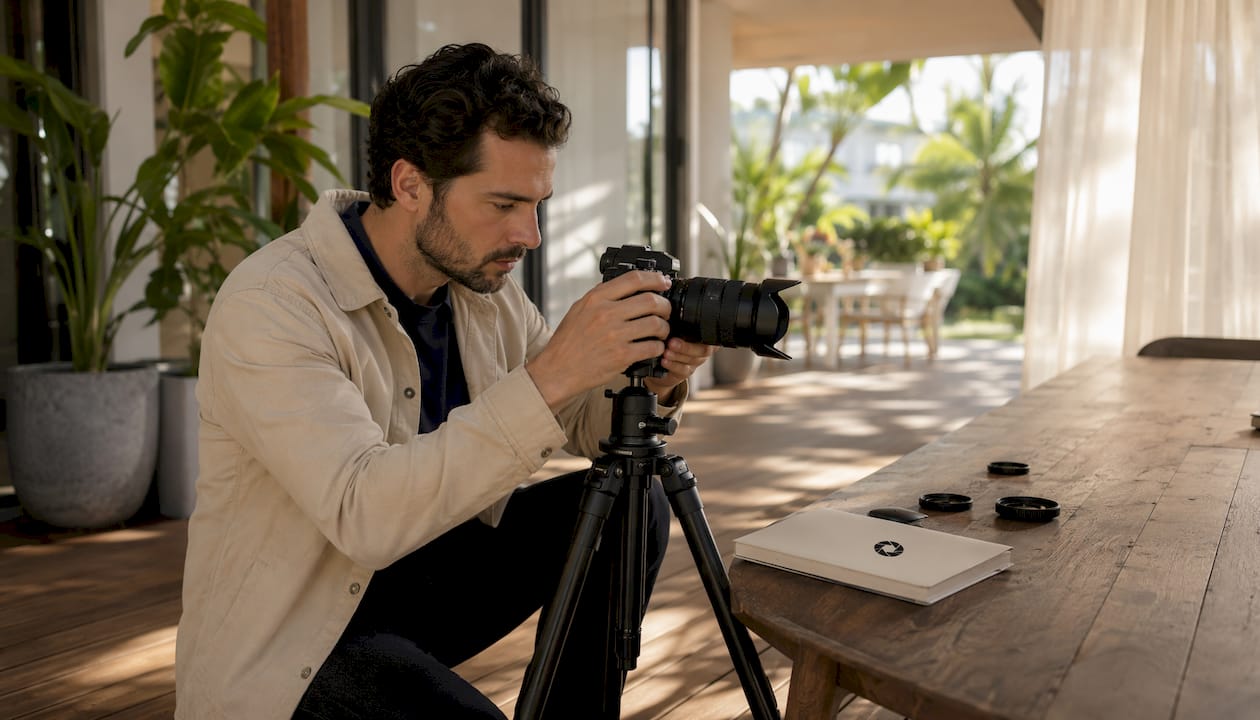
HDR stands for High Dynamic Range photography. In real estate, it means capturing the same scene at multiple exposure levels and merging those frames into a single image that shows bright windows, shadowed corners, and mid-tone walls all at once, clearly and without distortion. That is the core of what HDR means for property photos: a technique that closes the gap between what a camera sensor can record and what your eye actually sees when you walk through a room.
Camera sensors capture roughly 10–14 stops of dynamic range. Human vision handles around 20. That gap is exactly why a single-exposure interior shot so often looks wrong: either the windows blow out to white, or the room goes dark trying to expose for the view outside. HDR solves this by blending the best-exposed version of every part of the scene.
For property listings, the practical benefits are real and specific:
- Balanced interior lighting without blown-out windows or dark corners
- Accurate color rendering across walls, floors, and furnishings
- Visible detail in both shadow areas and bright exterior views
- A more honest representation of how the space actually feels to a buyer walking through
- Greater visual appeal that holds attention longer on listing platforms
Table of Contents
Why HDR matters so much for real estate listings
The photo is the first decision point. Before a buyer reads the description, checks the price, or schedules a showing, they have already formed an impression from the thumbnail. That impression is emotional before it is rational, and a dark or washed-out photo closes the door before the conversation starts.
HDR can help balance bright windows and darker interiors when the scene exceeds the camera’s usable dynamic range. That can improve clarity when applied naturally, but widely repeated real-estate marketing figures do not establish a universal view or sale-speed uplift from HDR photography.
Practical takeaway: Use HDR when it helps represent bright and dark areas naturally; judge success by image accuracy and your own listing performance rather than an industry-wide percentage.
HDR photography also addresses a credibility problem. A photo that misrepresents a room, even unintentionally, creates distrust the moment a buyer walks through the door. When your images show the space accurately, with real light and real color, buyers arrive with accurate expectations. That alignment between photo and reality is what builds confidence and moves a sale forward.
For agents managing multiple listings, consistent photo quality across a portfolio signals professionalism. One dark, flat photo in a set of otherwise polished images pulls the whole listing down. HDR helps maintain that visual consistency from room to room and property to property.
How HDR photography works: equipment and shooting techniques
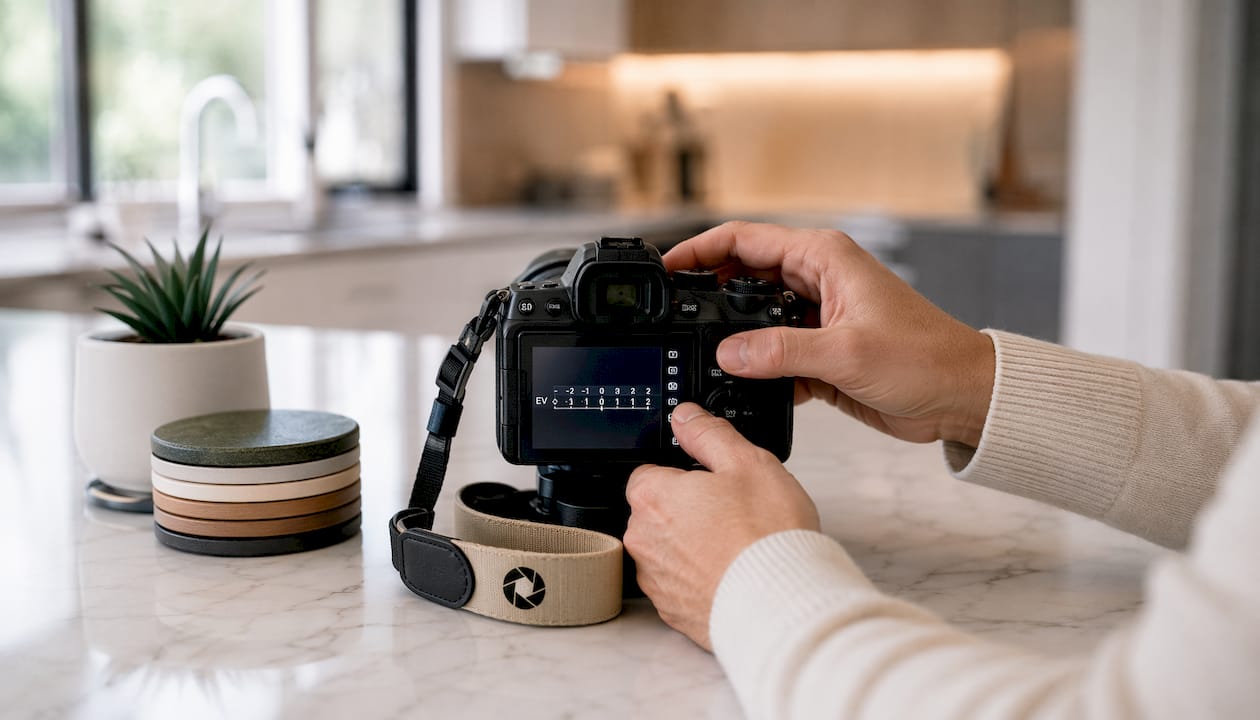
HDR starts at the camera, not the computer. The process is called exposure bracketing: you shoot the same frame multiple times, each at a different exposure value, then merge those frames in post-processing. A 5-shot bracket at 2-stop intervals is the standard for real estate interiors, typically at -4, -2, 0, +2, and +4 EV. The darkest frame preserves window detail; the brightest frame opens up the shadows; the middle frames carry the room’s natural tone.
The gear list for a clean HDR shoot is straightforward:
- A DSLR or mirrorless camera with manual or aperture-priority mode
- A wide-angle lens in the 16–24mm range for interior coverage
- A sturdy tripod, which is non-negotiable since any camera movement between frames creates alignment problems
- A remote shutter release or self-timer to eliminate vibration at the moment of capture
- Optionally, a flash or speedlight to fill shadows in very dark rooms before bracketing
Pro Tip: Set your camera to aperture-priority bracketing mode and lock your ISO at 100–400 to minimize noise across all frames. Shoot during the day when natural light is consistent, and turn off ceiling fans and close doors to reduce motion in the scene.
Timing matters more than most photographers expect. Midday light through north-facing windows is softer and more manageable than direct afternoon sun. If you are shooting a room with a large south-facing window, consider waiting for cloud cover or using a diffusion panel to reduce the contrast your bracket has to bridge.
Editing HDR photos for realistic real estate images
Merging bracketed exposures is where HDR either succeeds or fails. The goal is a photo that looks like the room, not like a rendering. Adobe Lightroom Classic’s built-in HDR merge is the most common starting point for real estate photographers: you select your bracketed frames, merge them into a 32-bit DNG file, and then apply tonal adjustments from there.
The technique that produces the most natural results is exposure fusion. Rather than applying a global tone-mapping curve to the entire merged image, exposure fusion cherry-picks the best-lit pixels from each frame and assembles them into a single wide-range image. The result avoids the halo effects and color shifts that older tone-mapping methods produced.
Editing priorities for realistic HDR real estate photos:
- Bring highlights down until window detail is visible but not gray or flat
- Lift shadows gently to reveal room detail without making the image look artificially lit
- Keep white balance consistent with the room’s actual light source
- Avoid pushing clarity or texture sliders past the point where walls start to look textured like concrete
- Check that colors match the real paint and fabric tones, not a saturated version of them
The natural look is the professional standard. Over-processed HDR, with glowing edges and hyper-saturated colors, reads as amateur work to buyers and agents alike. The image should look like a well-lit room, not a video game screenshot.
Common drawbacks and how to avoid poor HDR real estate photos
HDR done poorly is worse than a single clean exposure. The most common failure is over-processing: pushing the merge too hard produces images where walls glow, shadows look green, and the room feels unreal. Buyers notice, even if they cannot name what is wrong.
The second major problem is ghosting. Motion artifacts appear when something moves between frames: a curtain shifting in a breeze, a plant swaying, or a pet crossing the room. The merged image shows a blurred double of the moving object, which is distracting and unprofessional. Most HDR software includes deghosting tools, but they work best when the movement is minor. The cleaner solution is to eliminate motion sources before you shoot.
Other pitfalls worth watching for:
- Excessive saturation that makes walls look painted in colors the room does not actually have
- Over-sharpening that reveals sensor noise or creates an artificial crispness
- Mismatched color temperature between frames if your white balance shifts between shots
- Perspective distortion from a wide-angle lens that was not corrected in post
Pro Tip: After editing, view your final image on at least two different screens, ideally a laptop and a phone. Colors and brightness render differently across displays, and an image that looks balanced on a calibrated monitor can appear dark or oversaturated on a phone screen, which is where most buyers will see it first.
For property photo enhancement best practices that go beyond the HDR merge itself, the 2026 guidance on photo enhancement covers perspective correction, color grading, and clutter removal as part of a complete workflow.
How AI photo enhancement compares to traditional HDR workflows
Traditional HDR requires a tripod, a bracketed shoot, and 30–60 minutes of editing per property. For a photographer handling one or two listings a week, that is manageable. For a property manager onboarding ten units a month, or an agent refreshing a portfolio for a seasonal market, the time cost adds up fast.
AI-driven photo enhancement works differently. You upload an existing photo, and the system corrects lighting, color balance, perspective, and exposure in minutes rather than hours. There is no tripod required, no bracketing sequence, and no merge step. AI solutions process hundreds of photos in minutes, which makes them practical for volume work in a way that traditional HDR workflows are not.
Key features that AI enhancement handles well for real estate:
- Lighting correction on dark or unevenly lit interiors
- Perspective and horizon straightening on wide-angle shots
- Clutter removal and object cleanup without reshooting
- Color correction to match natural paint and fabric tones
- Consistent output across a full property portfolio
The honest comparison: traditional HDR gives a photographer precise control over every exposure decision, which matters for high-end architectural work. AI enhancement gives property managers and agents a fast, consistent path from a usable photo to a listing-ready image, without the equipment or editing overhead.
Pro Tip: If you already have decent single-exposure photos from a previous shoot, AI enhancement can often bring them to listing quality without a reshoot. This is particularly useful for seasonal refreshes or when a property’s decor has changed but the structure is the same.
For teams managing vacation rental listings, the speed advantage of AI enhancement is especially relevant when onboarding new properties or updating photos across a large portfolio.
How HDR affects buyer perception and engagement
A buyer scrolling through listings on Zillow or Realtor.com makes a decision about each property in under two seconds. The photo either holds their attention or it does not. HDR photography, when done well, produces images that feel inviting and honest, which is the combination that keeps a buyer on the page long enough to read the details.
The psychological effect is straightforward. A bright, balanced interior photo signals that the property is well-maintained and worth visiting. A dark or flat photo, even of a genuinely beautiful space, signals neglect. Buyers do not consciously analyze the lighting; they just feel more or less interested. HDR shifts that feeling toward interest by showing the room the way it actually looks to someone standing in it.
For agents, this translates directly into showing requests and offer timelines. A listing that generates more views and longer page engagement tends to produce more inquiries, and more inquiries compress the time between listing and offer. The ROI of professional real estate media is increasingly treated as a measurable input in listing strategy, not just an aesthetic preference.
Technical settings that produce clean HDR results
Getting the settings right before you shoot saves significant editing time afterward. These are the settings that consistently produce clean, mergeable brackets for real estate interiors:
Aperture: f/8 is the standard for real estate interiors. It gives you enough depth of field to keep foreground and background sharp without diffraction softening at f/16 or higher.
ISO: Keep it at 100 or 200. Higher ISO introduces noise that compounds across merged frames and becomes visible in shadow areas after lifting.
Shutter speed: Let this vary across your bracket. In aperture-priority bracketing mode, the camera adjusts shutter speed automatically for each exposure step, which is exactly what you want.
White balance: Set a fixed white balance before you shoot, not auto. Auto white balance can shift between frames, which creates color inconsistencies that are difficult to correct in the merge.
Exposure compensation steps: 2 EV between each frame is the standard for interiors with moderate contrast. For rooms with very large windows or direct sunlight, you may need to extend to 3 EV steps to capture the full range.
File format: Always shoot RAW. JPEG compression discards tonal information that the HDR merge needs to produce a clean result.
When HDR helps and when a single exposure is enough
HDR is not the right tool for every shot. Understanding when to use it saves time and produces better results than applying it by default.
HDR is most valuable in these situations:
Rooms with large windows. Any interior where the window view is part of the appeal, a garden, a city skyline, a water view, benefits from HDR because a single exposure cannot hold both the interior and the exterior simultaneously.
Dark or unevenly lit spaces. Basements, hallways, rooms with small windows, and spaces with mixed light sources (natural plus artificial) all benefit from the shadow-lifting that HDR provides.
High-end properties where detail matters. Luxury listings where buyers expect to see material quality, wood grain, tile work, countertop finishes, need the tonal range that HDR delivers.
Exterior twilight shots. The “golden hour” exterior shot, with interior lights glowing through windows against a blue sky, is almost always an HDR composite because the exposure difference between the lit interior and the sky is too large for a single frame.
Single-exposure photography is often sufficient for:
Well-lit rooms with no window conflict. A bathroom with a skylight and no exterior view, or a kitchen with consistent overhead lighting, may not need bracketing at all.
Exterior daytime shots in overcast conditions. Flat, even cloud cover reduces contrast enough that a single exposure captures the full range without clipping.
Spaces where flash fill is used. A well-placed speedlight can balance a room’s exposure enough that HDR is unnecessary, and the result is often cleaner because there are no motion concerns.
For hospitality properties specifically, commercial photo enhancement by Bridge PR covers the full range of scenarios where HDR, AI enhancement, or a combination of both produces the best listing result.
Your listing photos, improved without a reshoot
Getting listing-ready photos does not always mean scheduling a new shoot. HospitalityLens takes the photos you already have, whether they are dark, crooked, cluttered, or just flat, and returns professionally enhanced images that are ready for Airbnb, Vrbo, Booking.com, or a real estate listing page.
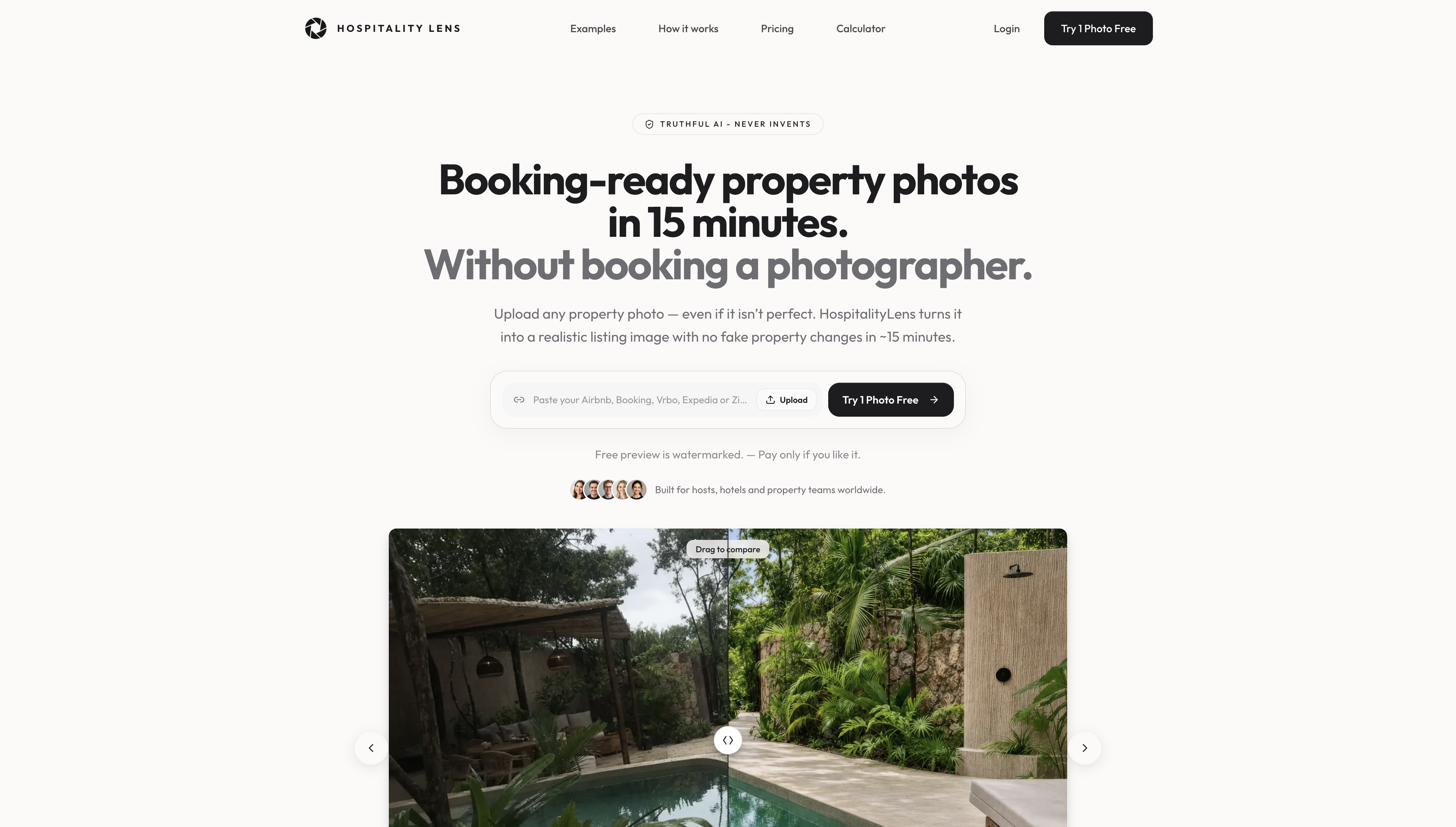
The service handles lighting correction, color grading, perspective straightening, clutter removal, and object cleanup, all while preserving what the property actually looks like. No fake amenities, no invented light sources, no misrepresentation. The result is an honest photo that shows the space at its best.
HospitalityLens offers a free watermarked preview before payment; see current pricing for finished images, packs, subscriptions, and revision terms. For property managers handling regular onboarding or seasonal refreshes, the PRO plan is built for exactly that volume.
Try one photo free and see the result before you commit. If it is not right, you pay nothing.
Key Takeaways
HDR photography closes the gap between what a camera captures and what a buyer sees when they walk through a room, and that gap directly affects listing performance.
| Point |
Details |
| HDR definition |
High Dynamic Range photography merges multiple exposures to show balanced light across bright and dark areas in one image. |
| Listing impact |
HDR can improve exposure balance when used naturally, but there is no universal view or sale-speed uplift attributable to HDR photography. |
| Shooting standard |
A 5-shot bracket at 2-stop intervals (-4, -2, 0, +2, +4 EV) is the standard for real estate interior HDR. |
| Avoid over-processing |
Exposure fusion produces natural results; heavy tone mapping creates glowing, unreal images that reduce buyer trust. |
| HospitalityLens option |
For teams without the time or equipment for bracketed HDR, HospitalityLens enhances usable existing photos with lighting correction, perspective fixes, and cleanup; see current pricing rather than a hard-coded article price. |
FAQ
What is HDR in real estate photography?
HDR stands for High Dynamic Range photography. It merges multiple exposures of the same scene to produce a single image that shows bright windows and dark interiors clearly at the same time, something a single camera exposure cannot do.
Should you use HDR for real estate photography?
Yes, particularly for interior shots with large windows or uneven lighting. HDR produces more accurate, visually appealing images that better represent the property, which supports buyer engagement and faster sales.
Should HDR be on or off for property photos?
For interiors with significant contrast between windows and room lighting, HDR should be used. For well-lit rooms with no exposure conflict, or when using flash fill, a single exposure often produces a cleaner result without the risk of ghosting or over-processing.
How do you take HDR real estate photos?
Set your camera to aperture-priority bracketing mode at f/8, ISO 100–200, with a fixed white balance. Shoot a 5-frame bracket at 2-stop intervals from a tripod, then merge the frames in Adobe Lightroom Classic or similar software using exposure fusion for a natural result.
Can AI enhancement replace HDR for listing photos?
For many listing scenarios, yes. AI enhancement corrects lighting, color, and perspective on a single existing photo in minutes, without bracketing or a tripod. It is particularly practical for high-volume property management where traditional HDR workflows are too time-intensive to scale.
Recommended