Real Estate
Photo Storytelling for Rental Listings: A Pro Guide
Boost inquiries and captivate renters by strategically sequencing property photos to tell an engaging visual story that highlights lifestyle and key features.
By Hospitality Lens · · 12 min read
TL;DR:
- Photo storytelling arranges rental listing images in a deliberate sequence to evoke emotion and help renters visualize living in the space.
- It uses film-inspired techniques like the Wide, Medium, Tight shot sequence to guide viewers logically through key areas and amenities.
- Property managers can enhance existing photos through curatorial judgment and tools like HospitalityLens, saving time and improving listing appeal.
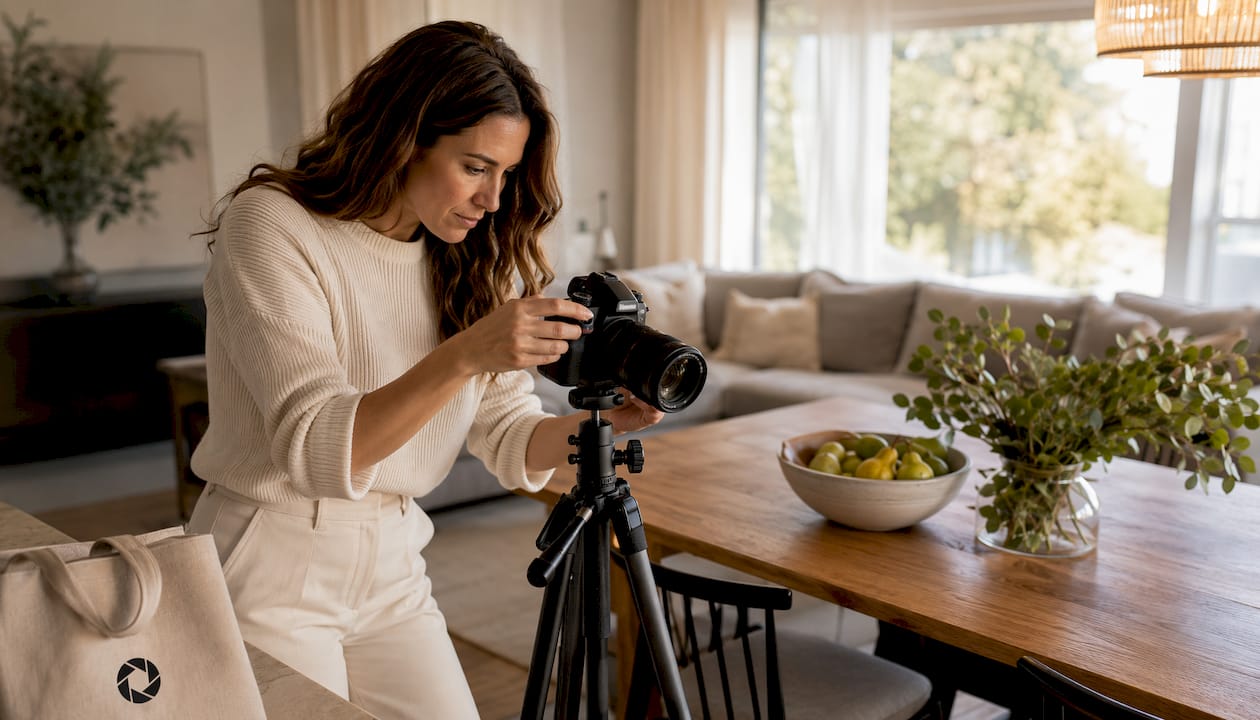
Photo storytelling for rental listings is the intentional use of curated photographs, arranged in sequence, to narrate a compelling emotional story that helps potential renters picture themselves living in the property. This approach goes well beyond standard documentation photography. Humans retain messages 22 times better when delivered as a story rather than a list of facts. That retention advantage is exactly why property managers who treat their photo gallery as a narrative, not a catalog, consistently attract more qualified inquiries. The industry term for this practice is visual narrative photography, and it draws directly from filmmaking and editorial photography principles. Understanding both terms helps you speak the language of professional photographers and listing platforms alike.
What is photo storytelling for rental listings?
Photo storytelling for rental listings is a structured approach to visual marketing where each image serves a specific role in a larger sequence. The goal is not to show every corner of a property. The goal is to answer one question in the renter’s mind: “Can I picture myself living here?”
Renters browse dozens of properties in minutes, comparing listings at a speed that leaves little room for weak photography. A gallery of flat, disconnected room shots fails to hold attention. A sequenced visual narrative pulls the viewer through the property the way a good short film pulls an audience through a scene. The listing photo is emotional before it is rational.
The distinction matters for property managers because it changes how you plan, shoot, and curate images. You are not documenting square footage. You are building a case for why this property fits a specific lifestyle. That shift in mindset is the foundation of effective photo storytelling for real estate and short-term rental listings alike.
What are the core techniques of photo storytelling for rental listings?
The most reliable framework borrowed from filmmaking is the Wide, Medium, Tight shot sequence. Wide shots establish the room and its scale. Medium shots show furniture arrangement and flow. Tight shots capture the details that make a space feel lived in: a stack of books, a coffee mug on a wooden table, morning light across a linen duvet. Together, these three shot types create narrative cohesion within a single room and across the full gallery.
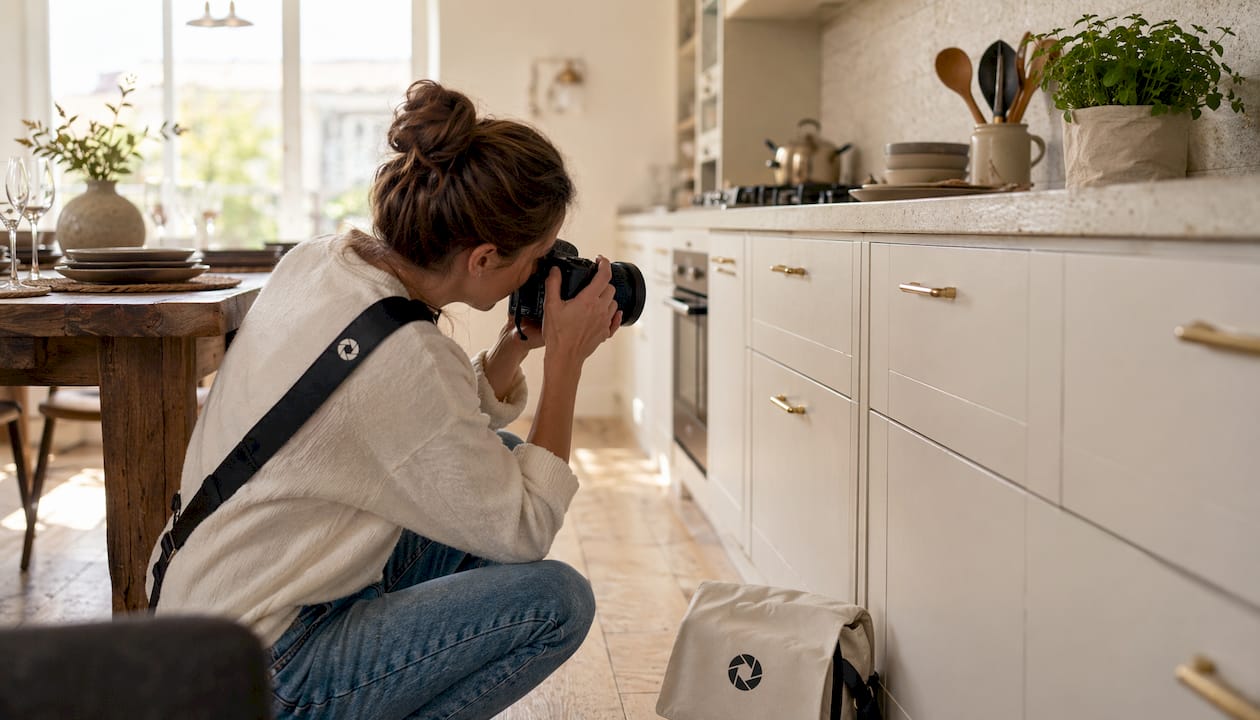
Composition shapes how a renter feels before they consciously process what they see. Shooting from a corner rather than a doorway adds depth. Including a partial foreground element, like the edge of a sofa or a plant, creates a sense of entry rather than observation. These choices signal that the space is real and welcoming, not staged for a floor plan.
Natural light is the professional standard for rental photography. Artificial lamps create inconsistent color temperatures that read as unprofessional, especially when mixed with daylight. Shoot during the brightest part of the day, turn off overhead lights unless the room has no windows, and let the natural color of the space come through. Authenticity in color builds trust before the renter reads a single word of your listing copy.
Staging for storytelling means preparing a space to feel inhabited, not sterile. A folded throw blanket, a set dining table, or a single vase of flowers communicates warmth without crossing into fiction. Authentic lived-in details build renter trust far more effectively than a showroom-perfect setup that looks impossible to maintain.
Pro Tip: Set your camera or phone at 4–5 feet off the ground, roughly eye level for a seated adult. This height maintains realistic spatial proportions and avoids the distorted, fish-eye effect that makes rooms look larger than they are.
How should rental listing photos be sequenced to create an effective story?
Sequence is where photo storytelling separates itself from standard listing photography. A strong rental gallery contains 5–20 photos, with the first three carrying the heaviest responsibility. Those three images must establish trust, communicate scale, and create emotional appeal. If they fail, most viewers leave.
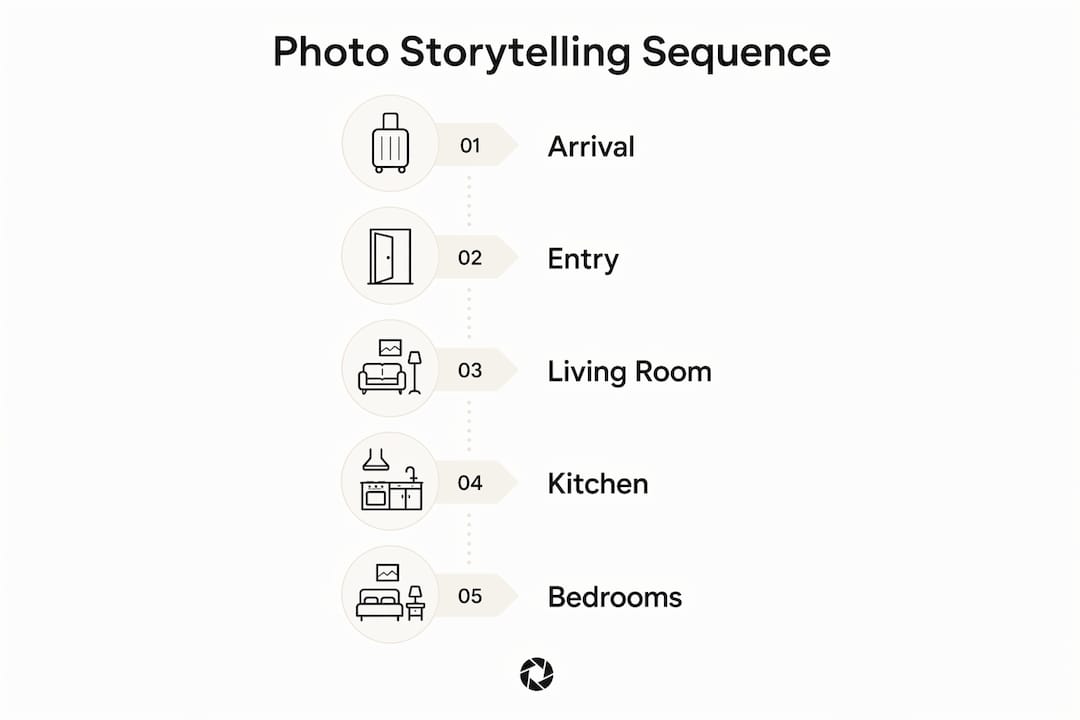
The recommended sequence mirrors the guest journey: arrival and exterior, entry impression, living spaces, kitchen, bedrooms, bathrooms, and then amenities like a patio, pool, or workspace. This order reflects how a guest would actually move through the property. It feels intuitive because it is intuitive. Renters follow the sequence without thinking about it, which is exactly the point.
| Photo position |
Primary purpose |
Common mistake |
| 1 (hero shot) |
Establish emotional appeal and scale |
Using a bedroom instead of the best exterior or living space |
| 2–3 |
Build trust and confirm layout |
Jumping to bathrooms or minor details too early |
| 4–10 |
Guide through key spaces in journey order |
Random room order that breaks spatial logic |
| 11–20 |
Amenities, details, local context |
Padding with redundant angles of the same room |
User engagement drops sharply after the third photo when viewers feel no emotional connection or cannot understand the layout. That data point explains why the first three images are not just important. They are the listing. Everything after them is supporting evidence.
Pro Tip: Place your single strongest image first, always. Property managers often save the best shot for the middle of the gallery as a “reveal.” Renters rarely get there. Lead with your best.
How does photo storytelling differ from traditional real estate photography?
Traditional real estate photography is built around documentation. The goal is to show a buyer every room, every angle, and every feature so they can assess the property before a showing. Accuracy matters more than emotion. The audience has time and motivation to study the images carefully.
Rental photography operates under completely different conditions. Renters evaluate listings quickly and respond to images that evoke emotion and lifestyle rather than sterile, technical shots. They are not buying the property. They are deciding whether they want to spend time there. That is a fundamentally different decision, and it requires a fundamentally different visual approach.
“Rental photography prioritizes evoking emotion to answer ‘Can I picture myself living here?’ rather than just documenting room layout. The camera’s job is not to record the space. It is to make the viewer feel something about it.”
Insight from professional short-term rental photography practice
The practical difference shows up in shot selection. A real estate photographer captures every bedroom with equal weight. A rental storyteller identifies the bedroom with the best light and the most character, shoots it with the Wide, Medium, Tight sequence, and gives it three times the gallery space. The other bedrooms get one clean wide shot each. Attention is allocated by emotional impact, not by square footage.
Professional photos remain the foundation for attracting renters, even as virtual tours and video walkthroughs grow in popularity. Video enhances a listing. Photography converts it. The two serve different moments in the decision process, and photo storytelling sits at the most critical moment: the first impression.
What practical steps can property managers take to implement photo storytelling?
Implementing visual narrative photography in your listings does not require a full photoshoot every time. It requires a plan. These steps give you a repeatable process.
-
Map the guest journey before you shoot. Walk through the property as a guest would. Note the arrival view, the first interior impression, the spaces where guests will spend the most time, and the amenities that justify the price. That walk becomes your shot list.
-
Stage for authenticity, not perfection. Remove clutter, personal items, and anything that dates the space. Then add three to five warm details: fresh towels, a fruit bowl, open blinds to let in light. The goal is “clean, but not sterile.”
-
Shoot each key room with the Wide, Medium, Tight sequence. Capture the full room, then a mid-range shot of the focal point, then a close detail. You will use all three in the gallery for your hero spaces and only the wide shot for secondary rooms.
-
Curate with the sequence in mind. Select images that flow logically from arrival to amenities. Cut any photo that breaks the spatial logic or adds no emotional value. A gallery of 12 strong images outperforms a gallery of 25 mediocre ones.
-
Align your listing copy with your visual narrative. If your photos tell a story about a quiet mountain retreat, your headline and description should reinforce that same story. Consistency between image and text builds trust and reduces the gap between expectation and reality.
-
Improve existing photos before reshooting. Many property managers have usable images that simply need lighting correction, perspective adjustment, or clutter removal. Services like HospitalityLens can take owner-submitted or cleaner-taken photos and return booking-ready images without a new photoshoot. That is a practical starting point for managers with large portfolios.
-
Add local context to the final gallery slots. One or two images of the neighborhood, a nearby landmark, or a seasonal view give renters a sense of place. That context is part of the lifestyle story your listing is telling.
Key Takeaways
Photo storytelling for rental listings works because it answers the renter’s core question, “Can I picture myself here?”, faster and more memorably than any list of features can.
| Point |
Details |
| Story beats facts |
Humans retain story-delivered messages 22x better, making narrative photo sequences far more persuasive than room-by-room documentation. |
| First three photos decide everything |
Curate the opening images to establish trust, scale, and emotional appeal before the viewer considers leaving. |
| Sequence mirrors the guest journey |
Order photos from arrival through amenities to create a logical, intuitive flow that holds attention. |
| Natural light builds authenticity |
Shoot in daylight with lamps off to avoid color inconsistencies that signal amateur photography. |
| Authenticity outperforms perfection |
Lived-in details like a set table or folded throw build more trust than a sterile, over-staged setup. |
What we have learned from working with rental photo galleries
The HospitalityLens Team’s perspective on photo storytelling
The most common mistake we see is not bad photography. It is bad sequencing. Property managers upload 20 technically decent photos in random order, and the gallery reads like a filing cabinet rather than an invitation. The individual images are fine. The story is missing.
The second most common mistake is over-staging. Renters in 2026 are visually literate. They recognize a space that has been dressed up beyond what any guest would actually experience. When the photos look too perfect, trust drops. We have seen listings with genuinely beautiful properties underperform because the photos looked like a furniture catalog rather than a real place someone could stay.
The uncomfortable truth about photo storytelling is that it requires restraint. You do not need more photos. You need fewer, better-chosen photos in the right order. A gallery of 10 images that follows the guest journey and uses the Wide, Medium, Tight technique will consistently outperform a gallery of 25 disconnected shots.
Technology helps, but it does not replace judgment. Photo enhancement tools can fix lighting, correct crooked horizons, and remove clutter. What they cannot do is decide which images belong in the story and in what order. That curatorial decision is yours. Make it deliberately, and your listings will reflect it.
— The HospitalityLens Team
How HospitalityLens helps property managers build better listing galleries
Property managers who want booking-ready images without scheduling a photoshoot use HospitalityLens to get there faster. You upload your existing photos, whether they were taken by an owner, a cleaner, or a previous photographer, and receive professionally enhanced images in about 15 minutes.
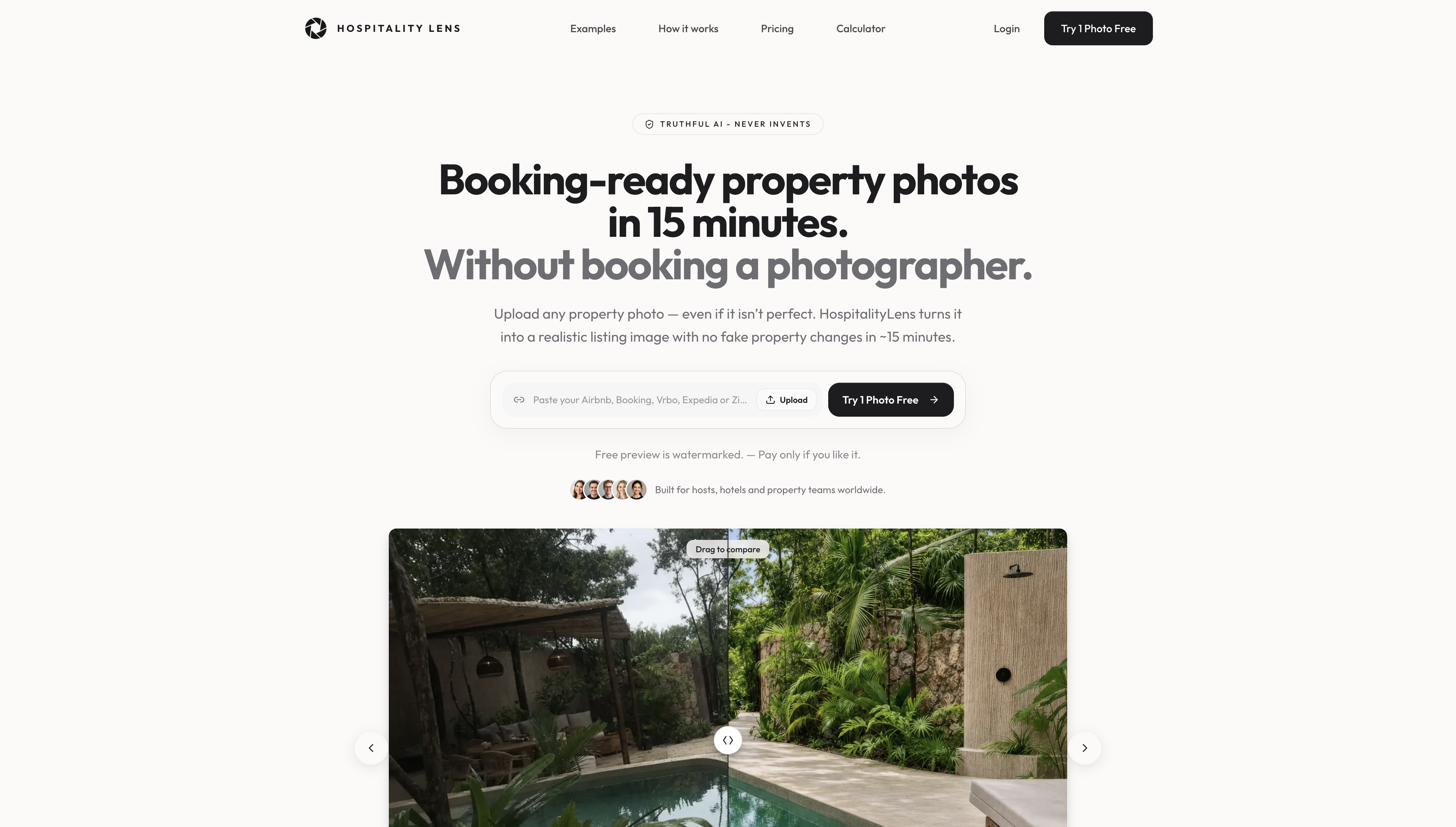
Free watermarked preview. Pay only if you like it. No card is required to create the free watermarked preview. See current pricing for unlocks, one-time packs, and subscriptions.
FAQ
What is photo storytelling for rental listings?
Photo storytelling for rental listings is the practice of arranging property photos in a deliberate sequence to create an emotional narrative that helps renters picture themselves in the space. It draws on filmmaking techniques like the Wide, Medium, Tight shot sequence to guide viewers through the property logically and memorably.
How many photos should a rental listing include?
A strong rental gallery contains 5–20 photos, with the first three images carrying the most weight for trust and emotional appeal. Quality and sequence matter more than quantity.
Why does photo sequence matter for rental listings?
Engagement drops sharply after the third photo when viewers feel no connection or cannot follow the layout. Sequencing photos to mirror the guest journey, from arrival through amenities, keeps viewers engaged and builds confidence in the property.
How is rental photography different from real estate photography?
Real estate photography documents every room for buyers who study images carefully before a showing. Rental photography prioritizes emotional appeal and lifestyle storytelling for renters who make fast decisions based on whether they can picture themselves in the space.
Can existing listing photos be improved without a new photoshoot?
Yes. Services like HospitalityLens can correct lighting, fix perspective, and remove clutter from owner-submitted or existing photos, delivering booking-ready images without scheduling a new shoot. This is a practical option for managers refreshing multiple listings at once.
Recommended