Short-Term Rentals
Why Spa and Wellness Photos Drive Bookings for Hosts
Showcase your spa and wellness amenities with stunning photos to confidently attract more guests and significantly boost your property's bookings.
By Hospitality Lens · · 13 min read
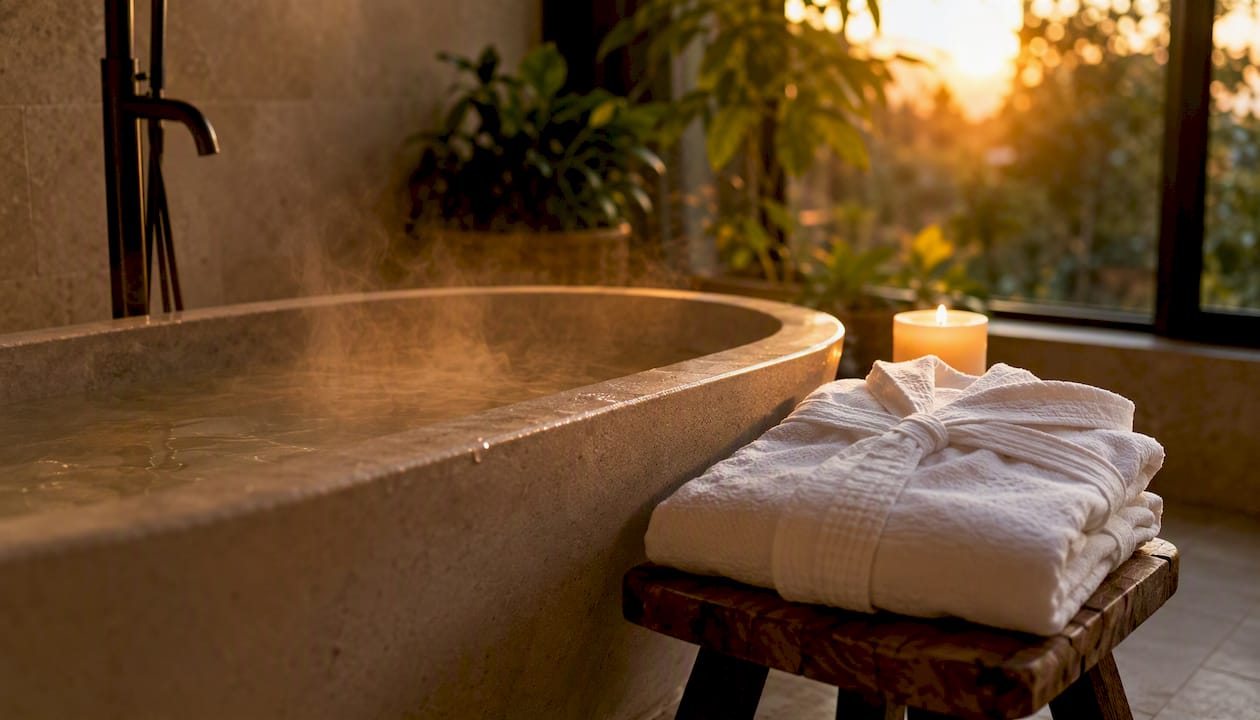
Yes — spa and wellness photos measurably increase clicks and bookings when they resolve uncertainty and surface the right wellness cues. The photo is the first decision point. Before a guest reads your amenity list or checks your price, they are already forming a judgment from your gallery. Show the spa clearly, show it well, and your listing earns the click. Bury it or skip it, and guests assume it either does not exist or is not worth mentioning.
Your single most important action: replace your current cover image with a wide, well-lit spa or wellness overview shot that includes a staged-use cue — a folded robe, a lit candle, a filled soaking tub. That one change does more for booking conversion than any other edit in your gallery.
Research supports this directly. A photo-layout study found that optimizing cover image selection was associated with roughly 11% more bookings on average in its counterfactual analysis. An eye-tracking study found wellness images with natural cues drew more visual attention and higher willingness-to-pay perceptions than images showing only built or constructed elements. And Journal of Travel Research experiments confirmed that product-focused photos — showing the facility itself — are perceived as richer in information value, which directly mediates booking intention.
Key Takeaways
Spa and wellness photos drive bookings because they reduce uncertainty, raise perceived information value, and signal the quality of an experience guests cannot verify in advance.
| Point |
Details |
| Cover image is the priority |
Optimizing the cover image was associated with roughly 11% more bookings in the MIT photo-layout counterfactual analysis. |
| Natural cues raise willingness to pay |
Eye-tracking research found wellness images with natural elements drew more attention and higher willingness-to-pay than built-cue images. |
| Product-focused shots build trust |
Facility and equipment photos score higher on perceived information value, which directly mediates booking intention. |
| Match cover to headline |
Congruency between your cover image and listing headline increases booking choices; a mismatch creates hesitation. |
| HospitalityLens for fast refreshes |
Upload existing phone or listing photos for lighting, perspective, and clutter fixes; try one photo free with a watermarked preview. |
Table of Contents
Why spa and wellness photos drive bookings: the research case
Hospitality is intangible. Guests cannot touch the sauna bench or smell the eucalyptus steam before they book. Photographs substitute for that direct experience, and the quality of that substitution determines whether a guest books or scrolls past.
Experimental research shows that perceived information value — how much a photo tells a guest about what they will actually get — mediates the relationship between photo content and booking intention. A clear, well-framed shot of your steam room tells guests more than a vague lifestyle image of someone relaxing. That specificity reduces uncertainty, and reduced uncertainty converts.
The cover image carries disproportionate weight. The MIT photo-layout study used AI-based image analysis across OTA booking sequences and found that unilateral adoption of an optimal photo layout was associated with roughly 11% more bookings on average, with 2–5 extra booked days per year in some markets.
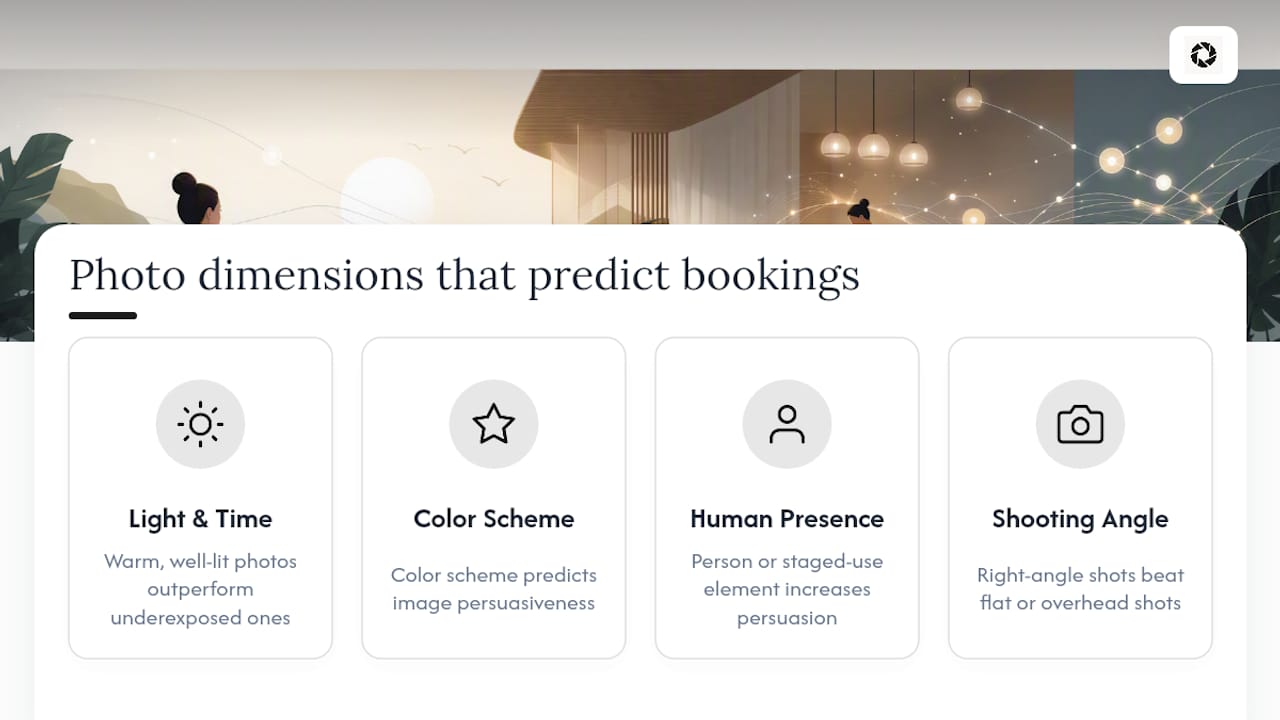
AI-powered visual analysis of hotel photos identified four dimensions that predict how persuasive an image is for booking decisions: light and time of shoot, color scheme, human presence, and shooting angle. Warm, well-lit images taken at the right angle with a person or staged-use element present consistently outperform flat, overhead, or underexposed alternatives.
What makes a spa photo actually work
The research points to three overlapping ingredients: information value, wellness cues, and aesthetic quality. Getting all three right does not require a professional shoot every time.
Information value comes from product-focused images. Show the equipment, the layout, the clean surfaces. A guest deciding between two listings with comparable prices will lean toward the one whose gallery answers their questions. What does the sauna look like inside? How large is the plunge pool? Is the steam room tiled or wood-paneled? Your photos should answer those questions before the guest thinks to ask them, offering insight like this guide on sauna for skin health.
Wellness cues matter more than most hosts realize. The eye-tracking study of older consumers found that natural elements — plants, daylight, outdoor views, wood textures — drew more visual attention and produced higher willingness-to-pay perceptions than images dominated by built or constructed cues alone. If your spa has a window, shoot toward it. If there are plants, include them in frame. Natural light and organic materials signal restoration before a guest reads a single word.
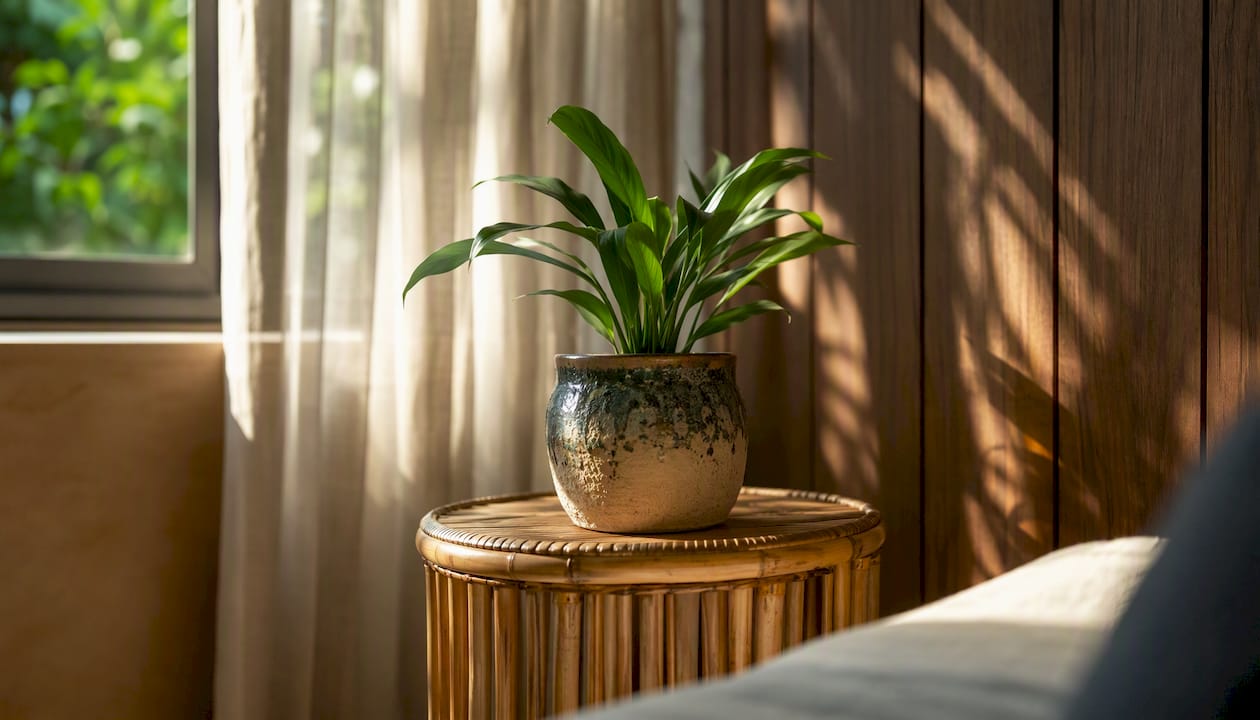
Aesthetic quality is the baseline. Research on hotel photo aesthetics identified correct exposure, a warm-to-neutral color palette, and a deliberate shooting angle as the dimensions most tied to booking influence. Crooked verticals, harsh shadows, and blown-out highlights all reduce credibility — not because guests consciously notice them, but because they make the space feel less trustworthy.
Pro Tip: Stage the space before shooting. A fresh folded towel, a lit candle, and an open robe on a hook cost nothing and signal care. Clean, but not sterile.
Your listing-ready spa and wellness shot list
A focused 6–8 image pack covers every proof point a guest needs without padding your gallery with redundant frames.
- Cover shot: Wide overview of the main spa or wellness space, well-lit, with a staged-use cue (robe, towel, filled tub). This is your highest-attention image.
- Second wide: A second angle of the same space, or the adjacent area (sauna exterior, plunge pool surround), to confirm scale and layout.
- Equipment detail: Close-up of the primary amenity — sauna benches, steam controls, cold plunge, massage table. Shows guests exactly what they are getting.
- Hygiene and turnover cue: Fresh folded towels, sealed amenity bottles, a clean treatment surface. Credibility signal that the space is maintained.
- Usage or staged-person shot: One image with a person in frame or a clearly staged session (robe on, candles lit, tray prepared). Triggers experiential association without misrepresenting the space.
- Natural cue or context shot: A window view, a plant wall, an outdoor hot tub with sky visible. Supports the restorative associations that eye-tracking research links to higher willingness-to-pay.
- Arrival or exterior context (if relevant): The path to the spa, a private entrance, or a garden approach. Helps guests visualize the full experience.
- Optional: A treatment menu card, a booking slate, or a branded amenity tray — useful for properties with curated wellness programming.
Shoot each amenity at three distances: wide for context, mid for layout, detail for proof. That discipline alone produces a consistent, professional-feeling gallery even from a smartphone.
How cover image order and headline congruency affect clicks
The cover image is not just the first photo — it is the filter. On most OTAs, the cover and the first three gallery images receive the majority of viewer attention before a guest decides to click through or move on. Quasi-experimental research confirms that representative images, meaning photos that match what the listing headline claims, increase booking choices compared to incongruent pairings.
If your headline says “Private spa suite with cold plunge,” your cover should show the cold plunge in context. A mismatch between headline and cover image creates hesitation. Guests sense the disconnect even when they cannot articulate it, and hesitation kills conversion.
On mobile, thumbnails crop aggressively. Test your cover image at thumbnail size to confirm the key element — the sauna, the soaking tub, the steam room — is still visible and centered. For platform-specific guidance on thumbnail framing, the hotel booking photo best practices resource covers OTA-specific safe zones in detail.
Organized galleries with a logical sequence — overview, context, detail, proof — outperform random collections. More photos help only when they add new information. Duplicate angles and redundant shots dilute the gallery’s credibility rather than strengthen it. If your spa listing photos attract more clicks, it is usually because the gallery answers questions in the right order.
When to hire a photographer vs. when AI enhancement is enough
The honest answer depends on what you already have and what the amenity requires.
Send a professional photographer when: the spa is architecturally distinctive, the property is a flagship launch, you need lifestyle editorial imagery for a brand campaign, or your existing photos are completely unusable — wrong angles, wrong rooms, or too dark to recover.
Use AI enhancement when: you have usable phone or listing photos that are dark, crooked, or cluttered but show the amenity accurately. Enhancement can correct lighting and color, straighten perspective, remove clutter, and clean up distractions without fabricating anything. That is the conversion-safe zone — improving visibility and clarity while keeping the space truthful.
For most portfolio-wide refreshes, seasonal updates, and new-property onboarding, enhancement is the faster and more cost-effective path. A hotel photo enhancement service pays off when the source photo shows the right thing but shows it poorly.
Current HospitalityLens pricing (USD); one-time packs — The Hero: 1 photo for $12; The Refresh: 10 photos for $59; The Property: 25 photos for $129; The Portfolio: 100 photos for $399; monthly subscriptions — THE STARTER: 10 photos/month for $49/month; THE OPERATOR: 25 photos/month for $99/month; THE PORTFOLIO: 100 photos/month for $299/month; one-time pack credits do not expire; monthly subscription credits remain valid for up to 3 months; 2 free revisions per photo on one-time packs; 3 free revisions per photo on monthly subscriptions. See current pricing.
Pro Tip: Standardize a coverage set per property type — cover, usage shot, hygiene cue, equipment detail — so every new listing or seasonal refresh follows the same brief. Consistency across a portfolio signals professionalism to guests and OTA algorithms alike.
How to measure whether your spa photos are working
A simple A/B test gives you real data instead of guesswork.
- Pick two matched listings or two comparable date windows on the same listing.
- Swap only the spa gallery cover image. Hold everything else constant — price, headline, description.
- Run the test for enough time to accumulate a meaningful sample. A minimum of 30–50 booking decisions per variant is a reasonable threshold for directional confidence.
- Track click-through rate (CTR), click-to-book conversion, average daily rate (ADR), and secondary signals like saves and inquiries.
- Check for seasonal confounds. A test that spans a holiday weekend on one side and a slow midweek period on the other is not a clean comparison.
The MIT photo-layout research suggests roughly 11% more bookings on average from optimal layout in its counterfactual model. Treat that as a hypothesis, not a promise. Your listing’s baseline, market, and amenity type all affect the actual lift. What matters is that you measure it rather than assume it.
For listings with low booking volume, track saves and page-view duration as leading indicators. Booking conversion takes longer to accumulate, but saves and dwell time respond faster to photo changes and point in the same direction.
What the evidence actually tells you to prioritize
The conventional wisdom says “get better photos.” That is true but incomplete. The research says something more specific: get a better cover image that matches your headline, shows the amenity clearly, includes a natural or staged-use cue, and is correctly exposed. Everything else in the gallery supports that first impression.
Property managers often invest in a full photoshoot when the real problem is a single underperforming cover image. Conversely, some teams skip wellness photography entirely because the spa feels like a secondary amenity — when in practice, wellness amenities drive premium spending and repeat stays and are increasingly a primary booking filter for higher-value guests.
The credibility guardrail matters just as much as the quality one. Guests who arrive and find the spa does not match the photos leave negative reviews that cost more than any photo investment. Enhancement should improve clarity, not create expectations the property cannot meet. That principle applies whether you are working with a photographer or an AI tool.
Listing-ready spa photos without arranging a new shoot
If you have phone photos of your spa that are dark, crooked, or cluttered, HospitalityLens can turn them into booking-ready listing images without scheduling a photographer. The service corrects lighting and color, straightens perspective, removes clutter and distractions, and delivers polished images that reflect the real space accurately.
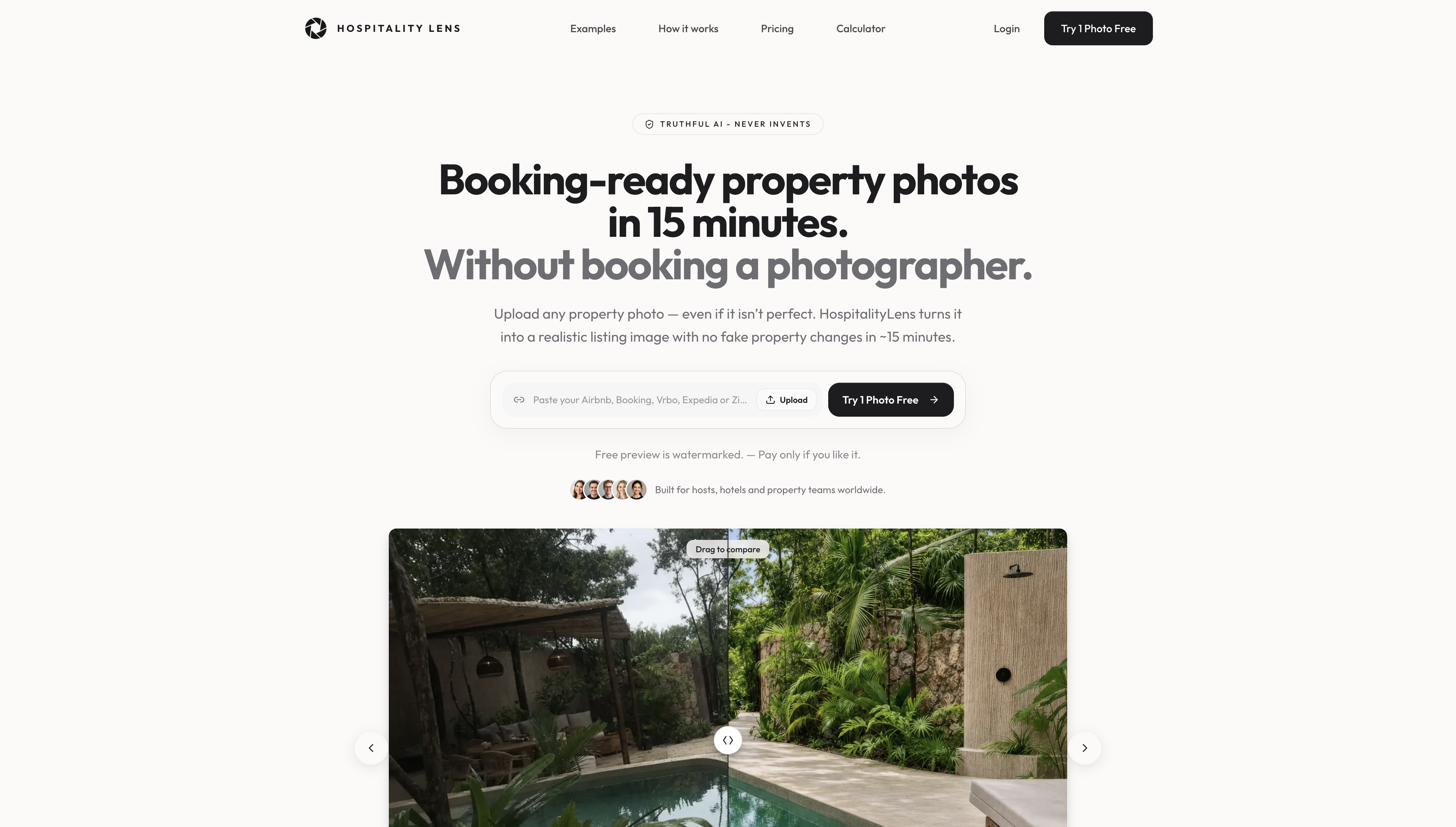
Free watermarked preview. Pay only if you like it. No card is required to create the free watermarked preview. See current pricing for unlocks, one-time packs, and subscriptions.
Try one photo free at HospitalityLens and compare the result before committing to a full refresh.
Sources
FAQ
Do spa photos actually increase bookings, or just clicks?
Both. Clicks and conversions tend to move together when the cover image is congruent with the listing headline.
How many spa photos should a listing include?
A 6–8 image pack covering the overview, equipment detail, hygiene cue, staged-use shot, and a natural-cue frame gives guests enough proof without padding. More photos help only when each one adds new information.
When does AI photo enhancement make sense instead of a new shoot?
When you already have usable phone or listing photos that show the amenity accurately but are dark, crooked, or cluttered. HospitalityLens corrects lighting, perspective, and clutter without fabricating features — a practical option for seasonal refreshes and portfolio-wide updates.
What is the most important photo dimension for booking decisions?
AI-based analysis of hotel images identified light and time of shoot, color scheme, human presence, and shooting angle as the four dimensions most tied to booking influence. Correct exposure and a warm-to-neutral palette consistently outperform flat or harshly lit alternatives.
How do I test whether a new spa cover image is working?
Swap only the cover image on matched listings or date windows, hold price and description constant, and track CTR, click-to-book conversion, and saves over at least 30–50 booking decisions per variant to reach a directional conclusion.
Recommended