Real Estate
Wide-Angle Photography's Role in Real Estate Listings
Unlock accelerated sales and increased bookings for your properties by showcasing expansive, accurate interior views that attract and engage more potential buyers.
By Hospitality Lens · · 11 min read
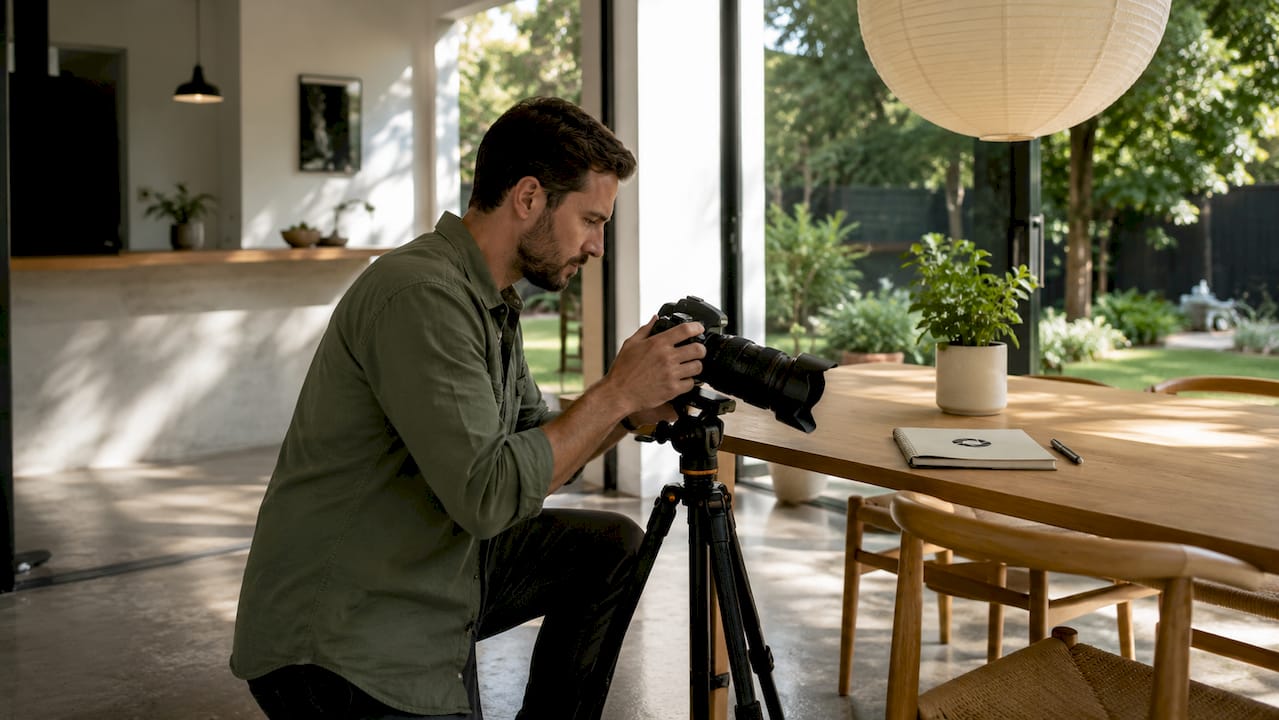
Wide-Angle Photography’s Role in Real Estate Listings
TL;DR:
- Wide-angle photography uses 16 to 35mm lenses to accurately showcase property spaces and enhance buyer perception. It increases sales speed and bookings by providing truthful, detailed images that build trust and demonstrate spatial flow. Proper technique and post-production ensure realistic, compelling listings that foster buyer confidence.
Wide-angle photography in real estate uses a wider field of view to show room context and spatial relationships in a single frame. Used carefully, it can make a listing easier to understand; it does not create a universal sale-speed, sale-price, or booking uplift, and excessive width can misrepresent proportions.
How wide-angle lenses capture space and shape buyer perception
Wide-angle lenses do more than make rooms look bigger. They communicate spatial flow, showing how a living room connects to a dining area or how natural light moves through a space. That context is what buyers actually need to decide whether a property fits their life.
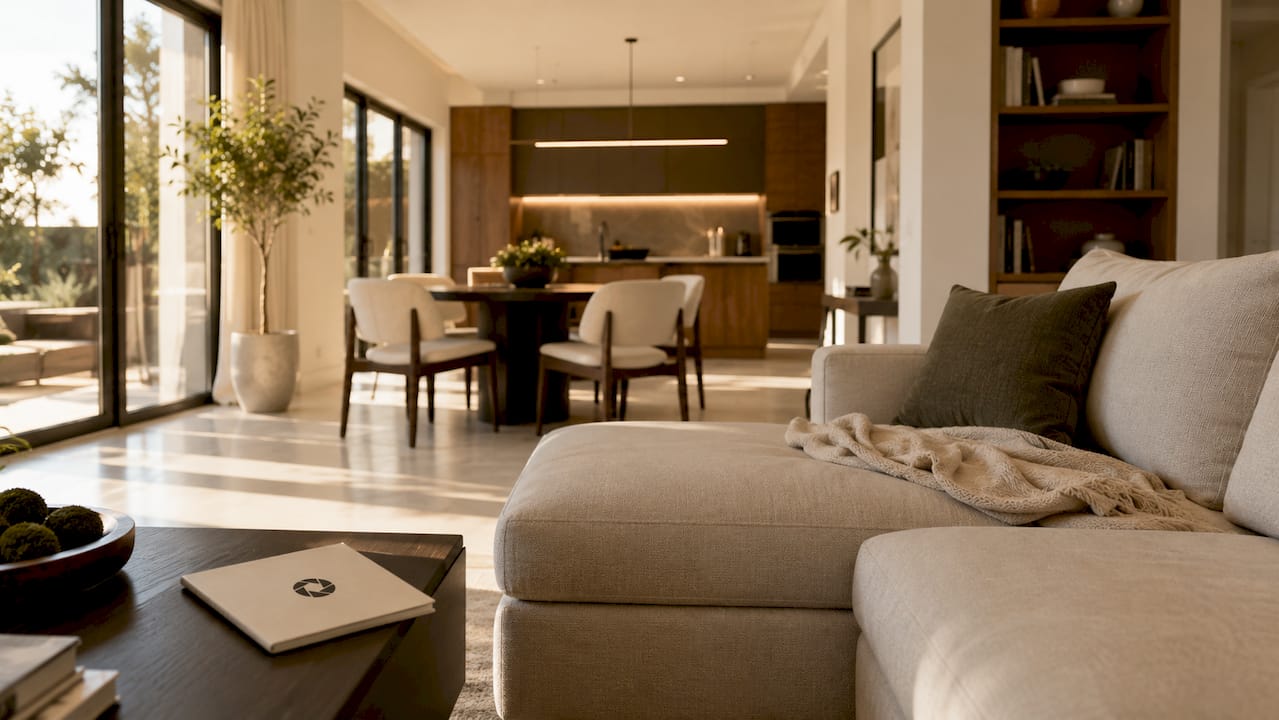
The industry standard for interior real estate photography in 2026 is a 16–35mm zoom lens on a full-frame camera, with most professionals shooting between 16mm and 24mm. At those focal lengths, you capture the full width of a room without the distortion that pushes buyers away.
Two lens types exist in this range: rectilinear and fisheye. Rectilinear lenses keep straight lines straight, which is what you want for real estate. Fisheye lenses curve walls and stretch corners, creating an image that looks nothing like the actual room. Buyers notice. Modern buyers are increasingly skilled at detecting misleading photography, which makes accuracy a competitive advantage, not just an ethical choice.
Wide-angle photos also serve buyer psychology in a specific way. A room that reads as open and connected feels livable. A room that looks cramped or cut off feels like a problem. The lens does not create that openness. It reveals it, when used correctly.
Pro Tip: Shoot from a corner at chest height, roughly 4–5 feet off the ground, to capture the most natural sense of room depth without exaggerating ceiling height.
Best practices for using wide-angle photography in listings
Getting wide-angle shots right requires more than pointing a camera at a room. Technique, focal length selection, and composition all determine whether the image builds trust or breaks it.
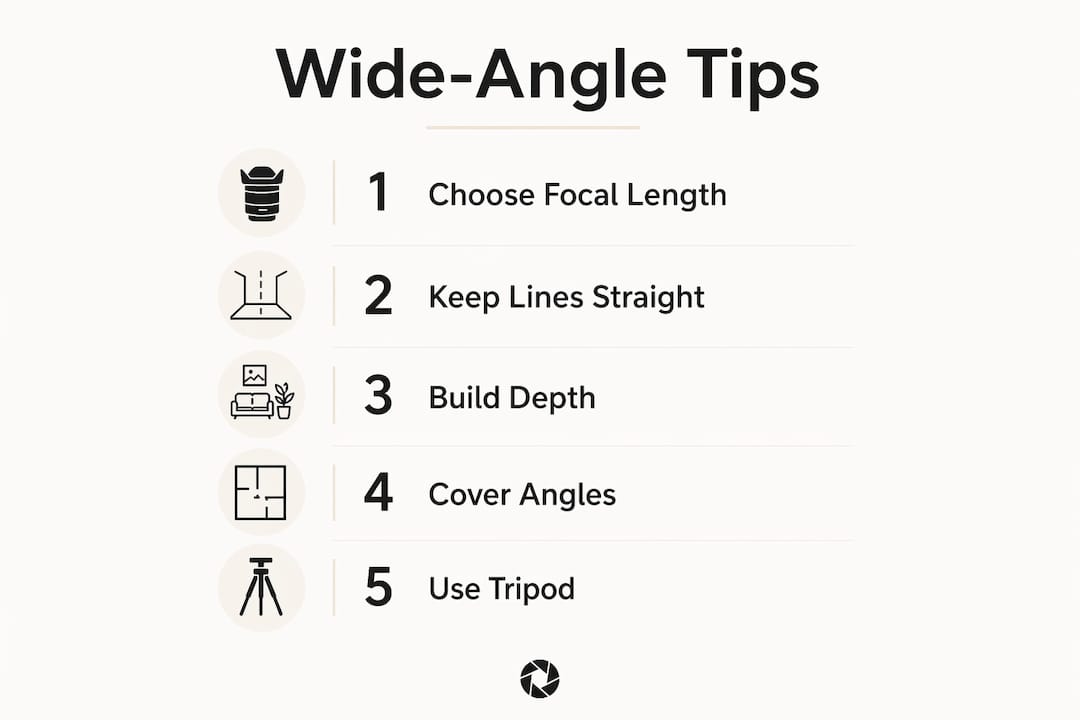
Choosing the right focal length
Stay between 16mm and 24mm for most interior shots. Going below 14mm introduces curved walls and stretched furniture that mislead buyers and reduce trust. Ultra-wide focal lengths below 14mm often create more harm than good in small rooms by stretching objects unnaturally, causing buyer disappointment upon visiting in person. Reserve 28–35mm for tighter spaces like bathrooms or closets, where a slightly narrower view keeps proportions accurate.
Keeping lines straight
Crooked verticals are one of the most common problems in amateur real estate photography. Using a tripod and camera leveling tools is the most reliable way to keep vertical lines straight and avoid the fishbowl effect that undermines photo credibility. A digital grid in your camera’s viewfinder helps you align walls and door frames before you press the shutter.
Building depth through composition
A flat image with no sense of distance reads as uninviting. Wide-angle photos convey flow and room context by showing a clear foreground, midground, and background. In a living room, that might mean a coffee table in the foreground, a sofa in the midground, and a window or fireplace in the background. That layering creates depth and makes the space feel real.
Composing shots with distinct foreground, midground, and background layers also helps images translate well to AI-powered video and immersive virtual tours, which are increasingly common in 2026 listings.
Shot coverage for a standard listing
A recommended shot list for a 3-bed, 2-bath home includes 35–45 images, with multiple wide-angle shots per main space to fully represent the property. The table below shows a practical coverage guide.
| Room |
Recommended wide-angle shots |
Notes |
| Living room |
3–4 |
Shoot from two corners, plus one detail angle |
| Kitchen |
2–3 |
Include one shot showing connection to dining area |
| Primary bedroom |
2–3 |
Capture window light and room depth |
| Bathrooms |
1–2 |
Use 28–35mm to avoid distortion in tight spaces |
| Exterior |
2–3 |
Wide shot of facade plus one yard or entry angle |
Pro Tip: Always shoot each main room from at least two angles. Buyers who see only one perspective of a room often assume something is being hidden.
Does wide-angle photography actually improve sales and rental results?
The data on this is clear. High-quality photos contribute to faster sales and better booking rates by increasing visual appeal and clarity. Wide-angle photography is the primary tool that makes professional real estate images possible at scale.
For rental listings specifically, the impact is direct. Platforms like Airbnb and Booking.com surface listings with stronger photos higher in search results. A listing with dark, narrow phone photos competes poorly against one with bright, wide, well-composed images of the same property.
“Real estate photography that prioritizes truthful improvement rather than exaggeration fosters buyer trust and reduces disappointment at showings. The goal is not to make a space look bigger than it is. The goal is to show it at its honest best.”
That distinction matters because buyer disappointment at a showing is not just a lost sale. It is a damaged relationship and a wasted appointment. Wide-angle photography done right sets accurate expectations and attracts buyers who are genuinely interested in what the property offers.
Wide-angle lenses primarily serve to convey spatial flow and room context more than simply enlarging spaces. That framing shifts the goal from “make it look big” to “help buyers understand the layout.” Agents who adopt that mindset produce listings that convert better and generate fewer complaints after showings.
How wide-angle photography fits into a complete listing photo strategy
Wide-angle shots are the foundation of a listing gallery, but they are not the whole story. A gallery built entirely on wide shots can feel cold and impersonal. Buyers need detail images to feel emotionally connected to a property.
Mixing focal lengths with 35–50mm lenses for detail shots complements wide-angle images by preventing distortion and providing emotional connection to features. A close shot of a marble countertop, a fireplace mantel, or a built-in bookshelf tells a different story than a room overview. Together, they build a complete picture.
Post-production also plays a role in a truthful, complete strategy. Consider these principles:
- Lighting correction and HDR techniques improve photo quality without distorting spatial reality. A dark room that was well-lit at the time of the shoot should look bright in the final image, not artificially lit to look like a different room.
- Proper use of lighting and post-production enhances photos authentically, increasing buyer trust rather than eroding it.
- Perspective correction in post-production fixes minor lens distortion and keeps vertical lines true, which is especially useful when shooting in tight spaces.
- Clutter removal and object cleanup preserve the room’s real character while presenting it at its best. Removing a power cord or a stray bag is honest editing. Adding a fireplace that does not exist is not.
- Combining wide-angle and longer focal length lenses creates a balanced gallery that maintains realism while showcasing details that evoke emotion.
Over-reliance on wide-angle shots is its own risk. A gallery of fifteen wide shots with no detail images signals to buyers that the property has nothing worth showing up close. Balance is the goal. Wide shots establish the space. Detail shots make it feel like a home.
Key Takeaways
Wide-angle photography in real estate works because it combines accurate spatial representation with buyer-ready visual clarity, and its impact on sales speed and booking rates is measurable.
| Point |
Details |
| Standard focal range |
Shoot interiors at 16–24mm on a full-frame camera for coverage with minimal distortion. |
| Avoid ultra-wide extremes |
Focal lengths below 14mm stretch rooms unnaturally and create buyer disappointment at showings. |
| Composition builds trust |
Use foreground, midground, and background layers to convey depth and spatial flow. |
| Mix lens types for balance |
Pair wide shots with 35–50mm detail images to create an emotionally engaging gallery. |
| Post-production supports truth |
Lighting correction and perspective fixes improve quality without misrepresenting the property. |
What I’ve learned about wide-angle photography and buyer trust
After years of watching real estate listings perform well or fall flat, the pattern is consistent. The listings that generate the most qualified interest are not the ones with the most dramatic photography. They are the ones where buyers feel like they already know the space before they visit.
Wide-angle photography is the tool that makes that possible. But I have seen it misused more often than not. Agents and owners push photographers to go as wide as possible, assuming that bigger-looking rooms always win. They do not. A room that looks twice its actual size in photos creates a specific kind of disappointment at the showing. The buyer feels misled. That feeling does not convert to an offer.
The agents I respect most treat the camera as a reporting tool, not a marketing trick. Their brief to photographers is simple: show the room accurately, at its best, with good light. That approach produces listing photos that build confidence rather than suspicion.
The other mistake I see regularly is skipping post-production entirely, or going too far with it. A dark photo with a blown-out window is not honest. It is just bad. Correcting the exposure and balancing the light is not deception. It is craft. The line is clear: improve what is real, do not invent what is not.
Buyers in 2026 are more visually literate than they were five years ago. They have seen enough listings to recognize a fisheye lens, an artificially widened room, and a virtual staging job that does not match the actual floor plan. Authenticity is not just the ethical choice. It is the practical one.
— Greg
How HospitalityLens improves your wide-angle listing photos
Wide-angle photography gives you the raw material. What you do with it after the shoot determines how well your listing performs.
HospitalityLens takes your existing property photos, including wide-angle shots from a phone or a professional camera, and returns professionally enhanced images without requiring a new photoshoot. The service corrects lighting and color, fixes perspective distortion, removes clutter and unwanted objects, and delivers polished, booking-ready results with commercial usage rights included. You can try one photo free to see the difference before committing. For a full walkthrough of the process, the step-by-step guide covers exactly how to submit photos and what to expect back.
FAQ
What focal length is best for real estate photography?
The industry standard is a 16–35mm zoom lens on a full-frame camera, with most professionals shooting between 16mm and 24mm for interior spaces. This range captures full room views while keeping distortion minimal.
Does wide-angle photography make rooms look bigger than they are?
Wide-angle lenses show more of a room in one frame, but they should not exaggerate size. Focal lengths below 14mm stretch rooms unnaturally and mislead buyers, while 16–24mm captures space accurately.
How many wide-angle shots does a listing need?
A standard 3-bed, 2-bath listing benefits from 35–45 total images, with multiple wide-angle shots per main room. Shooting each primary space from at least two angles gives buyers a complete sense of the layout.
Can I use a phone camera for wide-angle real estate photos?
Most modern smartphones include an ultra-wide lens, but the focal length is often below 14mm, which introduces distortion. Post-production perspective correction can help, though a dedicated camera with a 16–24mm lens produces more reliable results.
What is the difference between rectilinear and fisheye lenses in real estate?
Rectilinear lenses keep straight lines straight, which is the standard for real estate photography. Fisheye lenses curve walls and distort proportions, making rooms look unrealistic and reducing buyer trust.
Recommended