Short-Term Rentals
The Role of Lifestyle Photography in Rental Pricing
Boost your rental income and occupancy rates by showcasing your property with professional lifestyle photography that captures emotional appeal and drives bookings.
By Hospitality Lens · · 11 min read
TL;DR:
- Professional lifestyle photography boosts rental income by 20% to 26% and increases booking rates by up to 40%.
- It enhances emotional appeal, encourages guest engagement, and reduces vacancy time, leading to higher occupancy.
- Investing in quality images offers a strong return, often recovering costs within one or two booked stays.
Lifestyle photography is the single most controllable factor in rental pricing. Listings with professional photography command 20%–26% higher nightly rates and see booking increases of 24%–40% compared to listings with amateur images. That gap is not about the property itself. It is about how the property is presented. The industry term for this category is aspirational property photography, though hosts and agents commonly call it lifestyle photography. Both terms describe the same goal: images that sell an experience, not just a floor plan.
How does lifestyle photography shape guest perception and booking decisions?
The listing photo is emotional before it is rational. Guests decide within 2.5–3 seconds whether a property is worth a closer look, based almost entirely on the cover image. That decision happens before they read the description, check the price, or count the bedrooms.
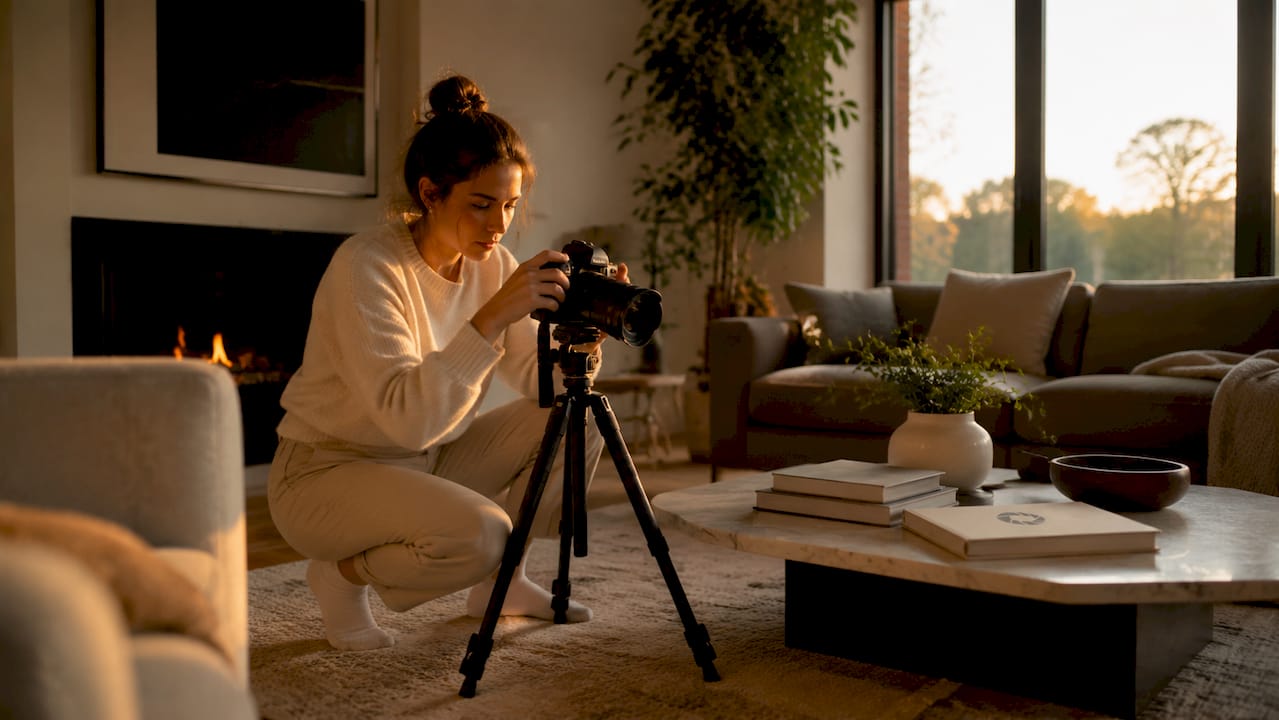
Lifestyle images work because they help guests picture themselves in the space. A photo of a living room with warm evening light, a throw blanket on the couch, and a coffee table styled with books and a candle communicates comfort and ease. A bare architectural shot of the same room communicates square footage. One sells a feeling. The other documents a fact.
“Listings with lifestyle images alongside traditional photos see 60% more guest engagement because lifestyle shots help guests imagine staying there.”
That engagement gap matters because more time spent on a listing directly correlates with higher booking intent. When a guest lingers on your photos, they are mentally committing to the stay. Architectural shots alone rarely produce that response.
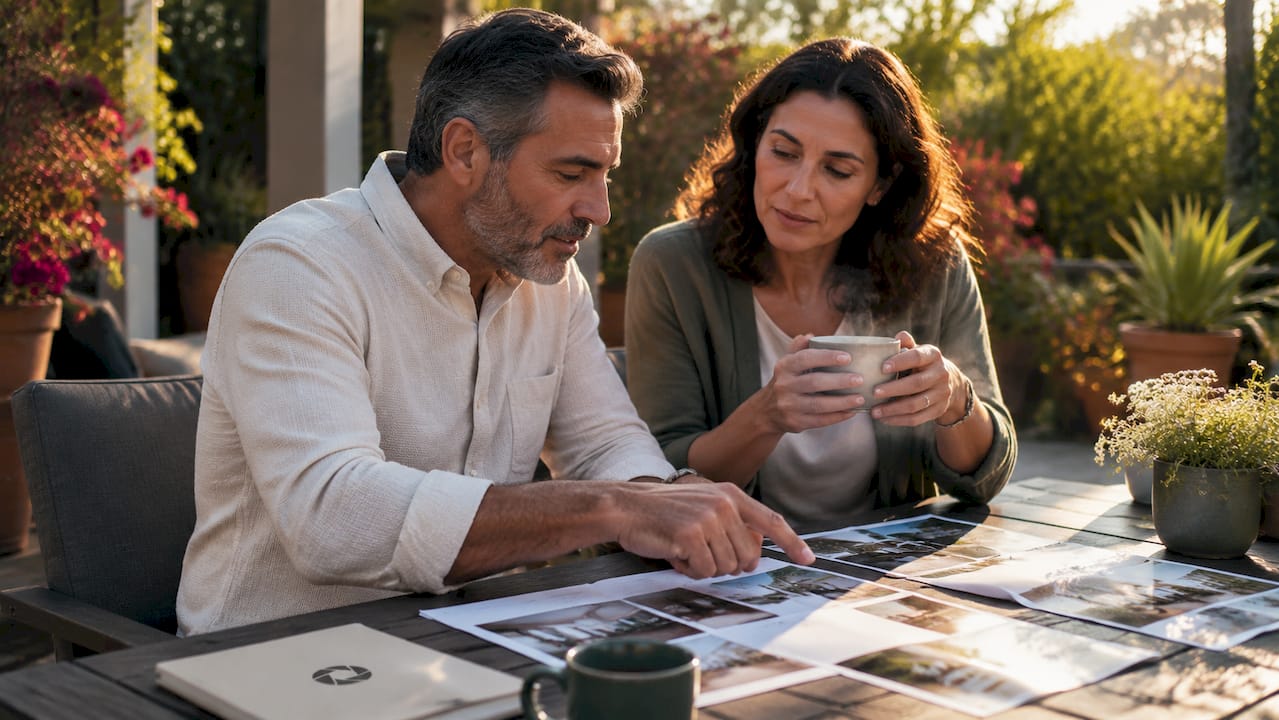
The difference between lifestyle and standard real estate photography is also a difference in audience. Standard real estate photography is designed for buyers who need to assess structural value. Rental guests are not buying. They are choosing an experience for a specific trip. Lifestyle images speak directly to that mindset. They answer the question “Will I enjoy being here?” rather than “What is this property worth?”
- Lifestyle images increase emotional connection by showing the property in use, not just in existence.
- Cover photos with warm lighting and styled interiors consistently outperform empty-room shots on click-through rates.
- Guests booking for leisure respond more strongly to aspirational images than to neutral documentation.
- A blend of functional and aspirational shots maximizes both trust and desire.
What is the quantifiable impact of professional photography on rental pricing?
The numbers behind lifestyle images and pricing are clear and consistent across the industry.
| Metric |
Impact |
| Nightly rate premium |
20%–26% higher with professional photos |
| Booking rate increase |
24%–40% lift over amateur images |
| Time on market |
50% faster rentals, average 11 fewer vacancy days |
| Guest engagement |
60% more engagement with lifestyle-integrated listings |
| Photography cost |
$300–$800 per shoot, typically recovered within 1–2 bookings |
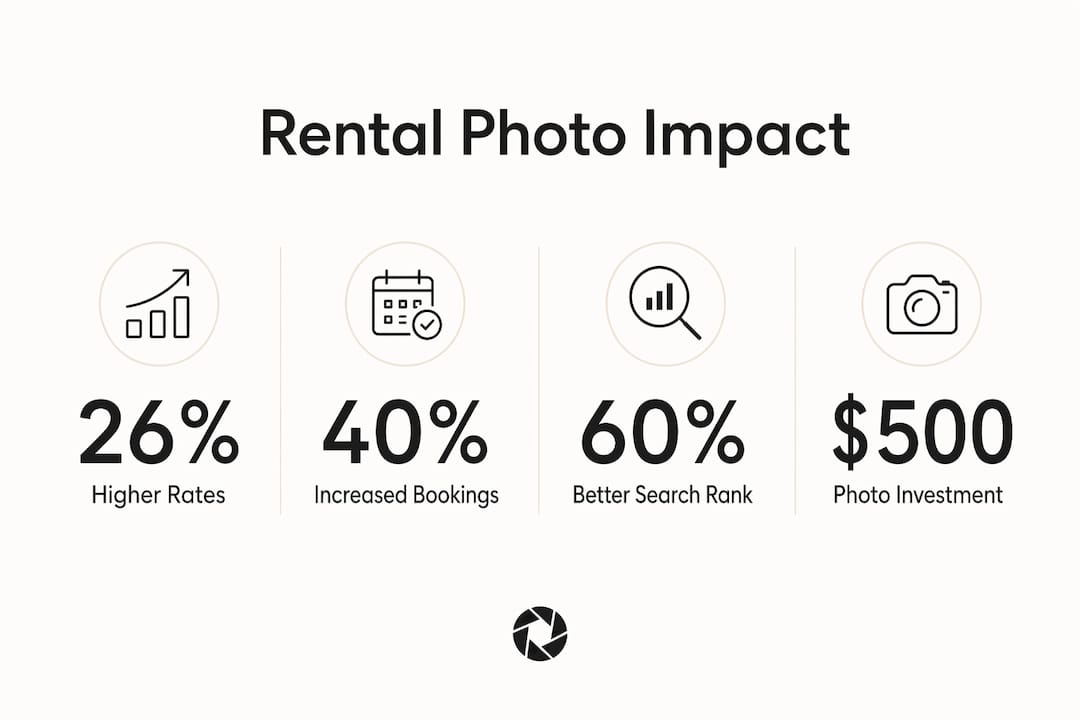
The cost-to-return ratio is one of the strongest in rental marketing. A $500 photography session that enables you to charge $40 more per night pays for itself in under two weeks of occupancy. The 11-day reduction in vacancy time compounds that return further, since every vacant day is lost revenue that no discount can fully recover.
The impact of photography on rentals also shows up in search ranking. Platforms like Airbnb and Booking.com factor engagement signals into listing visibility. A listing with strong click-through rates from compelling cover photos receives more impressions over time. Better photos do not just convert guests who find you. They help more guests find you in the first place.
Pro Tip: Before investing in a full photoshoot, audit your current cover image. If it was taken with a phone in mixed lighting or shows a cluttered room, replacing just that one image can produce a measurable lift in clicks within days.
The importance of visual content in rentals extends beyond aesthetics. Listings with consistent, high-quality imagery build the kind of trust that converts browsers into bookers. Guests who feel confident in what they are seeing are less likely to abandon the booking process midway.
Best practices for using lifestyle photography to maximize rental value
Photo quality matters. Photo strategy matters just as much.
The first decision you make is which image leads your gallery. Sequencing photos strategically, with the strongest lifestyle or living room shot as the cover, significantly influences click-through and booking conversion. Most hosts upload photos in the order the photographer delivered them, which is almost never the right order for a rental listing.
A practical sequencing approach works like this:
- Cover image: the most aspirational lifestyle shot, ideally a living space or outdoor area with natural light and light styling.
- Second and third images: the primary bedroom and a key amenity such as a pool, kitchen, or view.
- Middle gallery: supporting lifestyle shots, detail images, and secondary rooms.
- Final images: practical documentation such as parking, building exterior, and floor plan if available.
Twilight photography belongs in the second or third position when you have it. Twilight shots act as an emotional hook, transforming how guests perceive the property and attracting premium guests more effectively than daylight-only images. A well-lit exterior at dusk communicates quality before a guest has seen a single interior room.
Pro Tip: Aim for 18–22 photos total. The booking-rate curve flattens after 22 photos, and galleries exceeding 30 images can reduce conversion due to gallery fatigue. More is not better. Better is better.
Authentic styling beats heavy staging. A coffee mug on the kitchen counter, a folded towel on the bathroom vanity, and open curtains letting in natural light all read as genuine. Overly staged shots with props that do not belong in the property feel artificial. Guests notice the difference, and it affects their trust in the listing.
For photo best practices in 2026, the standard is a mix of wide-angle room shots, medium detail images, and at least two to three lifestyle-specific images that show the property as a place to live in, not just look at.
Common mistakes that hurt rental pricing and bookings
The most expensive mistake a host makes is treating photography as optional. Photography is a commercial investment, not a luxury, in a competitive digital rental market. Listings with phone photos taken in poor lighting signal low effort to guests, and low effort signals low quality.
- Amateur images with visible noise, distortion, or flat lighting reduce perceived property value regardless of the actual property condition.
- Focusing only on architectural documentation and skipping lifestyle shots removes the emotional appeal that drives premium pricing.
- Uploading more than 30 photos creates gallery fatigue and reduces the likelihood a guest completes the booking process.
- Changing primary listing images frequently negatively impacts booking intentions because guests rely on visual stability to build trust.
That last point surprises most hosts. You might think refreshing your cover photo is a good way to test what works. But research on host impression management shows that visual consistency is a trust signal. Guests who saw your listing last month and return to book expect to see the same property they remember.
“Visual stability in listings helps build guest trust and supports sustained booking performance over time.”
The effects of lifestyle photography on pricing are undermined when the images do not match the actual property. Overpromising through heavy editing or misleading angles creates negative reviews, which damage long-term pricing power far more than a mediocre photo ever would. The goal is honest improvement, not misrepresentation.
Key Takeaways
Professional lifestyle photography is the highest-return investment a rental host can make, directly raising nightly rates, accelerating bookings, and reducing vacancy time.
| Point |
Details |
| Nightly rate premium |
Professional photos support 20%–26% higher rates compared to amateur images. |
| Booking velocity |
Professionally photographed listings rent 50% faster and cut vacancy by 11 days on average. |
| Optimal photo count |
Keep galleries to 18–22 images; conversion drops after 30 photos due to gallery fatigue. |
| Photo sequencing |
Place your strongest lifestyle shot as the cover image to maximize click-through rates. |
| Visual consistency |
Avoid frequent cover image changes, as stability builds guest trust and sustains bookings. |
What I’ve learned from watching listings win and lose on photos alone
I have reviewed hundreds of rental listings across different markets, and the pattern is always the same. The listings charging top rates are not always the nicest properties. They are the best-photographed ones.
What separates a $180-per-night listing from a $240-per-night listing in the same building is often a single cover image. One shows a bed against a white wall in flat light. The other shows the same bed styled with layered pillows, warm lamp light, and a window view in the background. The room is identical. The perceived value is not.
The hosts who resist investing in photography usually cite cost. A $400 shoot feels like a lot when you are already managing cleaning fees, platform commissions, and maintenance. But the math is straightforward. If professional photos let you charge $30 more per night and you book 15 nights per month, that is $450 in additional monthly revenue. The shoot pays for itself in the first month, every month after that is pure gain.
The subtler lesson is about consistency. I have seen hosts get great photos, see a booking surge, and then start swapping images based on seasonal whims or guest feedback. The visual stability research backs up what I observed anecdotally: changing your primary images disrupts the trust guests build when they recognize a listing. Treat your photo set as a stable asset, not a rotating experiment.
My honest advice is to start with one great cover image if a full shoot is not in the budget right now. Fix the lighting, clear the clutter, and make sure the perspective is straight. That single improvement will tell you exactly how much your current photos are costing you.
— Greg
How HospitalityLens can improve your rental photos without a photoshoot
Getting professional-quality listing images does not require scheduling a photographer, clearing your calendar, or paying $500 upfront.
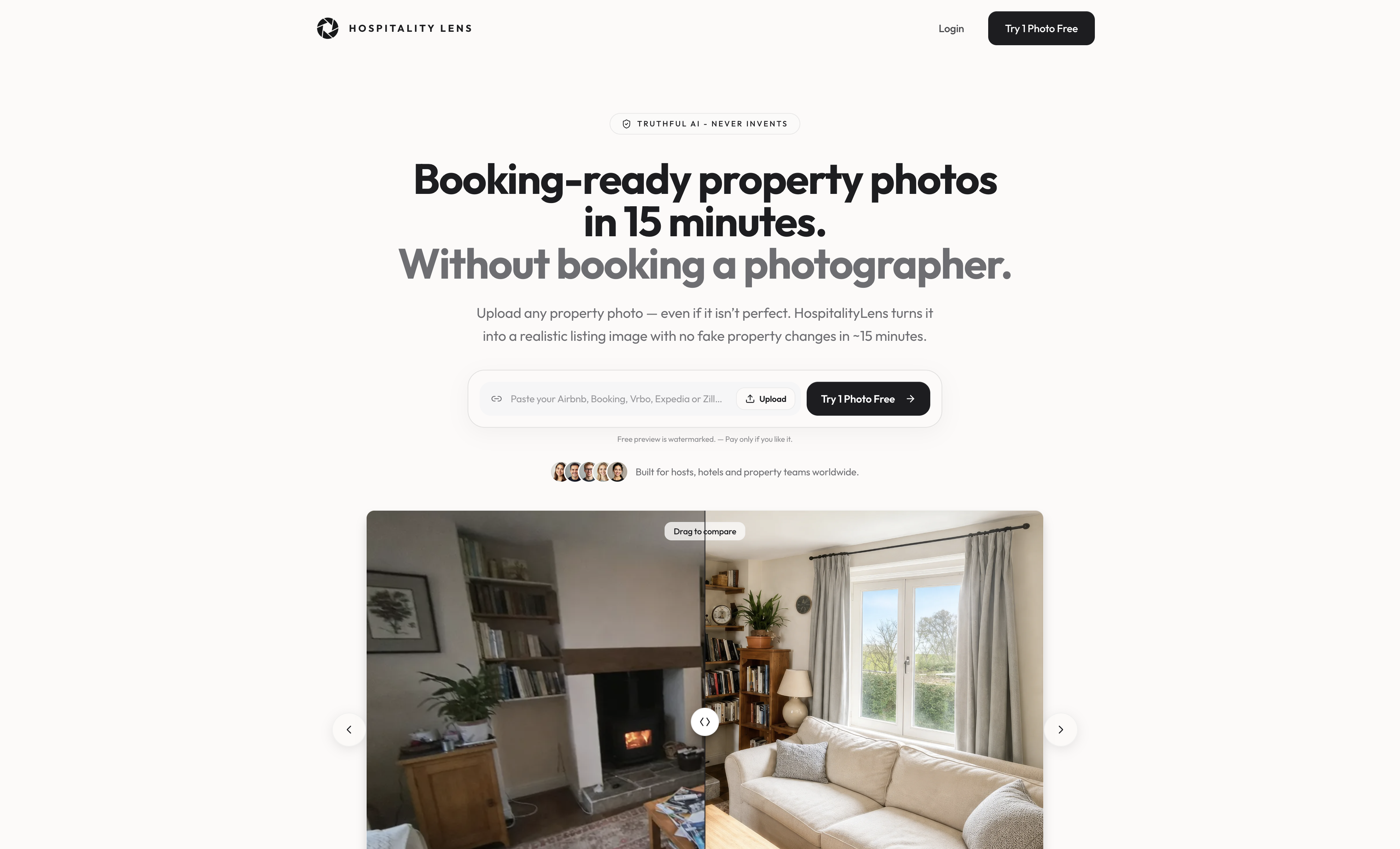
HospitalityLens lets you upload your existing phone photos or dark, cluttered listing images and receive professionally enhanced results. The service corrects lighting and color, fixes crooked perspectives, removes clutter and unwanted objects, and delivers booking-ready images with commercial usage rights included. There is no photoshoot to book and no waiting weeks for results. If you want to see what your photos could look like, the step-by-step guide walks you through the full process. You can also try one photo free before committing to anything.
FAQ
How much can professional photos increase my rental rate?
Listings with professional photography command 20%–26% higher nightly rates compared to listings with amateur images. That premium applies across short-term rental platforms including Airbnb and Booking.com.
What is the difference between lifestyle photography and standard real estate photography?
Standard real estate photography documents a property for buyers assessing structural value. Lifestyle photography shows the property as a lived-in experience, using styling, lighting, and composition to help guests imagine staying there.
How many photos should a rental listing have?
The booking-rate curve flattens after 22 photos, and galleries with more than 30 images can reduce conversion due to gallery fatigue. Aim for 18–22 well-sequenced images.
Does changing my listing photos hurt bookings?
Frequently changing primary listing images negatively impacts booking intentions because guests rely on visual consistency to build trust in a listing. Treat your core photo set as a stable asset.
Is professional photography worth the cost for a short-term rental?
A professional shoot typically costs $300–$800 and is often recovered within the first one or two bookings at the higher nightly rate it supports. The return on investment compounds over time through higher occupancy and reduced vacancy periods.
Recommended