Short-Term Rentals
What Perceived Value Means for Short-Term Rentals
Unlock higher booking rates and revenue for your short-term rental by optimizing perceived value through strategic photo presentation and quality enhancements.
By Hospitality Lens · · 12 min read
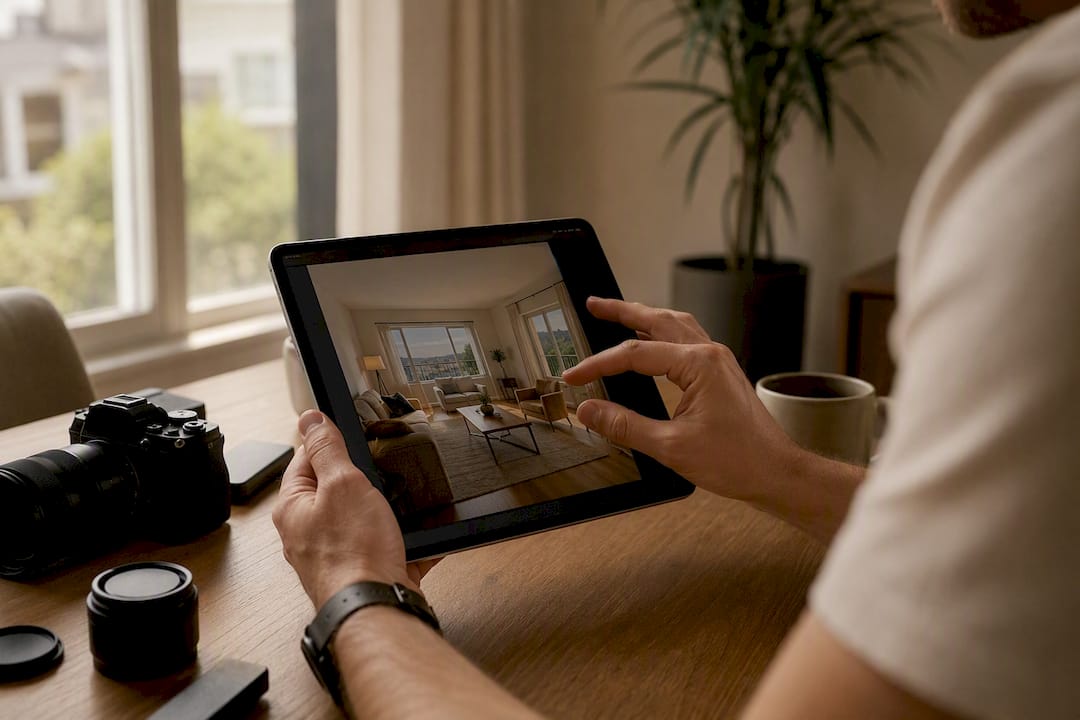
Perceived value in a short-term rental is the guest’s impression of what a stay is worth before they ever walk through the door. It comes almost entirely from what they see in your listing: photos, cleanliness cues, amenity signals, and how the whole gallery hangs together. Get that impression right, and guests click, book, and pay more for the exact same property.
Three photo moves shift that impression fastest:
- Put a living room or lifestyle shot in your cover photo, not a bedroom or bathroom.
- Prioritize product-focused images that clearly show layout, space, and design over vague “experience” shots.
- Order your gallery so the first photo matches your headline, then build outward with organized, information-rich rooms.
A peer-reviewed study on photo content and pricing found guests lean harder on these product-focused images when a listing is priced above market average. A separate structural analysis published through MIT-affiliated operations research found that fixing photo layout and cover-image quality lifted bookings by an average of 11%. HospitalityLens exists to help managers act on exactly this evidence without booking a new shoot.
Key Takeaways
Perceived value in short-term rentals is built almost entirely from photo content, order, and clarity, and fixing those three levers measurably raises clicks, bookings, and nightly rate.
| Point |
Details |
| Lead with a living room cover photo |
One study tied this single change to a 35% booking rate lift and notable extra revenue over a typical holiday window. |
| Prioritize product-focused images |
Photos that clearly show layout and amenities carry more information value, especially above-average-priced listings. |
| Fix gallery order and congruency |
Match your first photo to your headline and organize the full set; this can offset having fewer total photos. |
| Test one variable at a time |
Run cover-photo or order changes for two to three weeks and track CTR alongside booking rate, not CTR alone. |
| Enhance existing photos before reshooting |
HospitalityLens corrects lighting, angles, and clutter on phone or listing photos starting with a free watermarked preview. |
Table of Contents
What Is Perceived Value in Property Rentals, Really?
Perceived value is not the same as market value or replacement cost. It is subjective, formed in seconds, and almost entirely visual before a guest reads a single review. Two identical condos, photographed differently, will generate different click-through rates and different willingness to pay. That gap is what this article is about.
The academic term for this is “information value,” a concept from consumer behavior research describing how much a photo reduces a buyer’s uncertainty about what they’re actually getting. A photo with high information value shows the guest exactly what a room looks like, how big it is, and what’s included. A photo with low information value is moody, artistic, or cropped so tight it tells the guest almost nothing useful. Both can look nice. Only one builds trust.
Why Perceived Value Drives Clicks, Bookings, and Rate
The dollar effects here are not theoretical. A study on Airbnb search-result images found that featuring a living room in the cover photo raised booking rates enough to generate notable extra revenue over a typical 16-night holiday window (https://ideas.repec.org/a/eee/ijrema/v40y2023i4p760-780.html). Separately, the structural analysis of photo layout mentioned above tied better cover-image quality and gallery organization to roughly 2 to 5 extra booked nights per year and $500 to $1,100 in additional annual revenue per listing, depending on market.
The mechanism behind both numbers is the same. A guest scrolling search results has no way to verify your cleanliness, your space, or your host reliability except through what you show them. Photos that reduce that uncertainty read as more credible, and credibility translates directly into willingness to pay. This effect gets sharper when a listing has few reviews. Research on Airbnb signal attributes found that when review counts are low, guests lean much more heavily on non-review signals like price, host verification, and photo quality to fill the trust gap.
“Featuring a living room in the background image increases booking rates substantially.” That single change, backed by measured revenue data, is one of the cheapest edits available to any host.
None of this requires a new photoshoot. It requires knowing which existing photo to put first.
Not every photo carries the same weight. Research on photograph content consistently splits images into two categories: product-focused, which show interior design, amenities, and layout plainly, and experience-focused, which lean on mood, lifestyle staging, or atmosphere over clarity. The SAGE study on photograph content and booking intentions found product-focused images carry more information value, and guests rely on them even more heavily when your nightly rate sits above the local average.
Content matters, and so does presentation. Here’s what to prioritize on both fronts.
Content features that build information value:
- A cover image showing a full living space, not a single furniture detail
- At least one wide shot per major room that establishes scale and layout
- Amenity close-ups (coffee machine, hot tub, workspace) that back up your listing description
- Natural light and a tidy, lived-in feel rather than a staged, empty look
Presentation mechanics that move the needle:
- Shot-scale matters: research on cover-photo framing found panoramic, wide-angle shots increase click-through and booking intent, especially among guests focused on getting the most for their money.
- Brightness and clarity beat filtered or moody edits every time information value is being judged.
- A full, organized gallery outperforms a short one, but organization can compensate for fewer photos when your first image matches your headline.
- Congruency counts: if your title says “Ocean View Retreat,” your cover photo needs to show the ocean view, not the kitchen.
Does Perceived Value Change by Rental Type and Price Point?
Yes, and this is where a lot of hosts waste effort photographing the wrong thing. Research comparing entire-property and shared-space bookings found that guests booking a whole home or apartment respond most to hedonic and social cues: design quality, spacious common areas, a sense of “this could be my life for a weekend.” Guests booking a private or shared room respond more to utilitarian cues: price clarity, cleanliness, and practical amenities like a desk or a lock on the door.
That split should shape your shot list directly:
- Entire property, premium tier: lead with lifestyle and design. Show the living room, outdoor space, and any standout architectural feature.
- Entire property, budget tier: lead with space and value. Show room count and layout clearly, skip the styling.
- Shared or private room: lead with cleanliness and function. Show the bed, storage, and shared spaces guests will actually use.
- Serviced apartments: treat consistency across units as the differentiator. A guest comparing three of your units should see the same photo quality and framing in each.
The Photo Checklist You Can Run This Week
You do not need a photographer on-site to move these numbers. You need the right shots, in the right order, cleaned up properly.
- Rewrite your cover photo choice first. Pick a living room, main lounge, or defining feature. Never lead with a bathroom or a hallway.
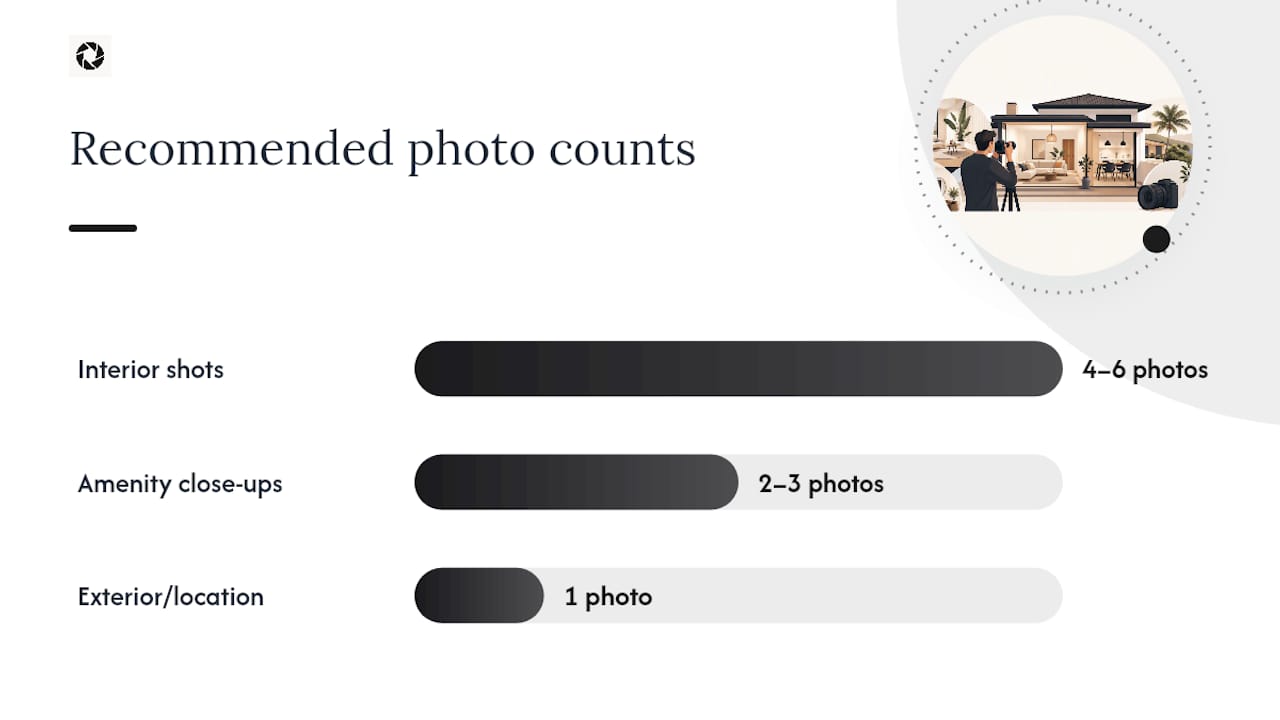
- Capture four to six interior shots covering every major room from a wide angle, standing in a corner to maximize visible space.
- Get two to three amenity close-ups that match your listing’s stated perks: a hot tub, a full kitchen, a workspace.
- Include one exterior or location shot that grounds the guest in the neighborhood or setting.
- Order the gallery deliberately: cover photo, hero living space, bedrooms, bathroom, amenities, exterior, in that rough sequence.
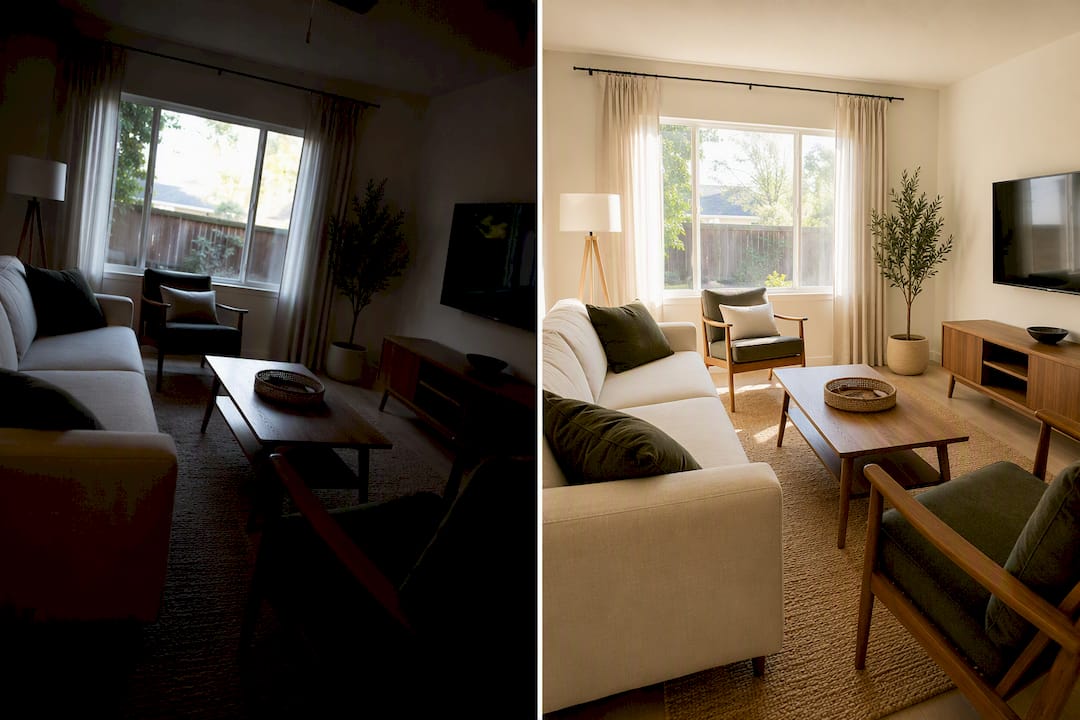
- Fix the basics before anything else: straighten crooked verticals, correct exposure, and clear visible clutter from every frame.
A phone photo shoot plus AI enhancement typically costs a small fraction of a professional shoot and turns around in a day or two, compared to a week or more of scheduling for a photographer. Choose enhancement when your existing photos are usable but flawed. Choose a photographer when the space itself has never been properly captured.
Pro Tip: Set expectations before you upload anything. A good enhancement corrects lighting, straightens the horizon, and clears clutter. It will not add a pool, invent a view, or change what the room actually contains. If a photo is fundamentally unusable, no edit can fix that; you need to reshoot it.
How to Measure Whether Your Photo Changes Are Working
Don’t guess. Track it.
- Pull baseline numbers first: click-through rate from search results, click-to-book conversion, current ADR, and occupancy for the trailing 30 to 60 days.
- Change one variable at a time, starting with the cover photo, then test gallery order in a separate window rather than bundling every edit into one launch.
- Run each test for at least two to three weeks to smooth out day-of-week booking noise, longer if your listing gets fewer than a handful of views per day.
- Watch CTR and booking rate together. A cover-photo change that raises clicks but not bookings usually means the rest of the gallery doesn’t back up the promise.
The 11% average bookings lift tied to better photo layout came from exactly this kind of counterfactual comparison, not from guesswork. Treat your own test the same way: a real before-and-after, measured against your own baseline.
When AI Enhancement Wins and When a Photographer Still Should
The honest answer depends on what you’re starting with, not on which option sounds more impressive. If you have usable phone photos from an owner, a cleaner, or a prior listing that are simply dark, crooked, or cluttered, enhancement solves that problem in hours, not days, and at a fraction of the cost of a shoot. That covers most listing refreshes, seasonal updates, bulk portfolio onboarding, and any underperforming listing where the photos are the bottleneck.
A photographer still earns their fee for flagship launches, spaces with genuinely difficult lighting, architectural photography, or any property where the current photos are unusable at the source. No enhancement service, including ours, can invent an angle nobody captured. Know which problem you actually have before you spend money solving it.
Try One Photo Free Before You Commit to Anything
HospitalityLens is the practical middle path between a phone photo that undersells your property and a full photoshoot you may not have time or budget for. Send us the dark, crooked, or cluttered photos you already have, and we correct lighting and color, straighten perspective, clear clutter, and remove stray objects or people, all while keeping the property exactly as it really is. No invented rooms, no fabricated views, no amenities that don’t exist.
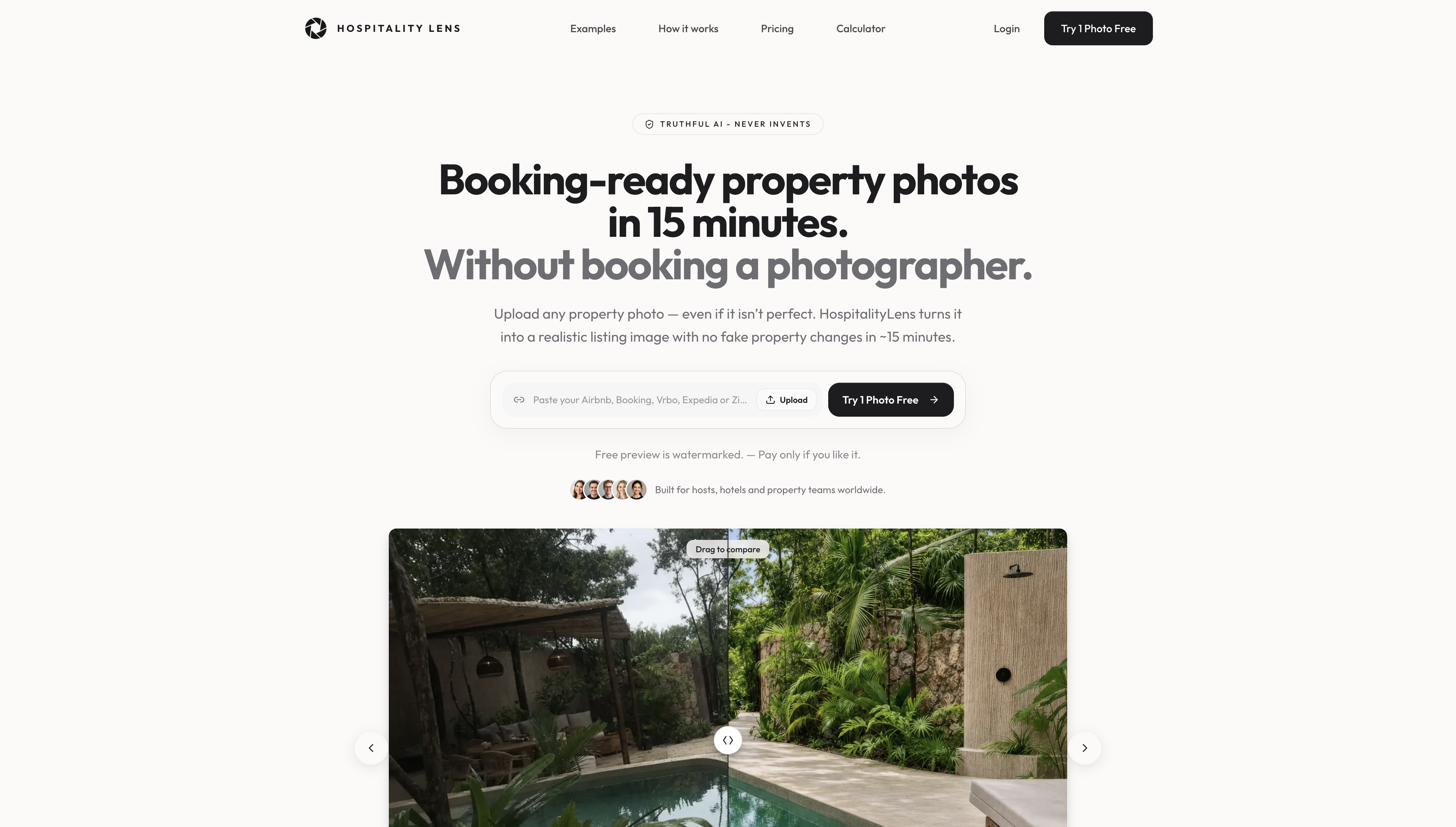
Free watermarked preview. Pay only if you like it. No card is required to create the free watermarked preview. See current pricing for unlocks, one-time packs, and subscriptions.
Sources
FAQ
What Is Perceived Value in Property Rentals?
It’s the guest-facing impression of a rental’s worth, shaped mostly by photos, cleanliness cues, and presentation, that determines whether someone clicks, books, and pays a higher rate.
Which Photo Change Has the Biggest Impact on Bookings?
Swapping the cover photo to a living room or main living space has the strongest documented effect, tied to a measured 35% booking rate increase in one study.
Do Photo Priorities Differ for Budget vs Premium Listings?
Yes. Premium and entire-property listings benefit more from design and lifestyle cues, while budget and shared-space listings perform better with clear, utilitarian shots of space and cleanliness.
Can I Improve Perceived Value Without Hiring a Photographer?
In most cases yes, if your existing phone or cleaner-taken photos are usable but flawed; a service like HospitalityLens can correct lighting, angles, and clutter starting with a free watermarked preview.
How Long Should I Run a Photo A/B Test Before Judging Results?
Run each change for at least two to three weeks to account for normal booking fluctuations, then compare click-through rate and booking rate together rather than either metric alone.
Recommended